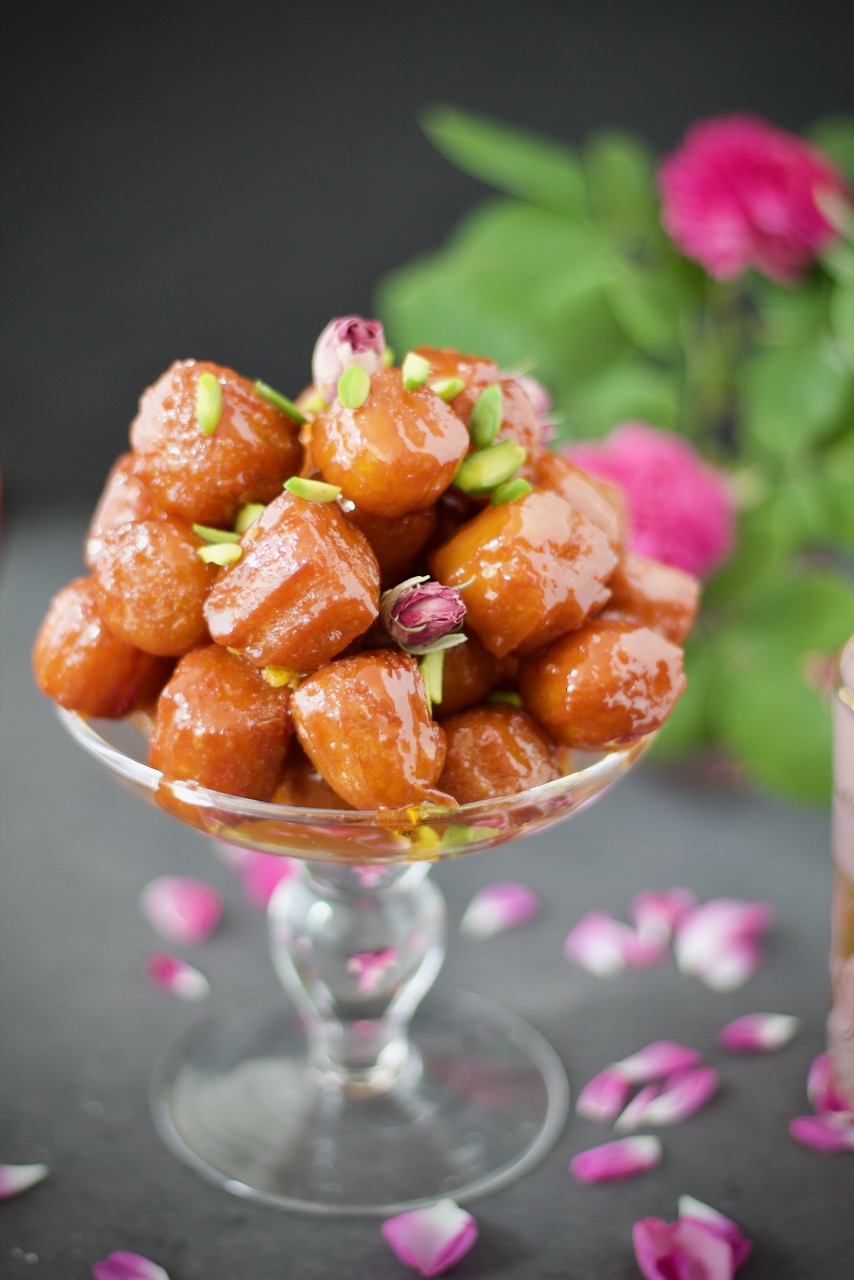
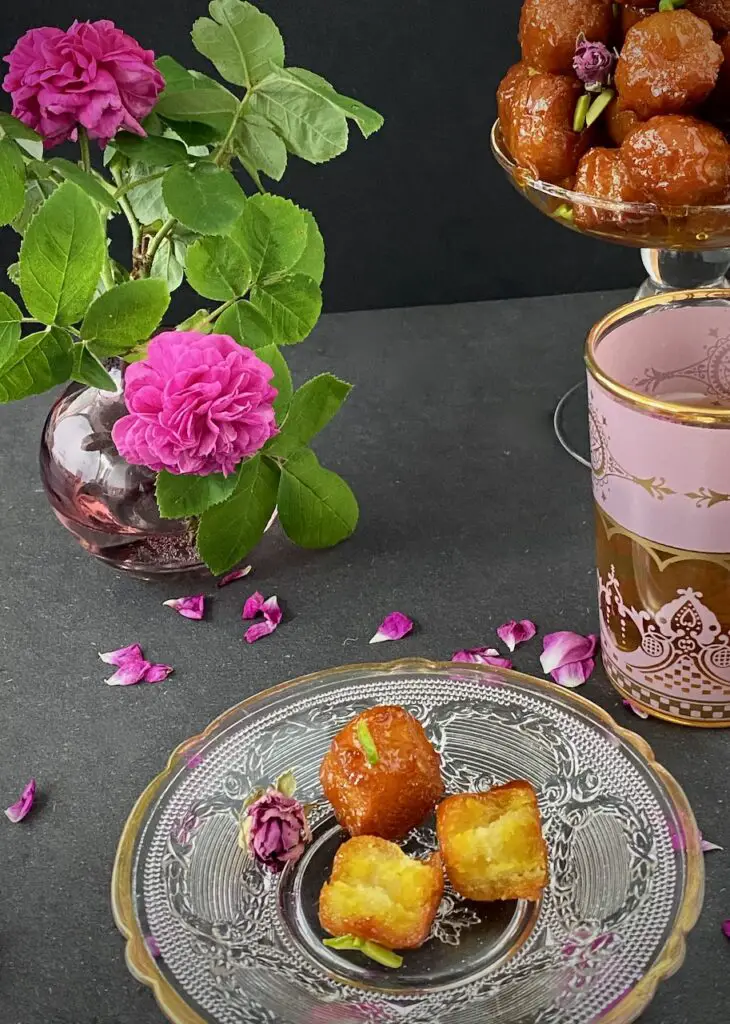
An engagement is truly one of the most beautiful days in a person’s life. In Persia, this special milestone is inseparable from the aroma of Saffron Bamieh.
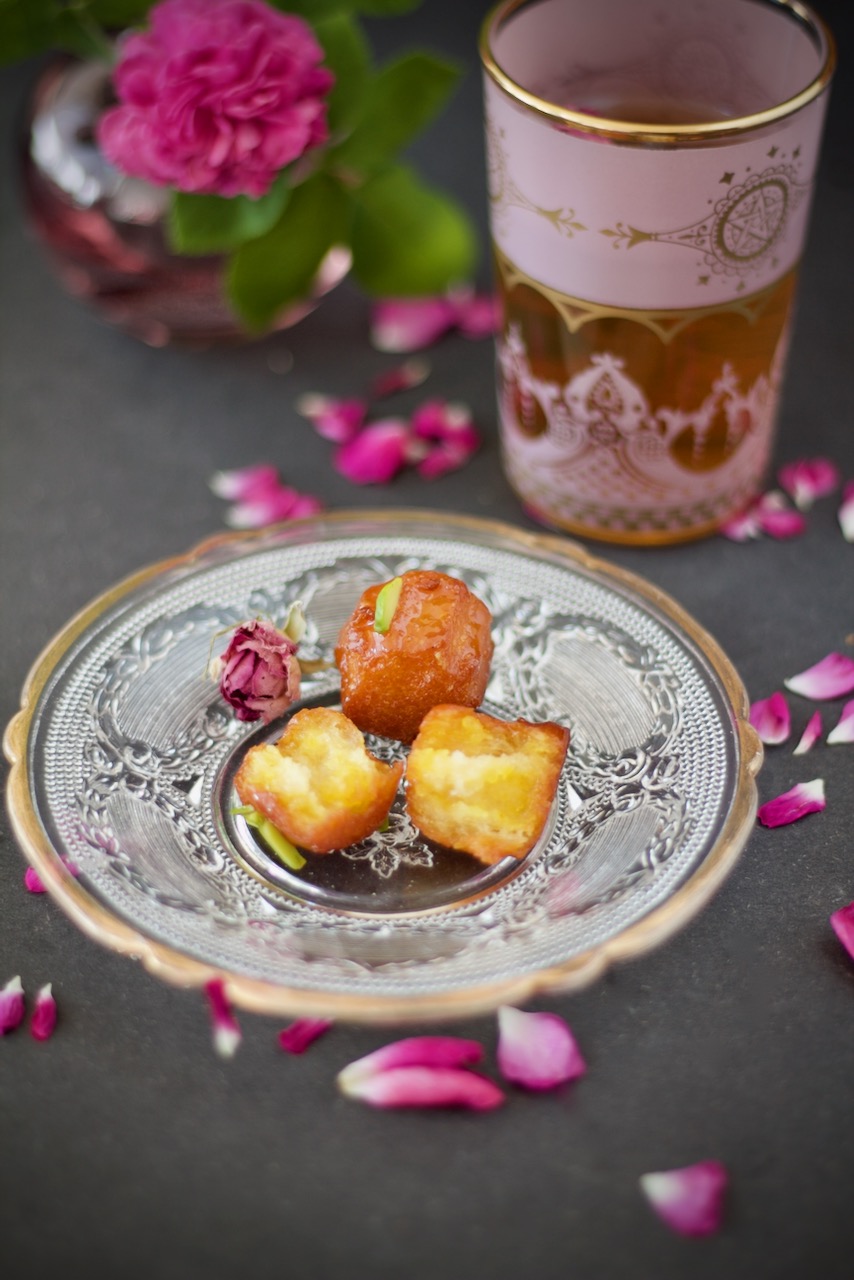
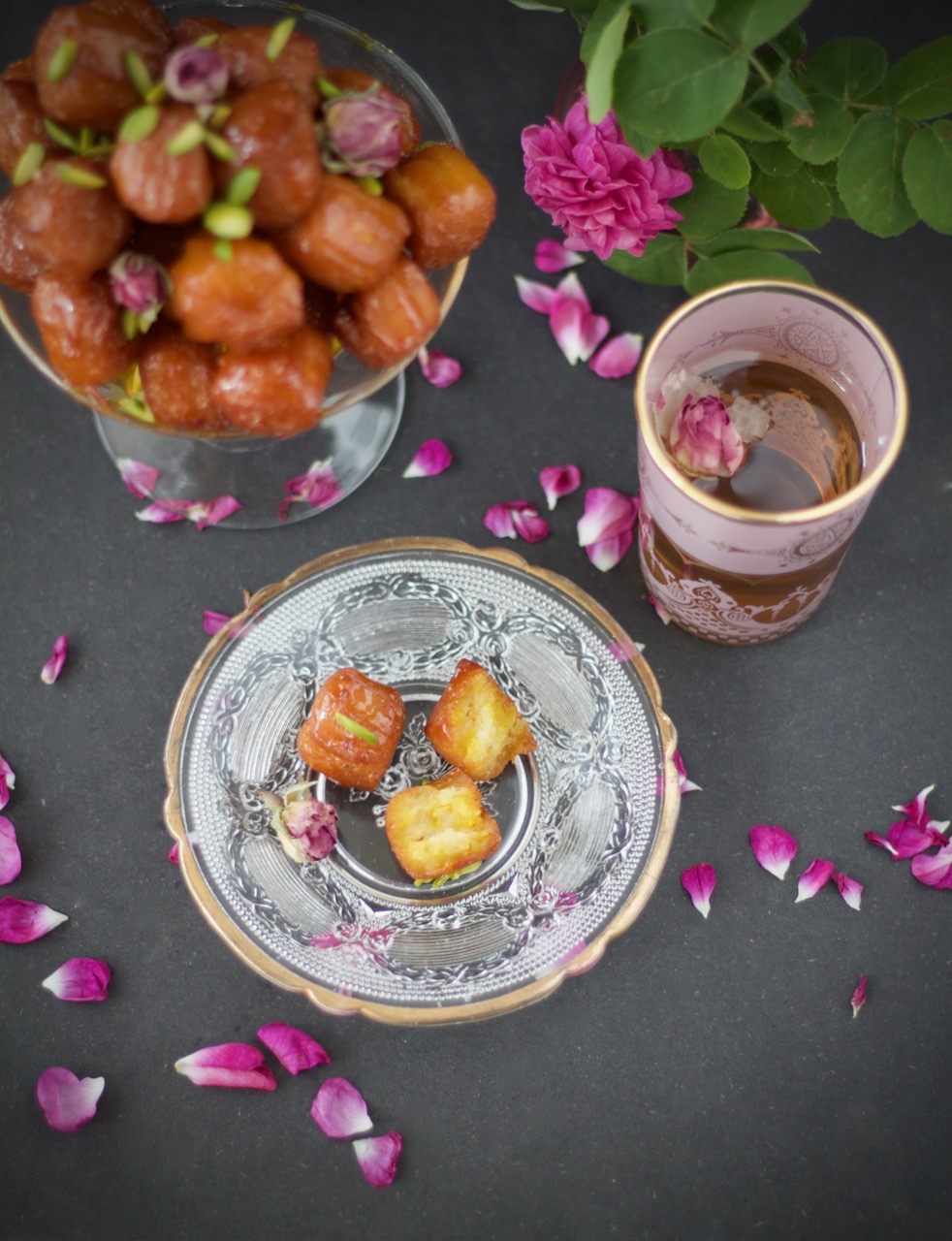
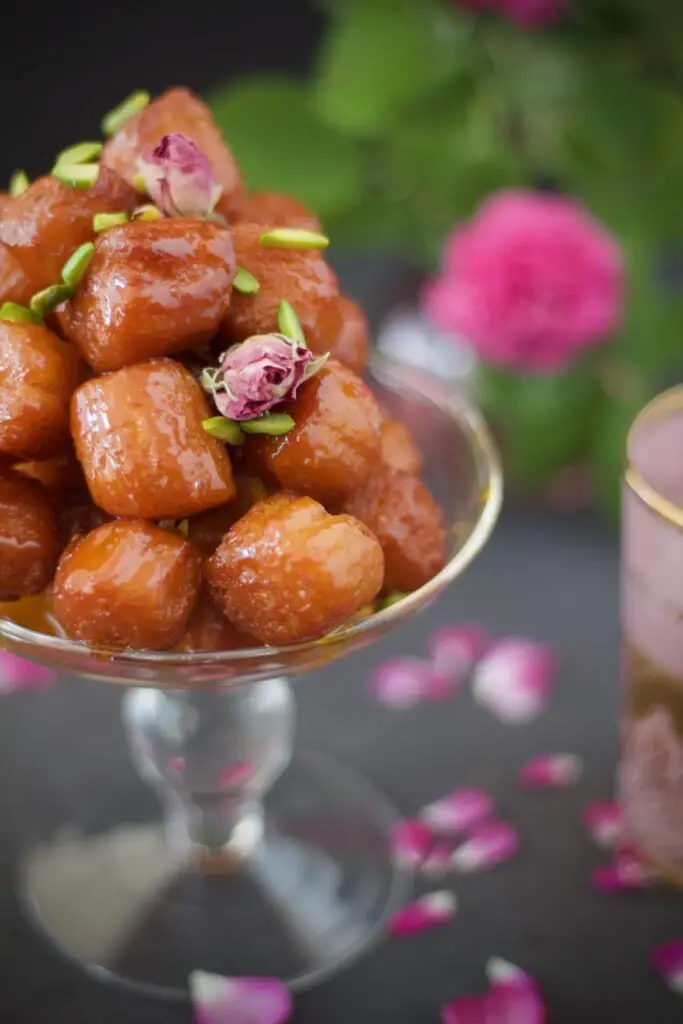
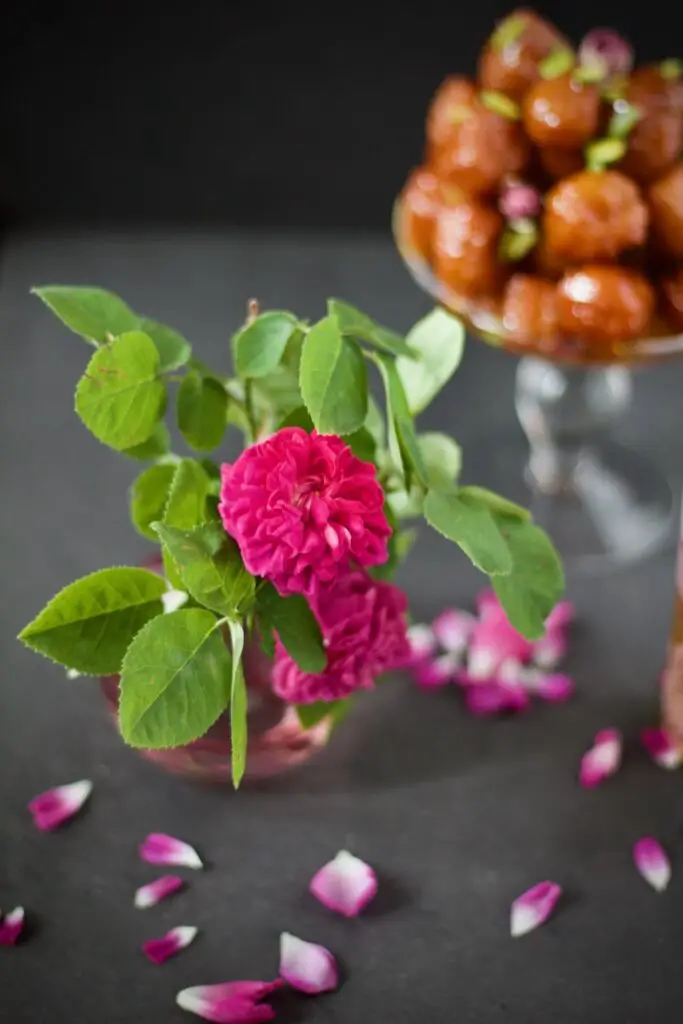
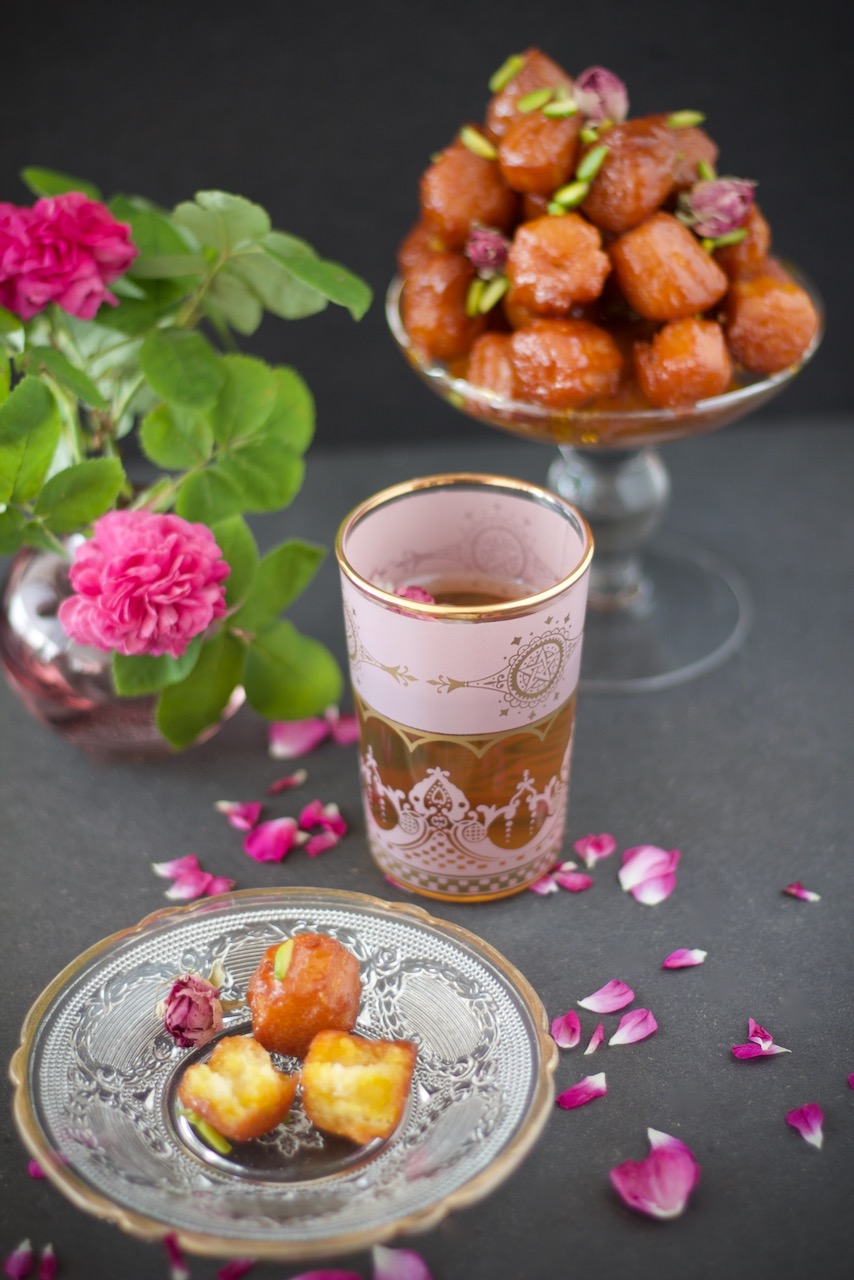
If you aren’t familiar with them, think of a Persian take on the Mexican Churro, but with a luxurious twist. While the shape may be similar, we refine our dough with precious saffron before frying it to a golden crisp. The magic happens next: a fragrant syrup of rosewater, saffron, cardamom, and honey drenches the warm pastries.
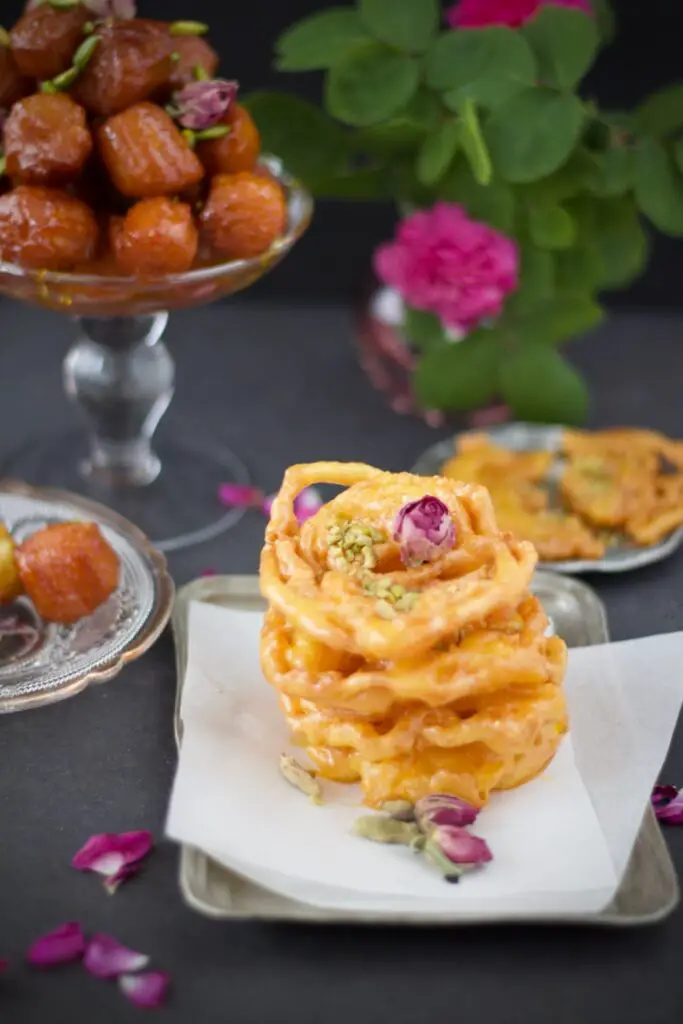
In our culture, Saffron Bamieh, Zoolbia and the Persian engagement go together “like a lid on a pot.” It is the ultimate “must-eat” for every ceremony, though you will also find it gracing the tables of Norooz (Persian New Year) and Ramadan, usually served alongside its famous partner, Zoolbia.
Today, I want to take you by the hand and lead you through my story of tradition—a journey into the vibrant, colorful world of 1001 Nights.

KHASTEGARI – THE PRELUDE TO A PERSIAN WEDDING – خواستگاری
Before the grand Persian wedding (Aghd) takes place, there is a beautiful series of meetings and customs that define the engagement period. For a Persian woman, the engagement is just as unforgettable as the wedding day itself. These traditions are deeply rooted in ancient Persia and Zoroastrian heritage.
Some families choose to take their time between the engagement and the wedding, allowing the anticipation to grow, making the eventual big day feel 1000% more magical!
Step into this world of “1001 Nights” with me as we follow the journey of Ziba (meaning “The Beautiful”) and Nika (meaning “The Good”). In the first part of my story, I’ll share how the engagement ceremony used to unfold in the past. Then, I’ll show you how these traditions have evolved into the modern celebrations we see today.
OLD ENGAGEMENT TRADITIONS ARE COMING BACK TO LIFE
Many of these ancient engagement traditions are now primarily practiced in rural areas and have naturally evolved over the centuries. While a traditional engagement involves a fair amount of negotiation between families, romance still finds its way into the process!
Interestingly, in Persia’s modern metropolises, many young people are beginning to embrace these old traditions once again. Sometimes ceremonies are skipped or combined for simplicity, and it is important to note that customs vary significantly from region to region and family to family.
If you are familiar with different ceremonies or have your own family stories to share, I would love to hear from you in the comments!
KHASTEGARI – DECLARING INTEREST IN THE BRIDE – خواستگاری
“Falling in love, getting engaged, getting married!” – In old Persia, it wasn’t quite that simple. Traditionally, the family of the future groom, like Nika’s, would look for a potential bride for their son, often arranging the marriage. However, in most families, mothers kept a very close eye on whether their son already had his heart set on someone.
Nika (meaning “The Good”) had already seen Ziba (“The Beautiful”) at a celebration and couldn’t take his eyes off her. His mother didn’t miss his enamored glances and soon told her husband that a young woman had finally been found who would be the perfect bride for their son. And so, the father, Nika, and a representative elder of the family (an uncle, grandfather, or close friend) set off for the Khastegari to officially declare their interest in Ziba.
THE FIRST MEETING – A HEART-POUNDING MOMENT
Ziba’s parents inform her that a Khastegar (someone asking for her hand) will visit that afternoon. When her mother reveals it is Nika, Ziba’s heart leaps—she hadn’t forgotten his glances at the party either. She puts on her most beautiful dress, has her sister style her hair, and takes one last satisfied look in the mirror.
When the doorbell rings, the honor of opening the door and welcoming the guests falls to her. Trembling with excitement, she opens the door; Nika hands her a bouquet, and his tender gaze gives her “beautiful goosebumps.” She invites Nika, his father, and his uncle into the living room, where Ziba’s family is already waiting.
TEA, TRADITIONS, AND SHARP EYES
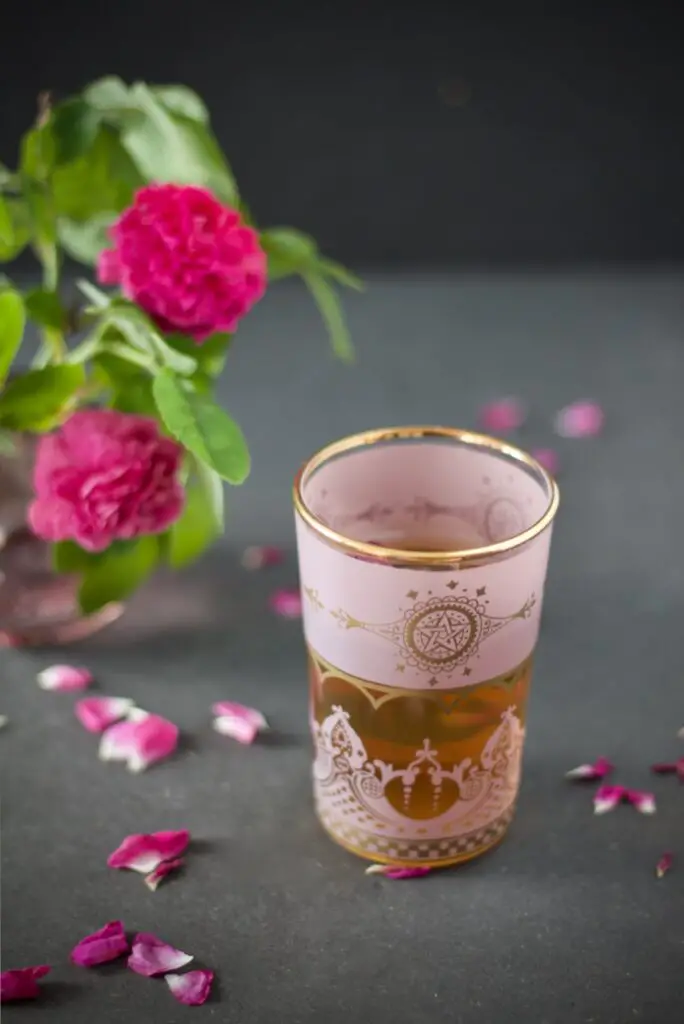
The table is laden with fresh fruits, sweets, and nuts (Ajil). Sharbat-e Sekandjebin (a Persian mint lemonade) is served, and a water pipe (Ghelyoon) is shared. Then comes the pivotal moment: Ziba waits for her father’s cue to serve the tea. With trembling hands, she carries the tray and serves the Persian Chai in delicate glasses, knowing that every movement is being watched closely.
This first meeting is a chance for the young couple to “test the waters.” Afterward, the parents decide if Ziba and Nika are a good match, and both the young man and woman are asked if they wish to meet again. While Ziba takes a few days to reflect, the head of the family eventually delivers the news. If a family isn’t interested, they might politely pretend Ziba is already “spoken for”, but luckily for our couple, Ziba is very much interested!
THE SECOND KHASTEGARI – WHEN TWO WORLDS MEET – خواستگاری دوم
Since both Ziba and Nika have agreed to move forward, it’s time for the “grand introduction.” This second meeting is much larger and more festive. Nika’s family arrives with an even more magnificent bouquet and boxes of premium sweets, but they aren’t alone—this time, grandparents, aunts, uncles, and cousins join the party. Ziba’s house is equally full, as her entire extended family is eager to meet the man who might join their ranks.
A SHOWCASE OF VIRTUES AND VALUES
This meeting is a deep dive into the lives and characters of the young couple. It is a tradition of sharing “virtues”:
Ziba’s Talents: She is asked about her homemaking skills, such as cooking and sewing, but also about her Mehman Navazi (the famous Persian art of hospitality). The family also discusses her hobbies, interests, and her personal philosophy on marriage.
Nika’s Future: His family presents his educational background and his visions for the future. For Ziba’s parents, this is the time to ensure he can provide a stable, beautiful home and financial security for their daughter.
A PRIVATE MOMENT BY THE HOOZ
While the families negotiate in the living room, Ziba and Nika finally get a chance to speak privately. They wander into the lush Persian garden and sit by the edge of the Hooz (the traditional turquoise water basin). Surrounded by the scent of flowers and the sound of water, they talk for hours about their dreams and expectations for a shared life.
These gatherings often last late into the evening, concluding with an opulent dinner. In the days that follow, each family huddles privately to make a final decision. If the answer is no, the other family is informed immediately. But if the answer is yes? Then we move toward the wedding bells!
🎵 Listen while you read: I’ve picked out a beautiful traditional Khastegari song for you on YouTube to set the mood!

BALE BORAN – THE PROPOSAL AND THE “YES” – بله بران
This is the day when everything becomes official. Both families, along with Ziba and Nika, have agreed to move forward toward marriage. Once again, the extended family gathers, grandparents, aunts, and uncles, all dressed elegantly but not quite in full wedding attire. This time, Nika’s family brings beautiful gifts for Ziba, and Nika himself is dressed to impress, his heart racing with anticipation.
THE TRADITION OF JAHEEEZIYEH (THE DOWRY)
Before the rings come out, the families discuss the Jaheeziyeh (or Jehaz). Much like the traditional trousseau or dowry that used to exist in Europe, this is the bride’s contribution to her new home.
In Persian culture, the bride’s family is responsible for furnishing the couple’s future home. Ziba’s mother has been lovingly collecting items since Ziba was a little girl:
- Exquisite hand-woven silk carpets.
- Elegant silver cutlery and fine china.
- Beautiful linens, blankets, and everyday essentials.
THE QUESTION OF LIFETIME
Nika is incredibly nervous. According to tradition, he must first ask Ziba’s father for permission to marry his daughter. But before the father gives his blessing, he asks Nika a crucial question: “What will you bring into this marriage?” They discuss Nika’s responsibilities and his ability to support a family.
Once the father gives his consent, the moment finally arrives. In front of both families, with a trembling voice, Nika asks Ziba to be his wife. Ziba’s heart skips a beat; the world seems to blur as she takes a breath and replies:
“Ba ejazeye bozorgtarha… Bale.”
(With the permission of my elders… Yes.)
With that one word—Bale—the deal is sealed! The mood shifts to pure celebration. Music fills the air, delicacies are served, and the families begin dancing while they set a formal date for the official engagement party.
🎧 Musical Vibe: You can listen to a modern Bale Boran remix right here to feel the energy of this celebration!
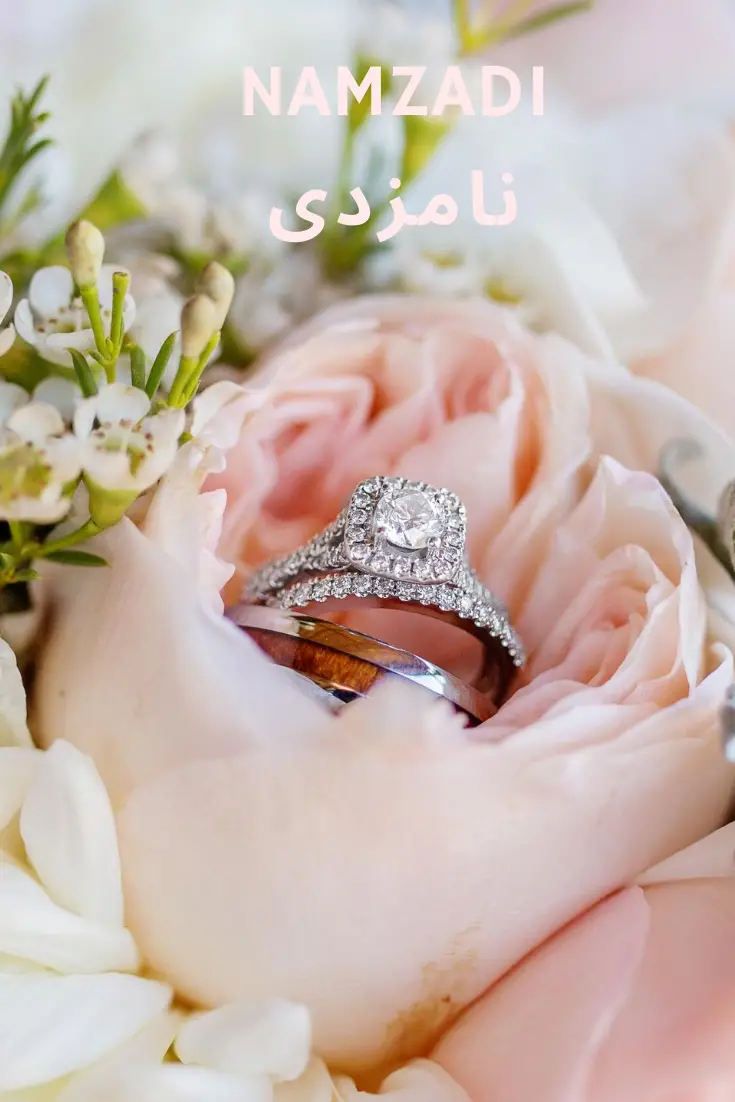
NAMZADI – THE OFFICIAL ENGAGEMENT CEREMONY – مراسم نامزدی
Finally, Ziba and Nika have reached the big milestone: the official engagement party! Traditionally hosted at the bride’s home, this celebration is a vibrant mix of joy, jewelry, and important promises.
MAHRIYEH – THE GIFT OF LOVE
One of the most unique aspects of a Persian engagement is the Mahriyeh. Translated as “The Gift of Love,” it is a formal marriage portion or dower pledged by the groom to the bride.
Think of it as a traditional form of financial security. The Mahriyeh serves to protect the bride in the event of a divorce. The amount is negotiated between the families and can range from:
- Symbolic gifts: A single gold coin or a book of poetry by the legendary Hafez.
- Financial assets: Money, fine jewelry, gold, or even real estate.
The amount is always tailored to Nika’s income and status, ensuring it is a respectful and realistic promise of protection.
RINGS, JEWELRY, AND NEW FREEDOMS
During the party, Ziba and Nika exchange their engagement rings in front of their cheering families. It is also customary for Nika’s family to shower Ziba with beautiful jewelry as a welcome into their fold.
But it’s not all formal negotiations! Once the “business” is out of the way, the house transforms into a festival of food, music, and dancing.
A New Chapter Begins: After the Namzadi, the couple enters a new social phase. They are now officially “promised” to one another, meaning they can finally enjoy public life together—taking romantic strolls, going to the cinema, or shopping for their future home as a recognized couple.
SHIRBAHA – “THE PRICE OF NURSING” – A TRIBUTE TO PARENTS
In traditional Persian engagements, an amount of money known as Shirbaha is given by the groom’s father to the bride’s family. To an outsider, this custom is often wrongly associated with “buying the bride,” but the true meaning is far more beautiful and respectful.
A SYMBOL OF GRATITUDE
Shirbaha literally translates to the “price of milk” or “price of nursing.” It is a symbolic tribute to the bride’s parents for the love, effort, and resources they invested in raising her.
- Honoring the Upbringing: It acknowledges that Ziba’s parents spared no effort to prepare her for adulthood.
- A Shared Benefit: By marrying Ziba, Nika’s family now benefits from the wonderful person she has become thanks to her parents’ devotion.
SUPPORTING THE NEW HOME
Beyond the sentiment, Shirbaha serves a very practical purpose. Since the bride’s family is traditionally responsible for the Jaheeziyeh (the extensive dowry of furniture and household goods), this contribution helps ease their financial burden. It is a way for the families to support each other as they build a new future for the couple.
THE WEDDING INVITATION – A TRAY OF SWEET WISHES
In the world of Ziba and Nika, invitations aren’t just cards sent through the mail; they are a beautiful, lived tradition.
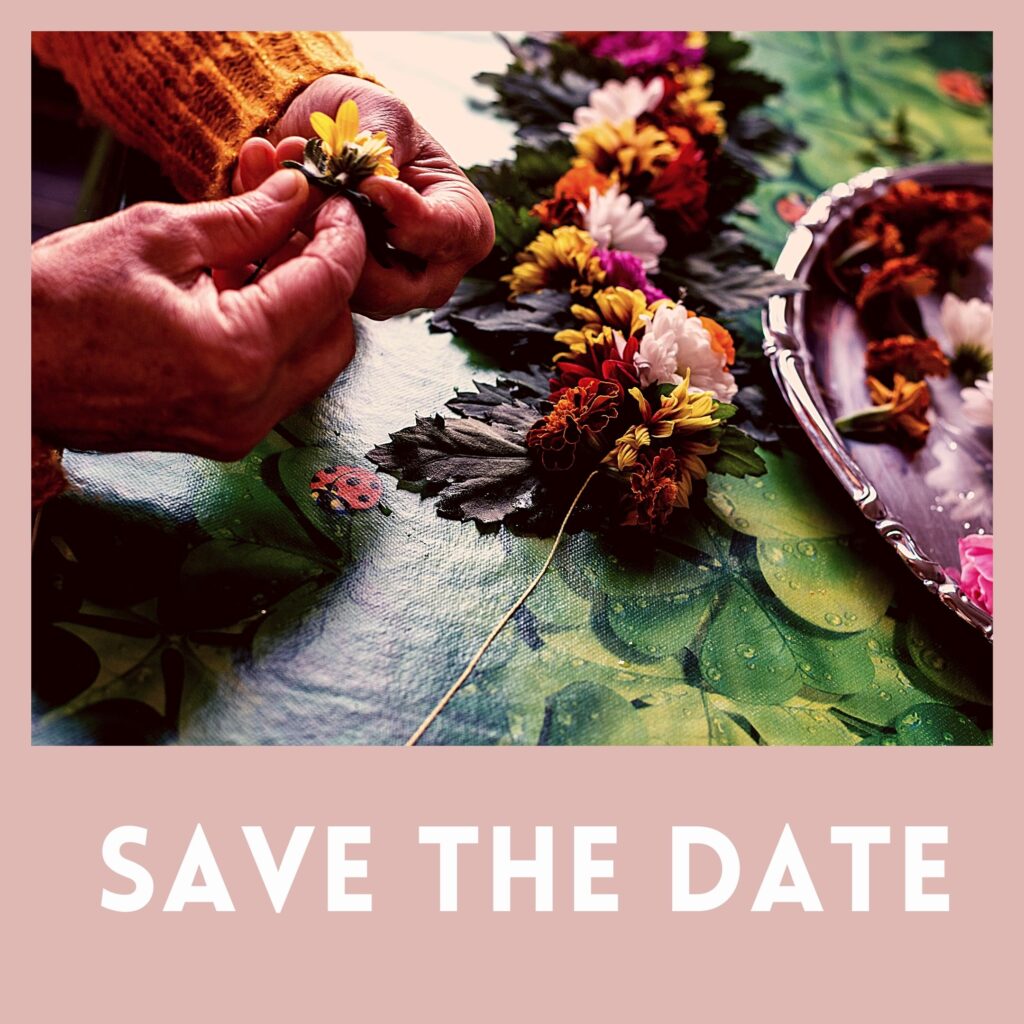
Ziba’s family appoints a family member to carry a special tray to the homes of the invited guests. Covered with a vibrant green silk cloth, the tray is a treasure trove of symbols:
- Fresh blossoms and delicate rosebuds.
- Fragrant rose petals.
- Nogl (sugar-coated almonds) and Nabat (rock candy).
A SWEET ACCEPTANCE
When the messenger knocks, the guest accepts the invitation by taking a few ingredients from the tray. They offer their heartfelt blessings for the couple’s future and give their “RSVP” on the spot.
Finally, the guest tastes the sweets—a symbolic gesture showing their desire to “sweeten the life” of the bride and groom. It is a moment of shared joy that turns every guest into a part of the couple’s story before the wedding even begins.
SHIRINI KHORAN – SWEETENING THE FUTURE – شیرینی خوران
A few days after the official engagement, the celebration continues with a dedicated ceremony called Shirini Khoran, which literally translates to “Eating Sweets.”
In Persian culture, we believe that sharing something sweet helps to “sweeten” the life and path of the future couple. Once again, the families gather to celebrate with a feast for the sweet tooth:
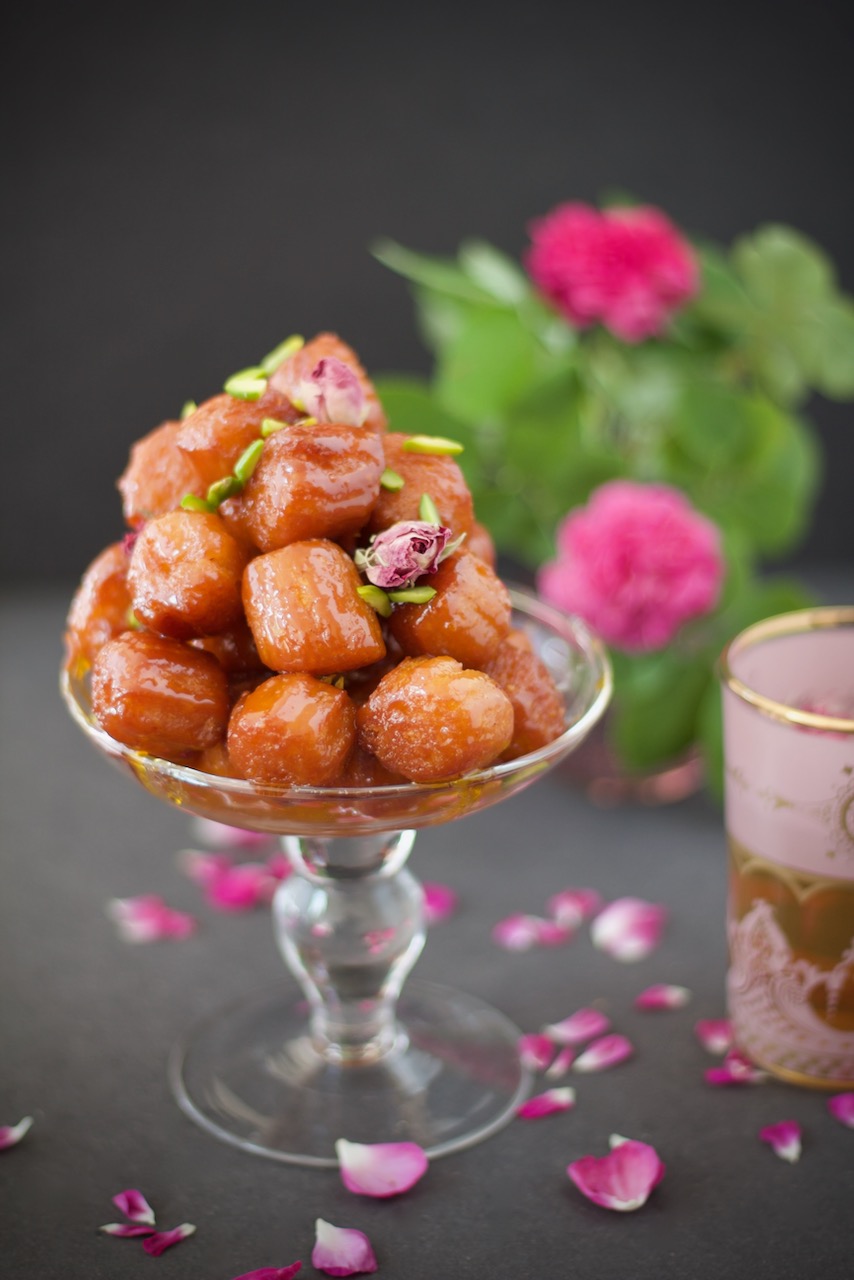
- The Star of the Show: Golden Saffron Bamieh.
- Traditional Treats: Delicate Nan-e Berenji (rice flour cookies) and various Persian pastries.
- The Accompaniments: Bowls of Ajil (savory nuts) and, of course, endless glasses of steaming Persian tea.
It’s a time of laughter, bonding, and pure indulgence. To truly capture the festive spirit of this day, I’ve found a beautiful Gilaki song themed around Shirini Khoran for you to enjoy!
NAMZADBAZI – THE ROMANTIC “FINACÉ-PLAY” – نامزد بازی
Namzadbazi is a beautiful, fluttering time before the wedding that most couples look back on with the fondest memories. For Ziba and Nika, this period begins the moment they are engaged and lasts until the day they say “I do.”
In traditional settings, the couple meets under the watchful (but often smiling) eyes of their family members. Even with the family nearby, the air is thick with romance. It is a time of:
- Stolen Glances: Throwing loving looks across the room while sipping tea.
- Butterflies: That wonderful, nervous excitement of being newly promised to one another.
- Secret Moments: If they are lucky, they might even manage to steal a quick, secret kiss when no one is looking!
It is a season of pure anticipation—a chance for the couple to fall even more deeply in love before their lives officially join as one.
SAGDOOSH – THE HEART AND SOUL OF THE WEDDING PARTY – ساقدوش
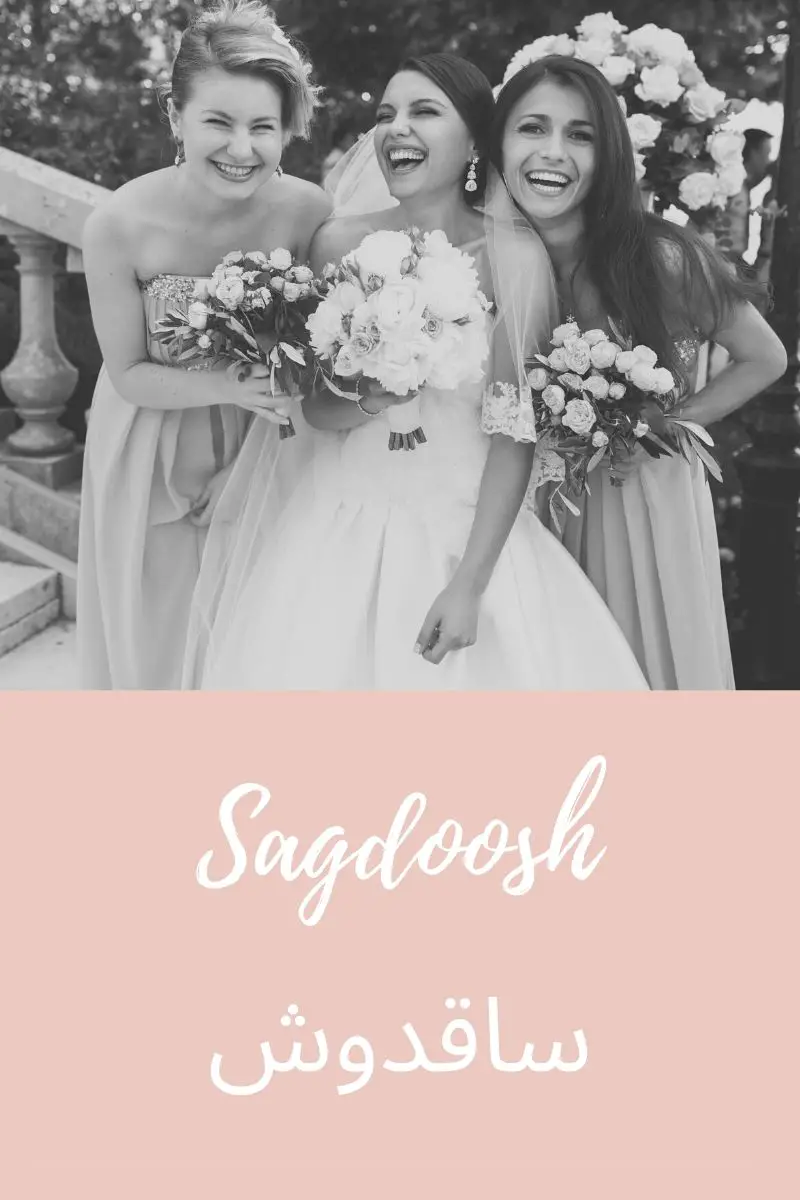
In a Persian wedding, the bride and groom aren’t on their own. They are accompanied by their Sagdoosh—the traditional Persian equivalent of bridesmaids and groomsmen.
THE SHAHBALAH AND THE BRIDEMAIDS
- Sagdoosh-e Damad (Groomsmen): Also known as Shahbalah, Nika chooses 2 to 4 of his closest friends to stand by his side. Their first big task? Helping him get dressed and ready for the ceremony.
- Sagdoosh-e Aroos (Bridesmaids): On the other side, Ziba is surrounded by her best friends, who share in the excitement and the preparations.
A BEAUTIFUL GESTURE
One unique tradition is that the couple provides everything the Sagdooshs need. From the elegant dresses and suits to the shoes, the bride and groom purchase and provide the wedding attire for their inner circle as a thank-you for their friendship.
MORE THAN JUST A TITLE
Being a Sagdoosh comes with heartfelt responsibilities:
- Moral Support: They are the “calm in the storm,” providing emotional strength to the couple.
- The “Smile” Ambassadors: A Sagdoosh is expected to have a warm, open smile for the couple and their families at all times.
- The Party Starters: Most importantly, they are responsible for the energy of the wedding, ensuring the mood stays joyful, the dance floor stays full, and the celebration never stops!
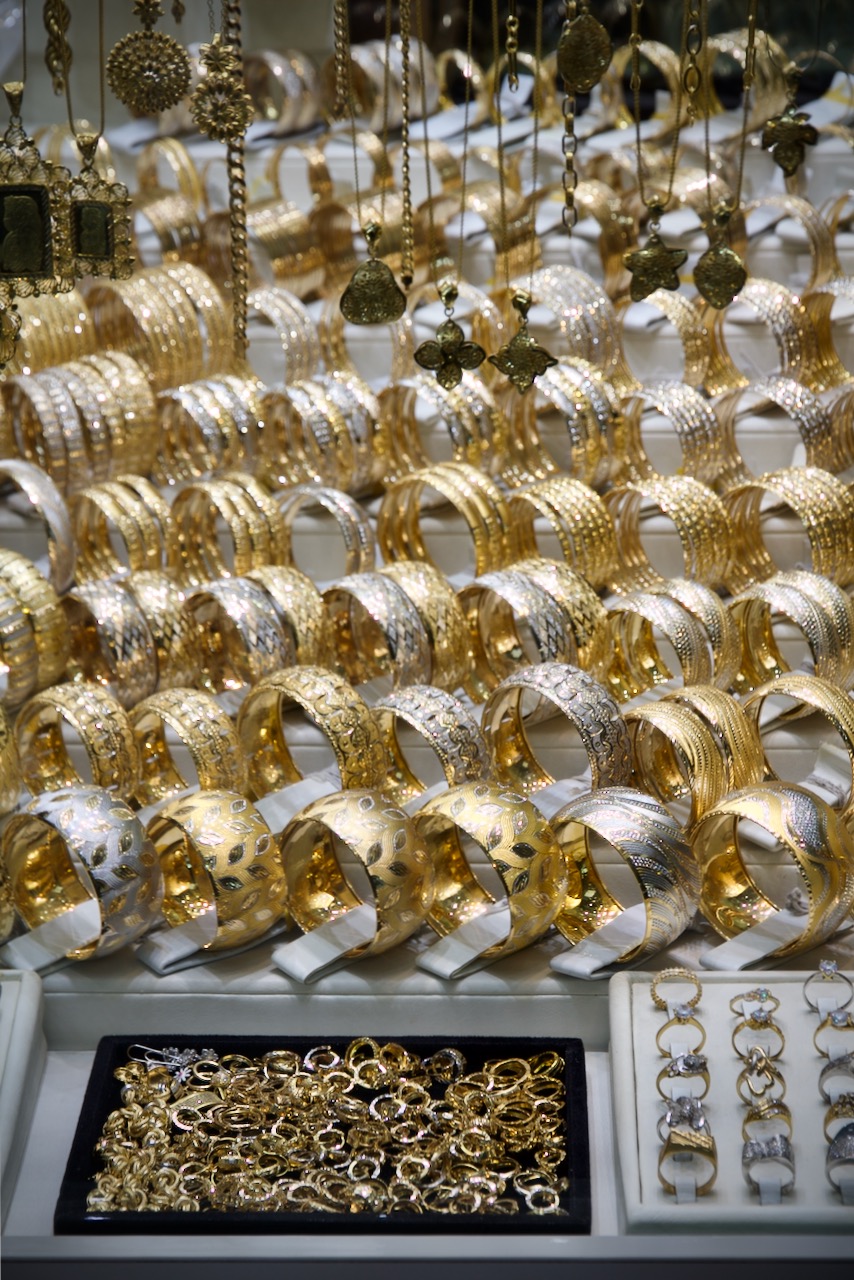
KHARID – THE ULTIMATE WEDDING SHOPPING TOUR – خرید
With the wedding date approaching, Ziba and Nika head to the bazaar for a very special tradition: the Kharid. This isn’t just a simple errand; it’s a festive shopping tour filled with excitement.
A SHARED JOURNEY
The couple isn’t alone on this trip. They are accompanied by their closest confidants—perhaps Ziba’s sister or best friend and Nika’s best man, who will serve as their Sagdoosh on the big day. Together, they navigate the glittering stalls of the bazaar.
THE SHOPPING LIST OF DREAMS
The primary focus of the Kharid is choosing the items that will define their union:
- The Gold: They select exquisite jewelry for Ziba and, most importantly, their matching wedding rings.
- The Attire: Ziba finds her dream wedding dress, while Nika chooses his suit. These are ordered together, marking a major step toward the ceremony.
- The Sofreh Accessories: They also pick out essential items for the wedding table (Sofreh Aghd), such as the traditional mirror and candlesticks, which symbolize light and the bright future ahead.
A BEAUTIFUL EXCHANGE
There is a lovely tradition of reciprocity during the Kharid: Nika pays for everything Ziba chooses, and in return, Ziba pays for Nika’s wedding attire. Even the Sagdoosh are looked after—they are fitted for their outfits, and the couple usually surprises them with a small gift as a token of appreciation for their support.
JAHAZ BARAN – THE GRAND CARAVAN OF THE DOWRY – جهاز بران
About a week before the wedding, the streets come alive with the Jahaz Baran (also known as Tabagh Baran). This is the day when all of Ziba’s gifts, her Jahaziyeh (dowry), and her clothing are moved into the couple’s future home. It is a community celebration where everyone dresses in their finest clothes to help with the “grand move.”
A PARADE THROUGH THE TOWN
Imagine a vibrant caravan winding through the village or neighborhood:
- The Procession: The dowry is carried on carts or by traditional carriers. In more traditional rural settings, you might even see horses, camels, or donkeys adorned for the occasion.
- The Bride’s Entrance: Ziba rides a horse, followed by her friends who carry decorative trays (Tabagh) on their heads, filled with household treasures.
- The Mirror of Light: Leading the way is the caravan leader, holding a mirror to reflect light and a bright future onto the path ahead.
THE RITUAL OF “GHEYCHI ZADAN”
Ziba’s dresses are placed on a tray and covered with a symbolic green silk cloth. Along the way, her belongings are presented, and she receives gifts in return.
One of the most important protective rituals is the Gheychi Zadan. A piece of clothing is ceremonially cut with scissors by a woman who is herself happily married. This tradition is believed to protect the young couple from misfortune and “evil eyes.”
MUSIC AND CELEBRATION
The air is filled with the sound of musicians singing and playing traditional instruments, announcing the good news to the entire community. And here’s a playful detail: if Ziba hasn’t received enough gifts by the time she reaches the new house, she might playfully refuse to get off her horse until her wishes are met!
HANA BANDAN – THE HENNA CEREMONY AND RITUAL CLEANSING – حنابندان
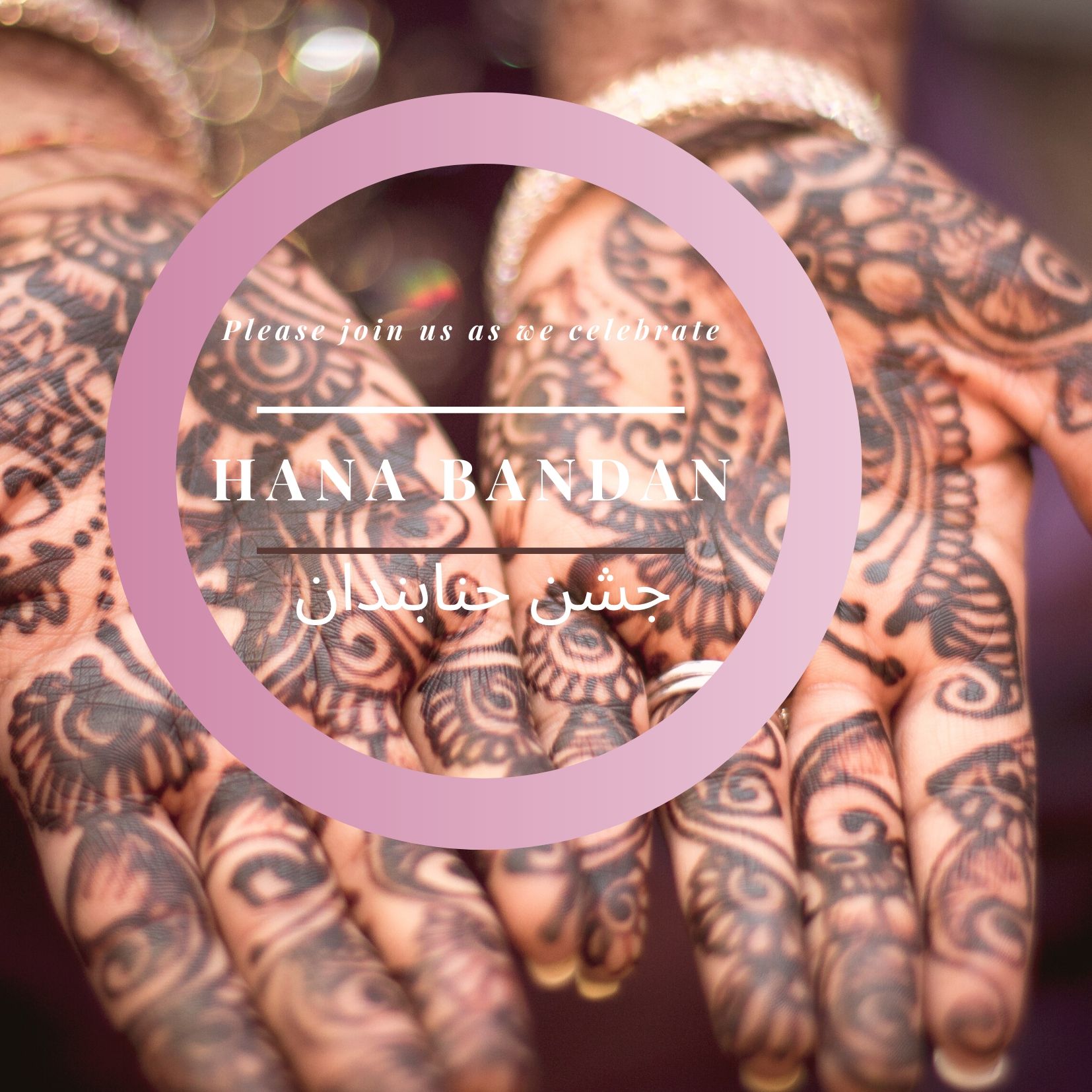
Just one day before the wedding, the final preparations begin with a deep, spiritual cleansing. This is the Hana Bandan, a ritual that is part spa day, part community festival, and part “bridal shower.”
THE HAMMAM AND THE STREET BARBER
Ziba and Nika head separately to the Hammam (traditional bathhouse) to be washed and massaged.
- For Ziba: It is a day of total transformation. She undergoes a complete body hair removal (except for her hair, of course! 🙂), her eyebrows are perfectly shaped, and she is pampered until she glows.
- For Nika: After his bath, the town barber is called. In a charming tradition, Nika sits right in the middle of the street to be shaved and groomed. Neighbors and friends surround him, singing loudly and showering him with coins and sweets.
To celebrate, the community is treated to Halvay-e Angosht Pich (a special rice flour halva), nuts, and tea. Even a special sesame bread is distributed throughout the neighborhood to share the joy.
THE NIGHT OF SYMBOLS – HENNA AS LUCK
As evening falls, family and friends gather at the couple’s new home or the bride’s parental house for a farewell ceremony. In Persian culture, Henna symbolizes happiness, goodness, and luck.
The ritual follows a specific tradition. A happily married woman, whose parents are both still living, carries dry henna into the room in a silver or copper bowl (Tashtak). As she prepares the paste, eight women surround the couple, clutching decorative cloths while they sing and dance in celebration.
Traditional motifs painted on the skin include:
- Birds and Flowers: Symbols of nature and beauty.
- The Tree of Life (Thuja): A powerful symbol of fertility.
- Stars and the Moon: Bringing celestial light to the marriage.
SONGS OF FAREWELL
Once Ziba is decorated and her hair is touched with henna, she is draped in a veil with red lace. She is led to the center of the room to the sound of traditional folk songs like:
“Aroos Hana mibande, Del be khoda mibande”
(The bride applies henna and binds her heart to God).
“Hanna Hanna avordim, dokhtaretoonro bordim”
(We brought the henna, and in exchange, we are taking your daughter with us).
To finish, the couple’s hands and feet are wrapped in green silk cloths. They leave the henna to set overnight, washing it off the next morning—ready to face their wedding day with the color of luck on their skin.
THE MODERN PERSIAN ENGAGEMENT – WHERE ORIENT MEETS MODERNITY
The days of purely arranged marriages are largely a thing of the past. Today, the “Orient meets Modernity.” Most couples have known each other for a long time, share the same friend circle, and often already live together. The decision to marry is their own.
Just like in Europe or America, the journey usually begins with a romantic, creative proposal. But even in a modern world, respect for the family remains the cornerstone of Persian culture.
THE MODERN KHASTEGARI – A MARK OF RESPECT
Even today, a formal meeting is arranged so the parents can get to know one another. The groom’s family arrives with a stunning bouquet, and the conversation flows:
- The Exchange: Parents learn about the bride’s education, career, and her vision for the future. Similarly, the young man’s qualities are presented.
- Family Bonding: This is the moment two families begin to merge. It’s about ensuring a harmonious partnership where the couple has the full support of their loved ones.
- Modern Dowry: Topics like Mahriyeh and Jaheeziyeh are still discussed, though they look different today. A Jaheeziyeh (dowry) might now include high-tech electronics or even an apartment—a symbolic gesture of a mother’s love for her daughter.
ONE BIG CELEBRATION
In the modern city, traditions like Bale Boroon, Shirini Khoran, and Namzadi are often combined into one spectacular day. Depending on the couple’s style, this can be an intimate family gathering at home or a loud, colorful party in a rented venue with a professional wedding planner.
THE RITUALS OF THE DAY
- The Rings & Hafez: The host presents engagement rings on a tray adorned with roses and a book of Hafez’s poetry to symbolize eternal love.
- The “Lililili”: Guests erupt into traditional trilling cries of joy the moment the couple exchanges their rings.
- The Kiss: Attendants hold a cloth before the couple’s faces, shielding them for a private first kiss as an engaged pair.
- Esfand: The family burns wild rue (Esfand) to ward off the “evil eye,” filling the air with protective smoke while guests enjoy fruit, tea, and sweets.
THE “HENNA NIGHT” & BRIDAL SHOWER
The night before the wedding, the Hana Bandan takes place—think of it as a Persian “Bridal Shower” or “Goodbye Party.”
Friends and family arrive with musicians, carrying trays of henna, gold, and gifts. The henna is kneaded with water and good wishes, then placed into the palms of the couple along with gold coins or bills. Whether it’s traditional or modern, the party often lasts until the sun rises on the wedding morning!
SAGDOOSH – MORE THAN JUST BRIDESMAIDS
Today’s Sagdoosh (bridesmaids and groomsmen) are the ultimate support system. While they all dress in matching colors to create a beautiful “eye-catcher” for photos, the Maid of Honor has a legal role: she is the one who officially signs the marriage certificate.


INGREDIENTS PERSIAN SAFFRON BAMIEH
INGREDIENTS BLOOMED SAFFRON
1/2 tsp saffron threads
10 ml boiling water
INGREDIENTS GOLDEN SYRUP
200g sugar
100ml water
2 tbsp lemon juice
2 tbsp rosewater*
4 cardamom seeds* (crushed)
2 tbsp honey*
INGREDIENTS BAMIEH DOUGH
200ml water
50g butter
2 tbsp honey*
125g wheat flour
1/4 tsp salt
1/2 tsp vanilla extract*
2.5 eggs
INGREDIENTS TOPPING (OPTIONAL)
Rose petals*, ground
pistachios*, slivered
STEP-BY-STEP PREPARATION BAMIEH
1.BLOOM THE SAFFRON
Grind the saffron and steep in hot water for 10 minutes.
2. MAKE THE GOLDEN SYRUP
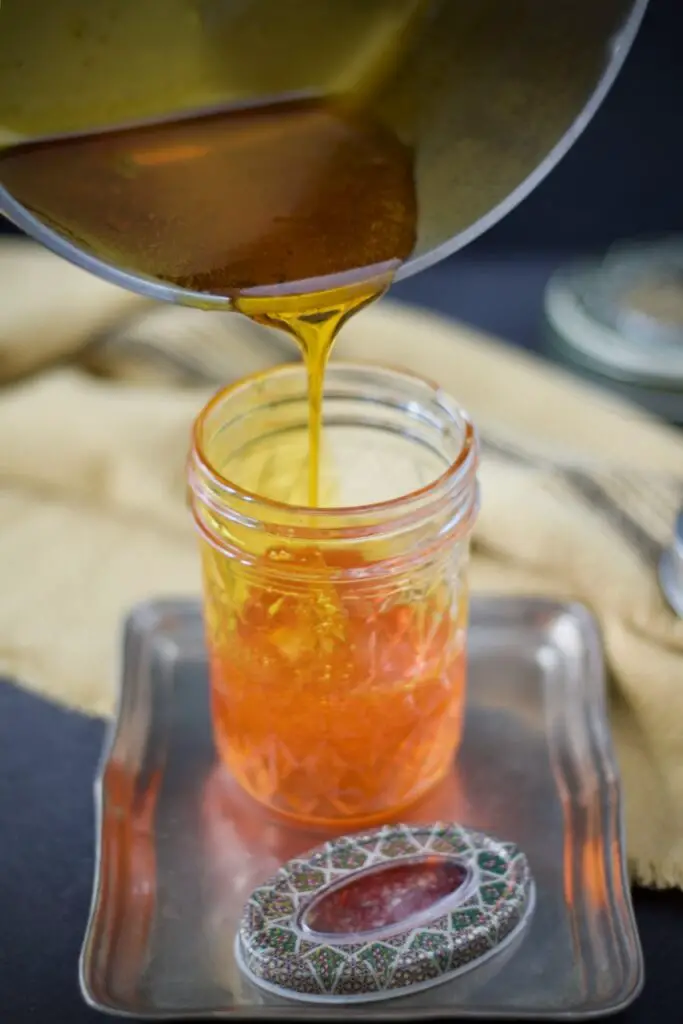
Simmer sugar and water in a pot for 5 minutes (do not stir!). Brush the inner sides of the pot with lemon juice to prevent crystallization.
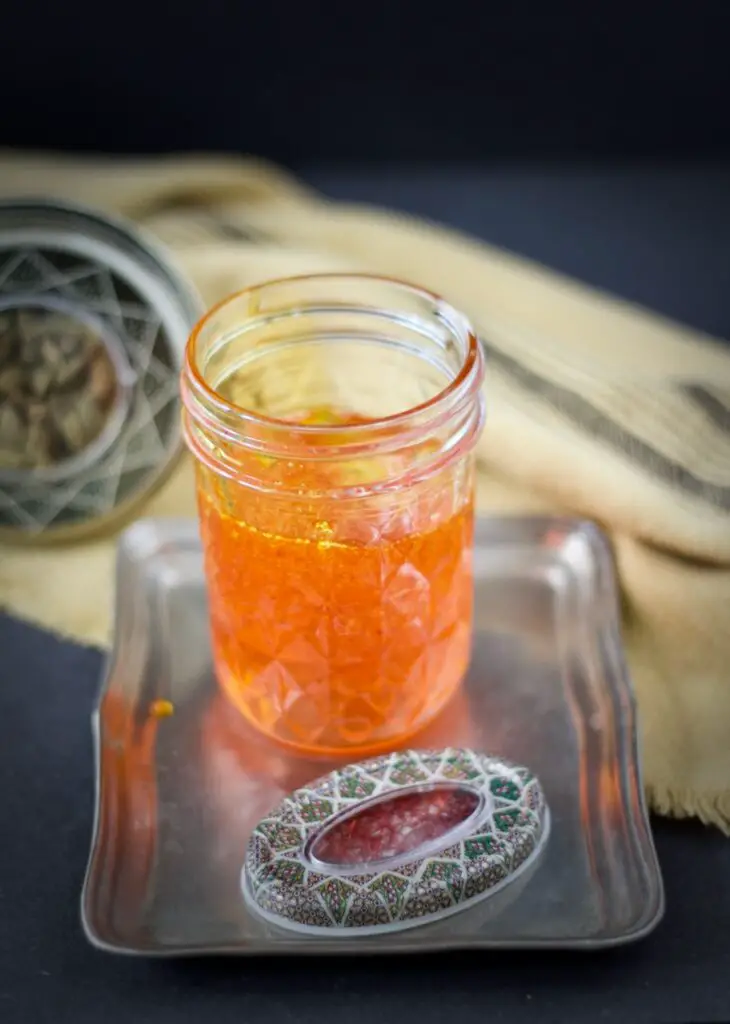
Add the rest of the lemon juice, saffron, rosewater, crushed cardamom, and honey. Once it thickens slightly, let it cool down completely.
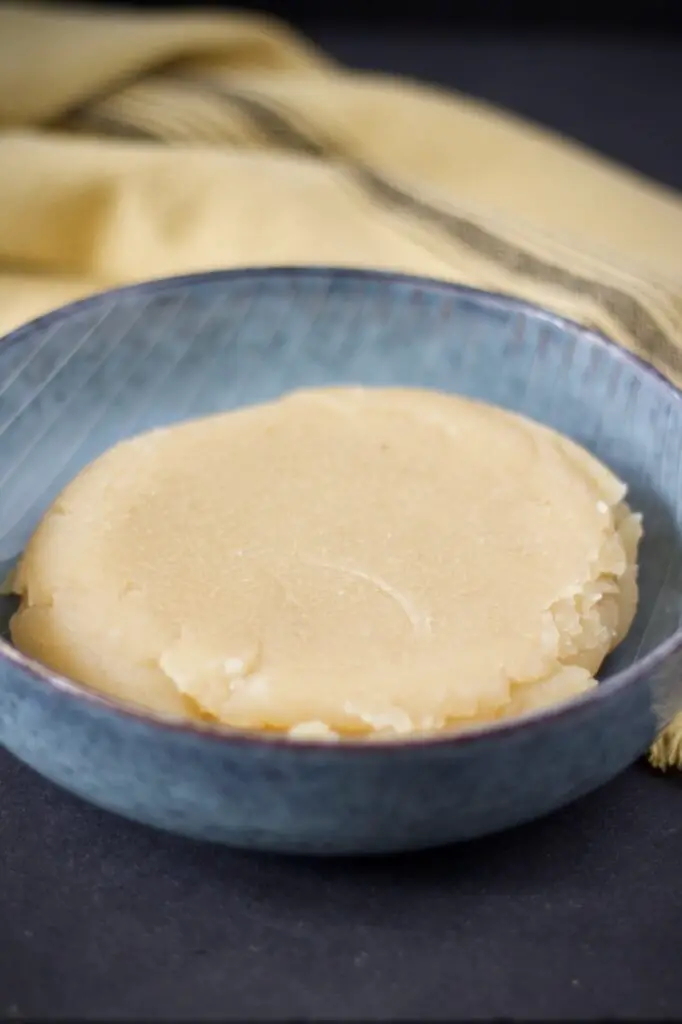
3. PREPARE THE CHOUX PASTRY DOUGH
Boil water, butter, and honey.
Sift flour and salt together, then dump it all at once into the boiling water. Stir vigorously with a wooden spoon.
Keep pressing the dough against the bottom of the hot pot for about 15 minutes over medium heat. This “burns” the dough, creating the hallow pockets during frying.
Let the dough cool until lukewarm. Beat in the eggs one by one until the dough is glossy and falls slowly from the spoon.
4. FRY THE DOUGH
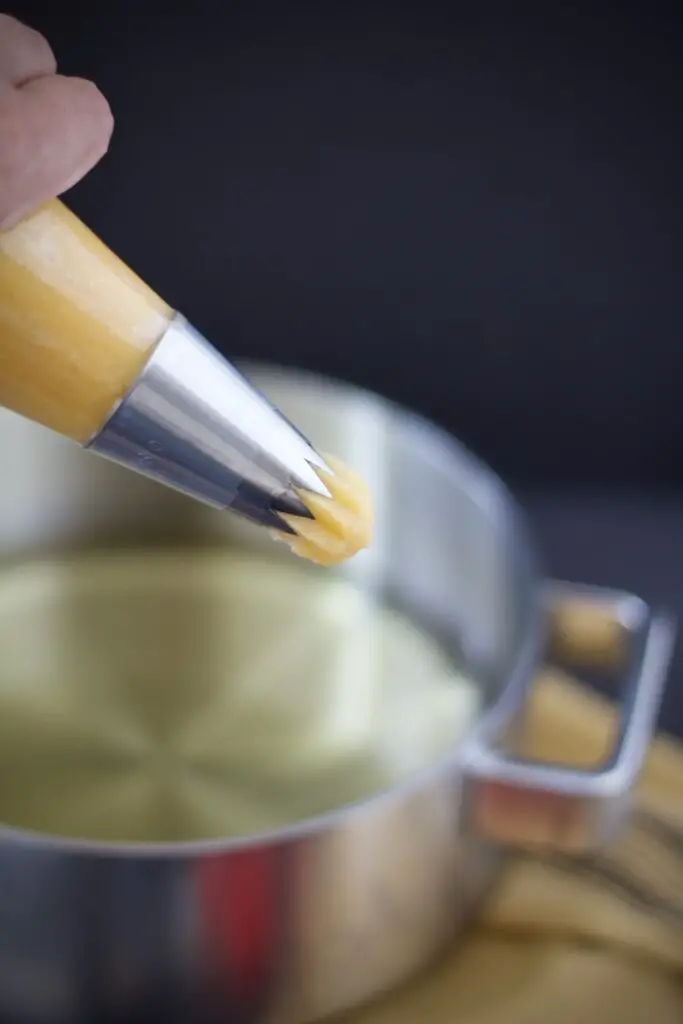
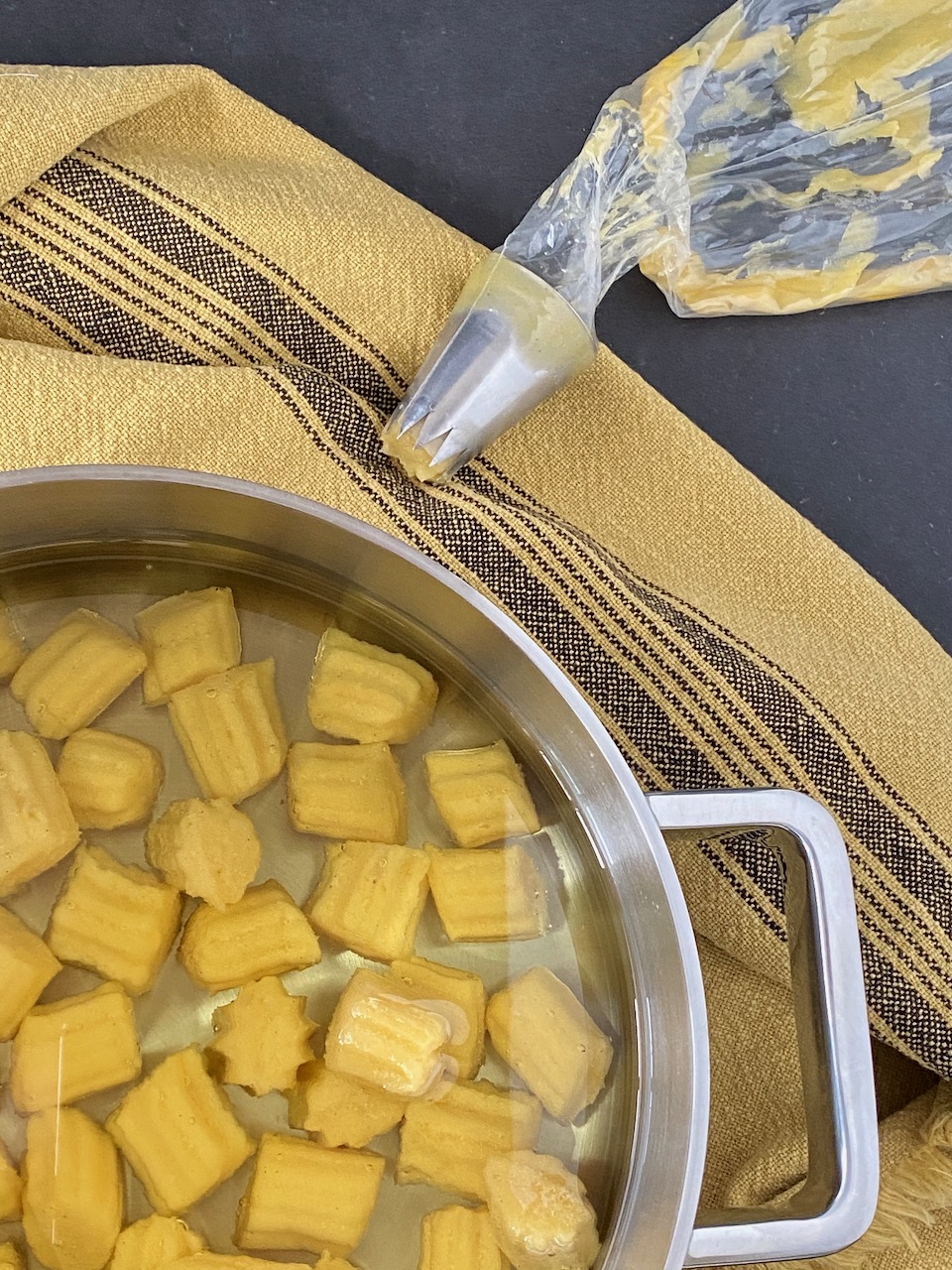
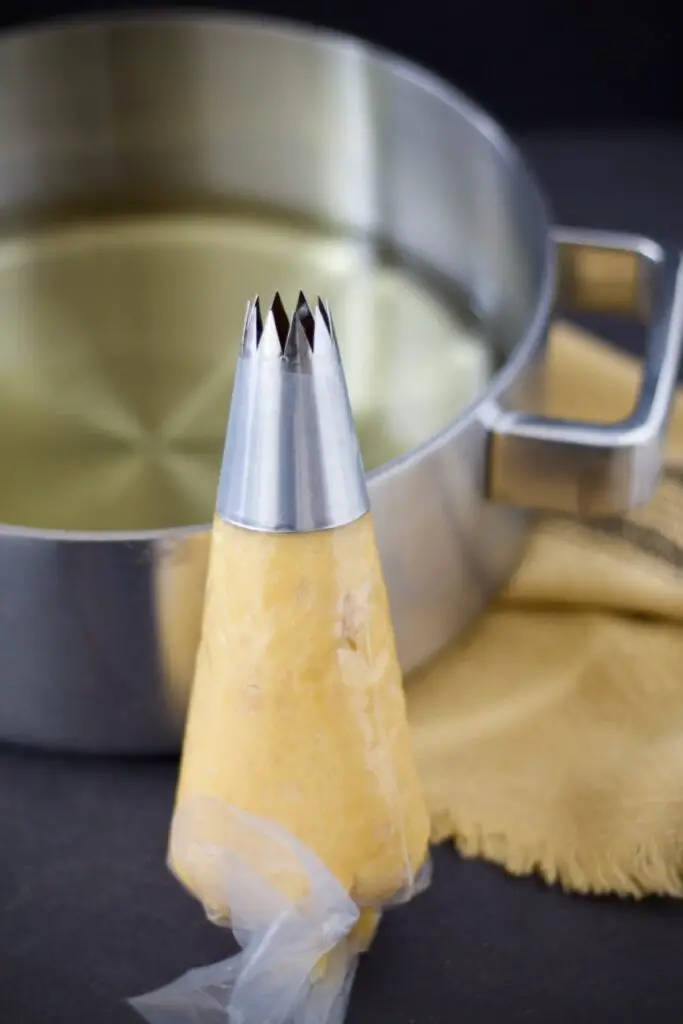
Fill a piping bag with a star nozzle*.
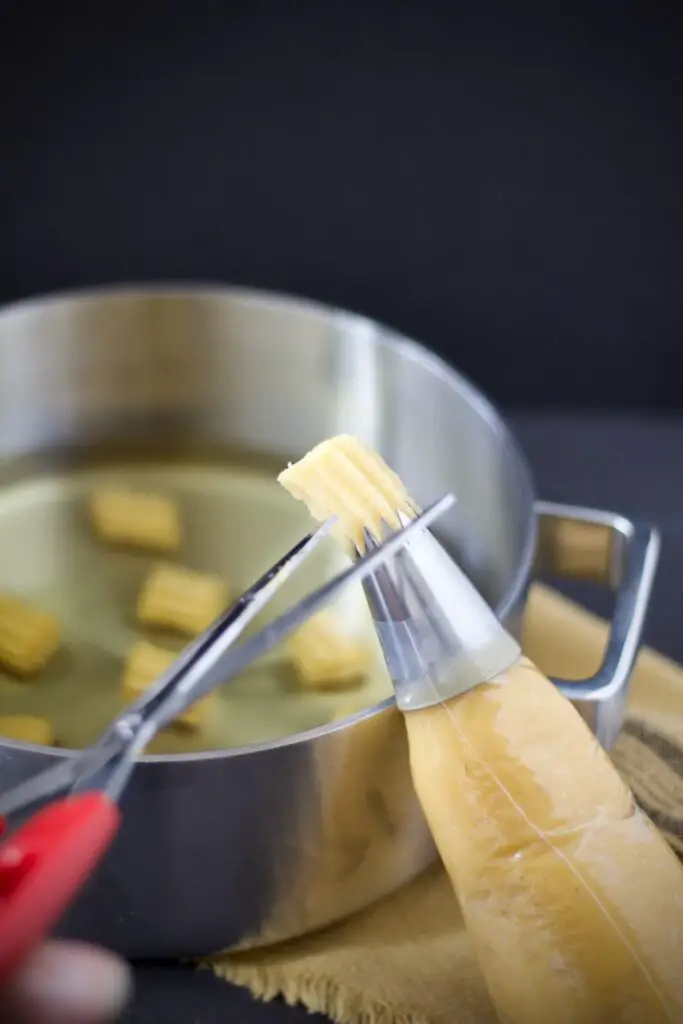
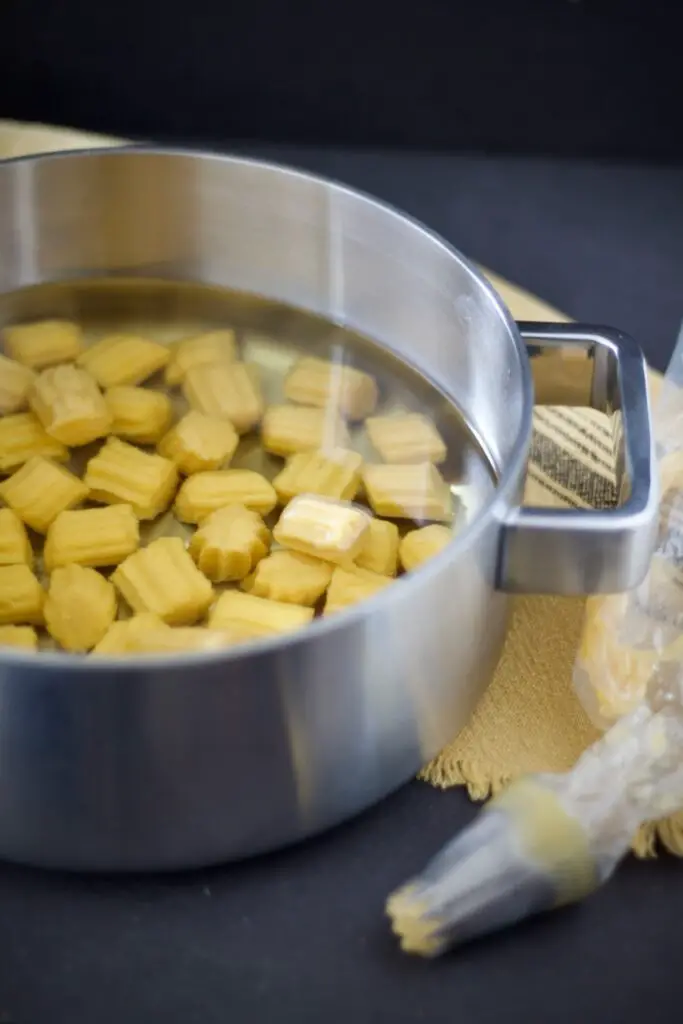
Crucial: Pipe the dough into cold oil, cutting them into small pieces with a scissor.
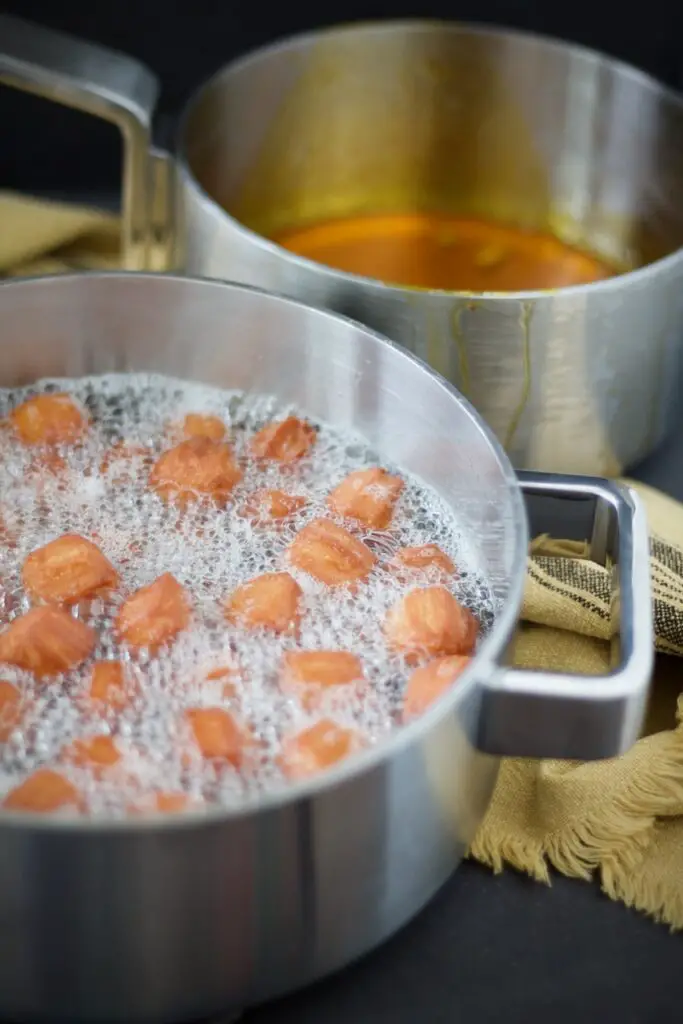
Turn on the heat to medium. Be patient! It takes 25–30 minutes to get that perfect golden-brown crunch. If you rush it, the inside will stay raw.
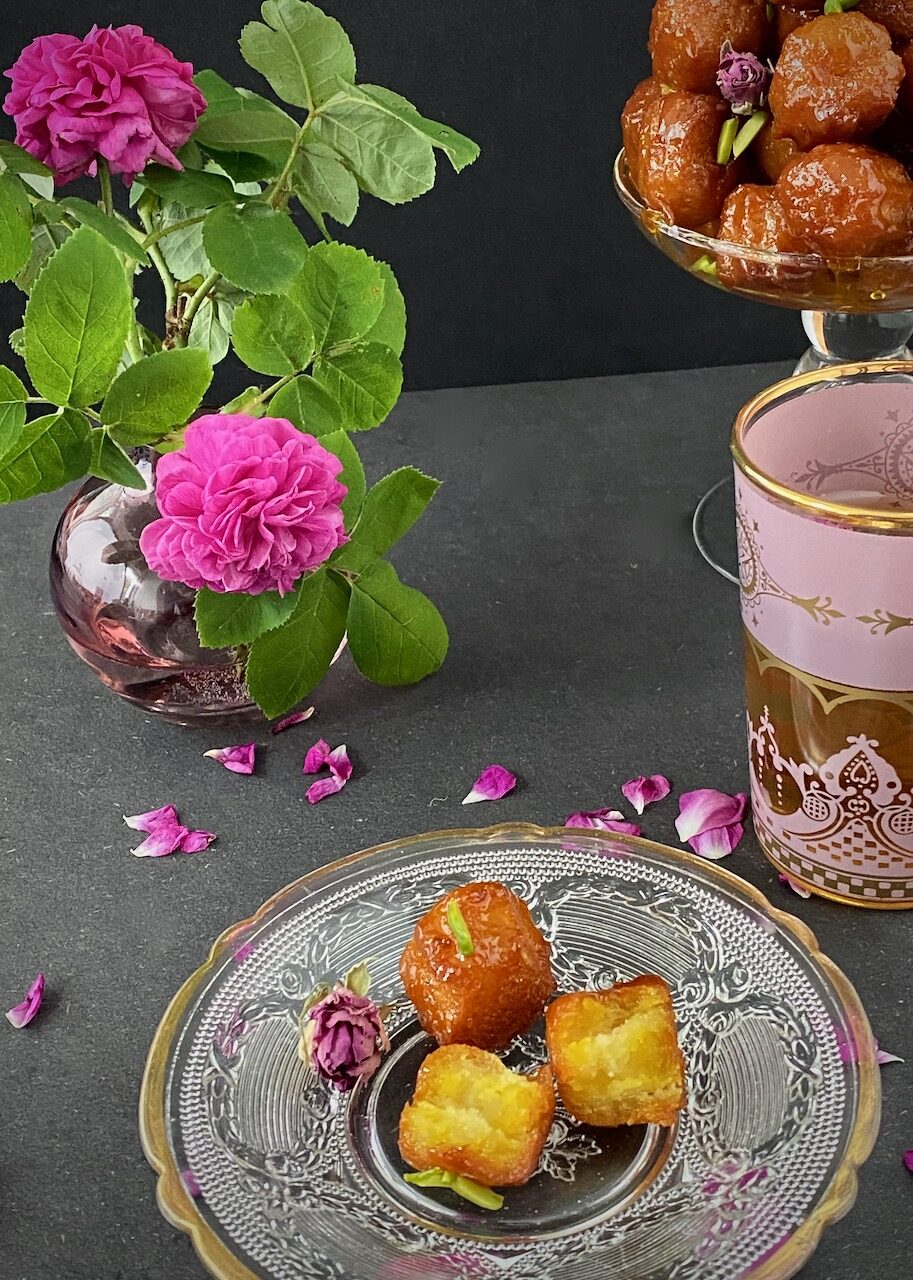
Toss the hot Bamieh into the cold syrup for 2–3 minutes. Drain, sprinkle with pistachios and rose petals, and enjoy together with Zoolbia!
Befarmayid
Susan
The items marked with * are affiliate links, referral links. If you buy through this link, I get a small commission. The price stays the same for you and you can easily support my efforts. A big thank you ♥
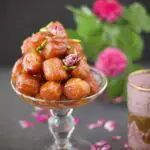
Saffron Bamieh and the Persian Engagement
Ingredients
INGREDIENTS PERSIAN SAFFRON BAMIEH
INGREDIENTS BLOOMED SAFFRON
- 1/2 tsp saffron threads
- 10 ml boiling water
INGREDIENTS GOLDEN SYRUP
- 200 g sugar
- 100 ml water
- 2 tbsp lemon juice
- 2 tbsp rosewater
- 4 cardamom seeds crushed
- 2 tbsp honey
INGREDIENTS BAMIEH DOUGH
- 200 ml water
- 50 g butter
- 2 tbsp honey
- 125 g wheat flour
- 1/4 tsp salt
- 1/2 tsp vanilla extract
- 2.5 eggs
- 1 l canola oil for frying
INGREDIENTS TOPPING (OPTIONAL)
- Rose petals ground
- pistachios slivered
Instructions
STEP-BY-STEP PREPARATION BAMIEH
BLOOM THE SAFFRON
-
Grind the saffron and steep in hot water for 10 minutes.
MAKE THE GOLDEN SYRUP
-
Simmer sugar and water in a pot for 5 minutes (do not stir!).
-
Brush the inner sides of the pot with lemon juice to prevent crystallization.
-
Add the rest of the lemon juice, saffron, rosewater, crushed cardamom, and honey.
-
Once it thickens slightly, let it cool down completely.
PREPARE THE CHOUX PASTRY DOUGH
-
Boil water, butter, and honey.
-
Sift flour and salt together, then dump it all at once into the boiling water.
-
Stir vigorously with a wooden spoon.
-
Keep pressing the dough against the bottom of the hot pot for about 15 minutes over medium heat. This “burns” the dough, creating the hallow pockets during frying.
-
Let the dough cool until lukewarm.
-
Beat in the eggs one by one until the dough is glossy and falls slowly from the spoon.
FRY THE DOUGH
-
Fill a piping bag with a star nozzle.
-
Crucial: Pipe the dough into cold oil, cutting them into small pieces with a scissor.
-
Turn on the heat to medium. Be patient! It takes 25–30 minutes to get that perfect golden-brown crunch. If you rush it, the inside will stay raw.
SOUP IN SYRUP
-
Toss the hot Bamieh into the cold syrup for 2–3 minutes.
-
Drain.
TOPPING (optional)
-
Sprinkle with pistachios and rose petals, and enjoy together with Zoolbia!
Have you cooked this or maybe another delicious recipe of mine? Feel free to leave me a comment below. If you tag your picture on Instagram with @labsalliebe and use the hashtag#labsalliebe, I won’t miss a post and will be happy to leave you a comment as well. Can’t wait to see your creations.
♥♥♥♥♥♥♥♥♥♥♥♥♥♥♥♥♥♥♥♥♥♥♥♥♥♥♥♥♥♥♥♥