When the aroma of roasted walnuts and tangy pomegranate molasses fills the house, I am instantly transported back to the shores of the Caspian Sea back to Gilan, the lush, green, rain-kissed province of northern Iran where I spent my summer holidays. I can still see myself standing barefoot on the beach, feeling the cool ocean breeze on my face, while the waves gently crashed in the background and clay pots simmered softly in the kitchen. For me, that unique combination of fresh herbs, rich roasted walnuts, and sour pomegranate is the true taste of Gilan.
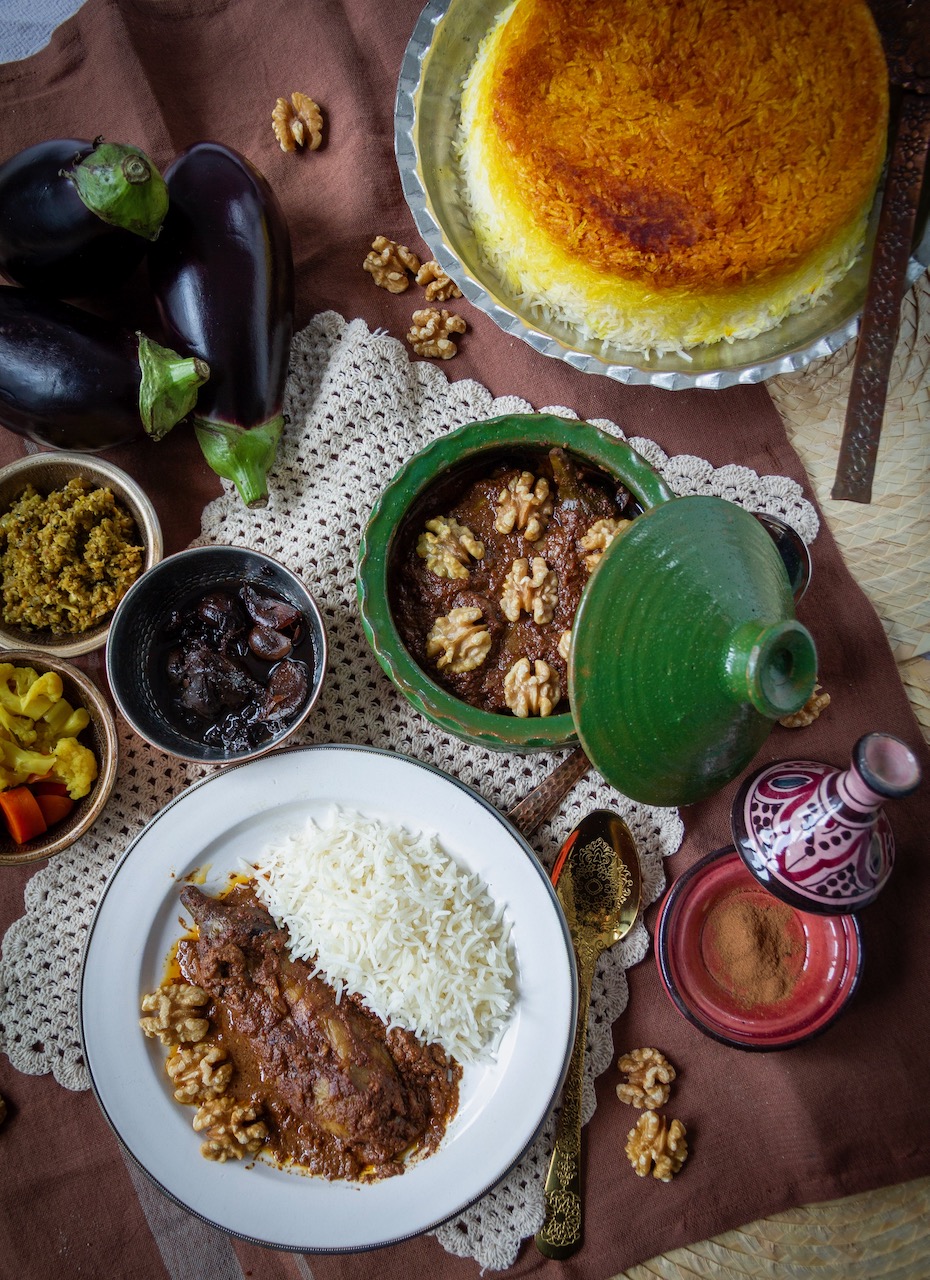
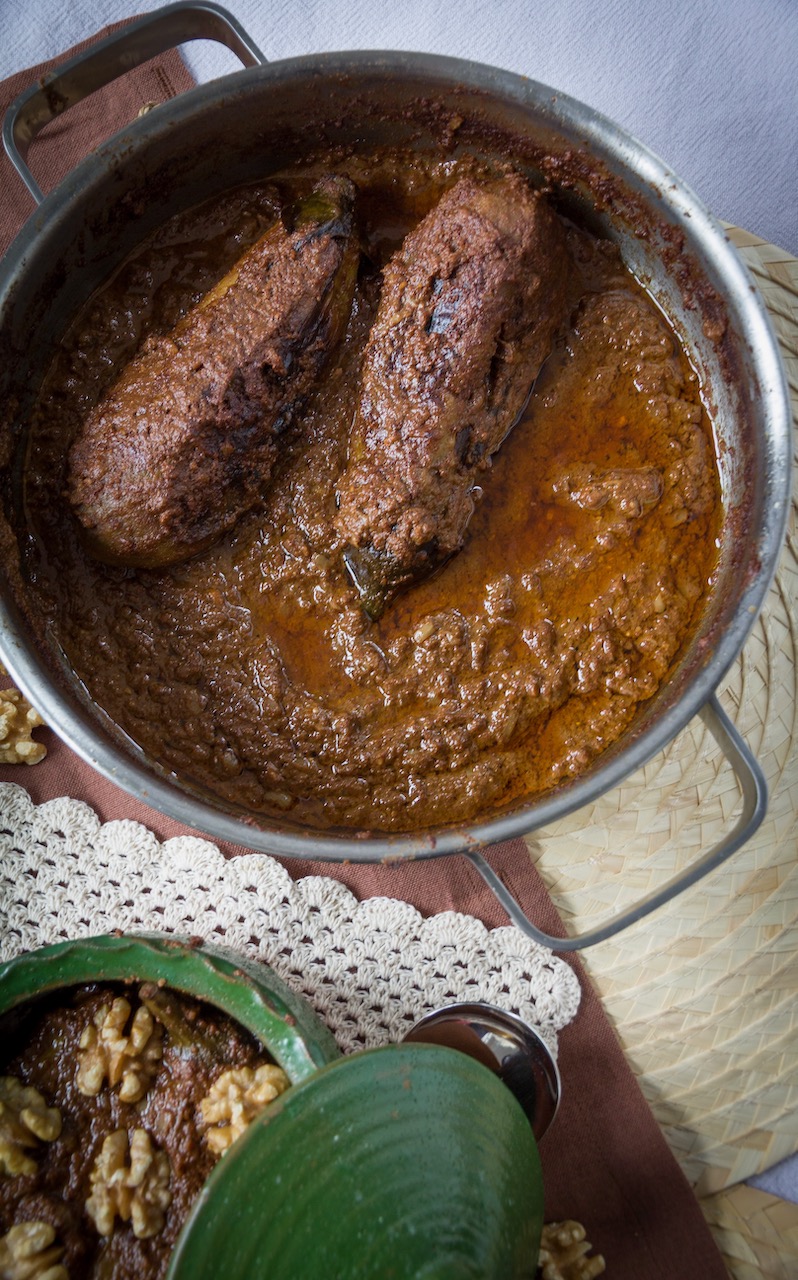
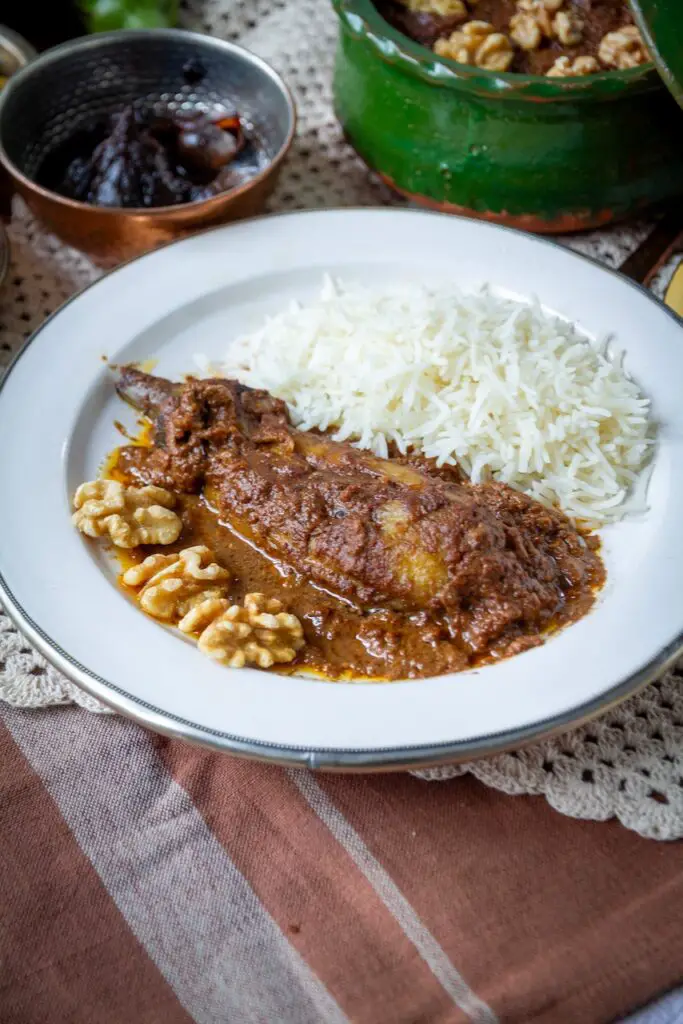
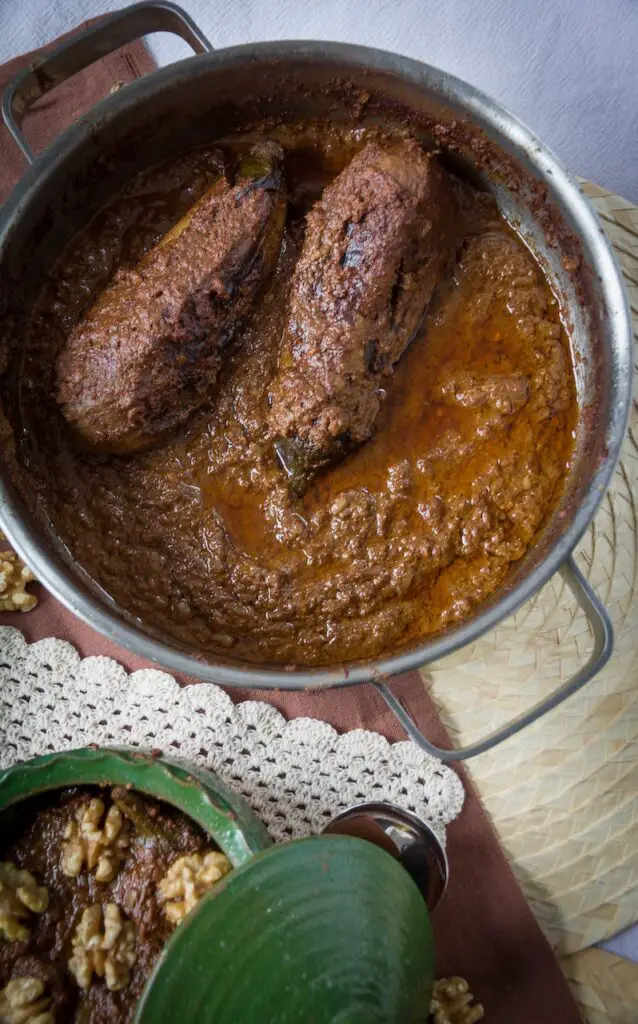
Shish Andaz-e Bademjan (شش انداز بادنجان) – vegan eggplants in a creamy walnut and pomegranate sauce is one of my absolute favorite dishes from this special region. Tender, pan-fried eggplants are gently braised in a velvety walnut sauce balanced with tangy pomegranate molasses. The result is a deeply aromatic, sweet-and-sour, naturally plant-based eggplant stew that captures the soul of Northern Iranian cuisine.
If you love Persian food and are already familiar with recipes like vegan Fesenjan or classic Fesenjan with lamb, Shesh Andaz is a must-try. This savory eggplant dish is a delicious celebration of how rich, unique, and vibrant the flavors of Gilan truly are.
Watch my preparation on Instagram
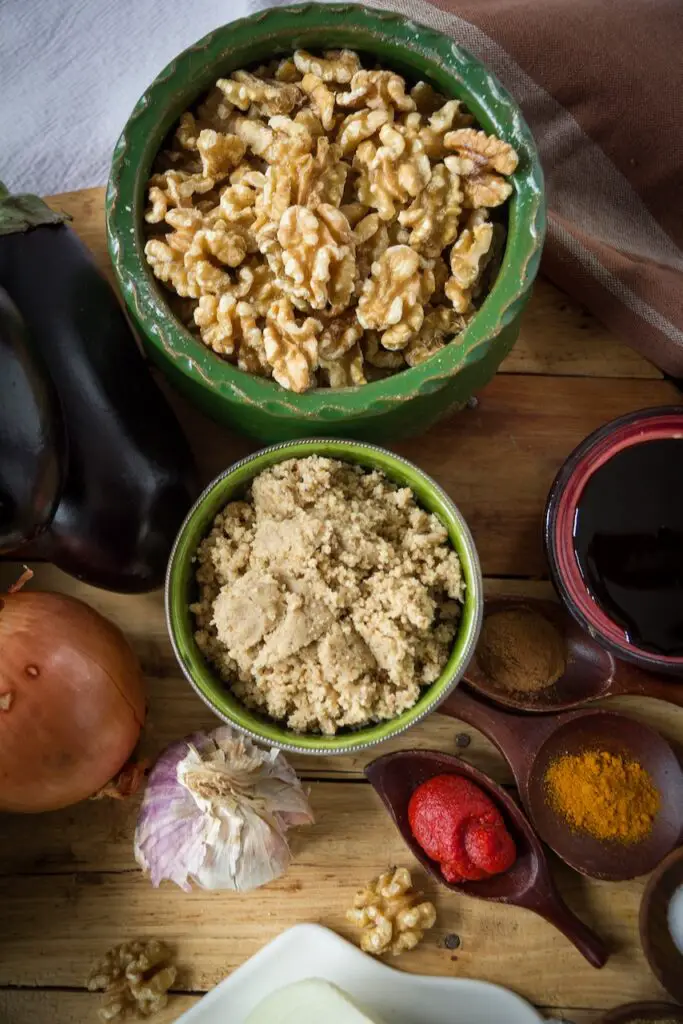
THE STORY BEHIND SHESH ANDAZ-E BADEMJAN
The name Shesh Andaz, often pronounced Shish Andaz, might sound a bit mysterious at first. In Persian, Shesh (or Shish) means six, while Andaz comes from a verb that means to throw, drop, or add in.
According to an old tradition from Northern Iran, this dish was originally made using six core ingredients that were added one by one into a traditional clay pot called a Gamaj. Depending on the region, the season, and what was fresh at hand, different variations were created. That is why you can find Shesh Andaz made with carrots, pumpkin, or like in this classic recipe, with silky eggplants, known as Bademjan in Persian.
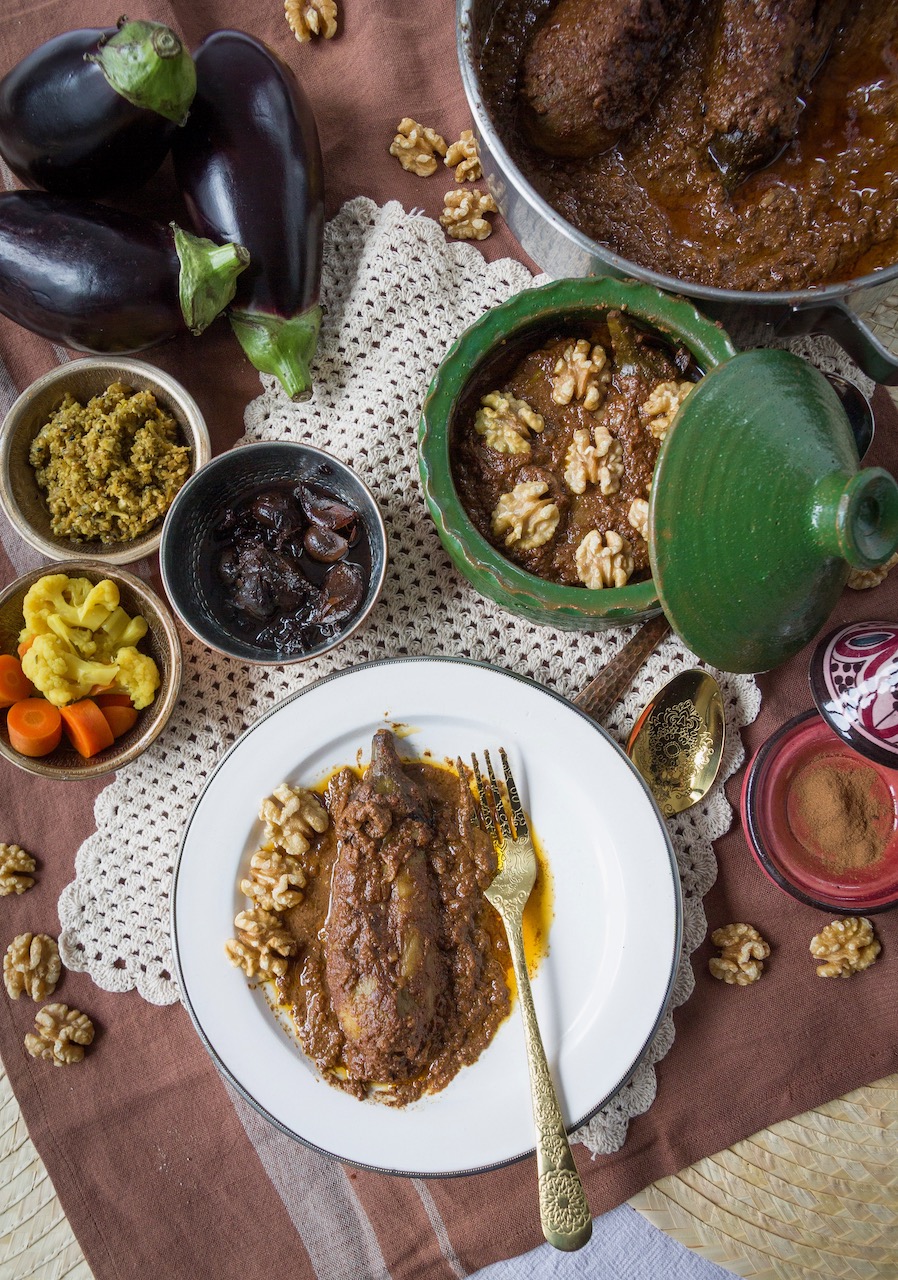
SHESH ANDAZ-E BADEMJAN FROM GILAN
In Gilan, the eggplant version is especially popular, thanks to the region’s humid climate, which provides ideal conditions for growing tender, flavorful eggplants. For Shish Andaz-e Bademjan, the eggplants are first pan-fried until golden brown, then gently simmered in a creamy sauce made from finely ground walnuts and tangy pomegranate molasses.
This pairing of walnuts and pomegranate is iconic in Northern Iranian cooking and closely mirrors the famous Fesenjan, the classic Persian walnut and pomegranate stew. But while Fesenjan has gained international fame, Shish Andaz-e Bademjan remains a hidden gem outside of Iran.
Traditionally, this special Persian eggplant recipe was reserved for festive celebrations like Chaharshanbeh Suri (the Persian Festival of Fire) and Norooz (Persian New Year). Rich, roasted walnuts were considered a precious ingredient, bringing an extra touch of celebration and comfort to the holiday table.
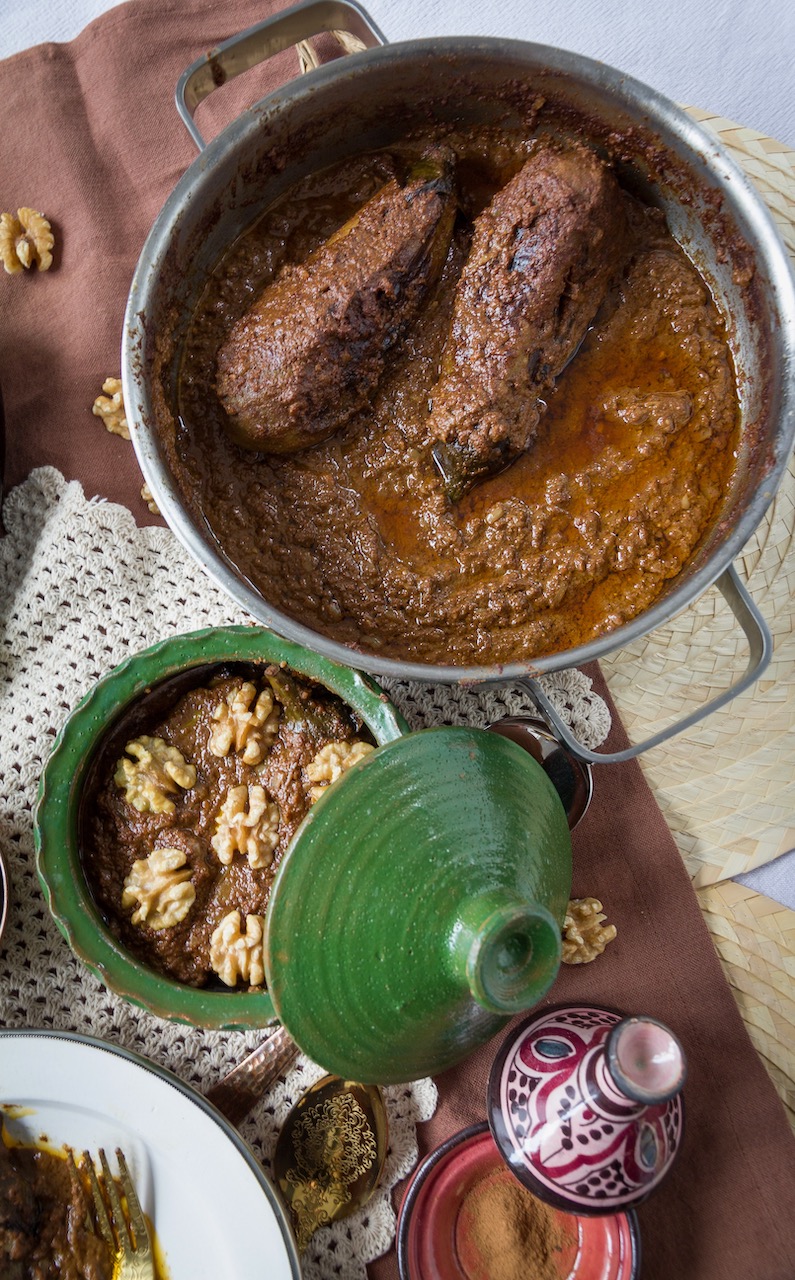
A PLATE FULL OF PROTECTION AND BLESSINGS
In our culture, the number six carries a special meaning that is closely tied to the “Night of Six” (Shab-e Shesh or Jashn-e Shab-e Kheyr). According to old folklore, the sixth night after a baby’s birth was considered a critical, protective moment for both mother and newborn. It was believed that they needed extra protection that night from the evil eye and mystical beings like “Sheshe” or “Al.” To keep them safe, the whole family would gather, burn Esfand (wild rue) to ward off bad energy, pray, laugh, and celebrate new life together.
No joyful family gathering is complete without a special meal, and Shesh Andaz was often the star of the table. The name beautifully connects the dish’s six core ingredients to the symbolic meaning of the sixth night, creating a bridge between culinary heritage and ancient traditions.
Even though we no longer believe in old myths or protective spirits today, I deeply love the feeling behind this custom. To me, it represents family, togetherness, and celebrating life’s special moments. After all, that is what good food is all about bringing people around the table, sharing stories, and offering a comforting taste of home. A steaming bowl of Shesh Andaz-e Bademjan, enjoyed with the people you love most, is truly one of the most beautiful ways to share a piece of home.
GILAN – THE GREEN OASI AND CULINARY GEM OF PERSIANS
To me, Gilan means open skies, nature, and endless greenery. When people think of Iran, they often picture vast deserts, arid landscapes, and historic oasis cities. Gilan, in northern Iran, is the exact opposite! It is a lush, vibrant green region tucked between the densely forested slopes of the Alborz Mountains and the expansive coast of the Caspian Sea. The warm, humid climate allows nature to truly explode. Between the vibrant green tea plantations in Lahijan, glowing rice paddies, and thick mixed forests, it feels like stepping into a completely different world. Scenic villages, rivers, and waterfalls dot the landscape, and everywhere you look, something is growing and thriving.
Gilan is celebrated as one of Iran’s most important culinary regions. Rasht, the provincial capital, has been recognized by UNESCO as a “City of Gastronomy” and embodies the incredible culinary diversity of Northern Iran. In Gilan, cooking is a true expression of hospitality, tradition, and a deep connection to nature. Family recipes are passed down through generations, cooked together, and, of course, enjoyed together.
It is this unique blend of nature, fresh local ingredients, and warm hospitality that makes Gilani cuisine so special to me. You can almost taste a piece of this green, fertile landscape by the Caspian Sea in every single dish.
RECIPES FROM GILAN
This extraordinary nature shapes both the people and the food of Gilan. The proximity to the Caspian Sea, the fertile soils, and an abundance of wild herbs have created a cuisine that stands distinctly apart from other regions of Iran. Fresh herbs, walnuts, pomegranate, garlic, eggplants, wild Caspian fish, and fragrant aromatic rice are at the heart of Gilani cooking. On my blog, you can already find a few delicious recipes from this region, such as:
Mirza Ghasemi – Easy Persian Smoky Eggplant and Tomato Appetizer
Zeytoon Parvardeh – Persian marinated Olives
Ash-e Anar – Thick Pomegranate Soup with Meatballs and Mint Oil آش انار
Torsh-e Tareh – Vegetarian Herb Stew with Egg
Vavishka – A Quick Persian Skillet Dish
Vegan Khoresht-e Fesenjan
Khoresht-e Kadu Halvai – Pumpkin and Chicken Pan خورش کدو حلوایی
Mahi Kabab ba Somagh – Sumac Roasted Fish
Nan-e Keshta – Skillet Pumpkin Flatbread
Kaka Kadu Halvai – Persian Pumpkin Pancakes
Reshteh Khoshkar – Gluten Free Sweet Pastry رشته خوشکار
THE SECRET TO THE PERFECT WALNUT SAUCE
Just like with classic Fesenjan, the secret to a great Shesh or Shish Andaz is all in how you cook the walnuts. When you simmer finely ground walnuts over low heat, they slowly release their natural oils, giving the sauce its signature velvety texture.
Here is the special trick: every hour, splash ice-cold water or toss a few ice cubes into the gently simmering pot. This sudden drop in temperature shocks the walnuts, forcing them to release even more oil.
Step by step, this creates a wonderfully smooth, glossy walnut-pomegranate sauce without needing a drop of cream or added oil. The patient, slow cooking draws out a deep, nutty flavor that gives Shesh Andaz its irresistible character.
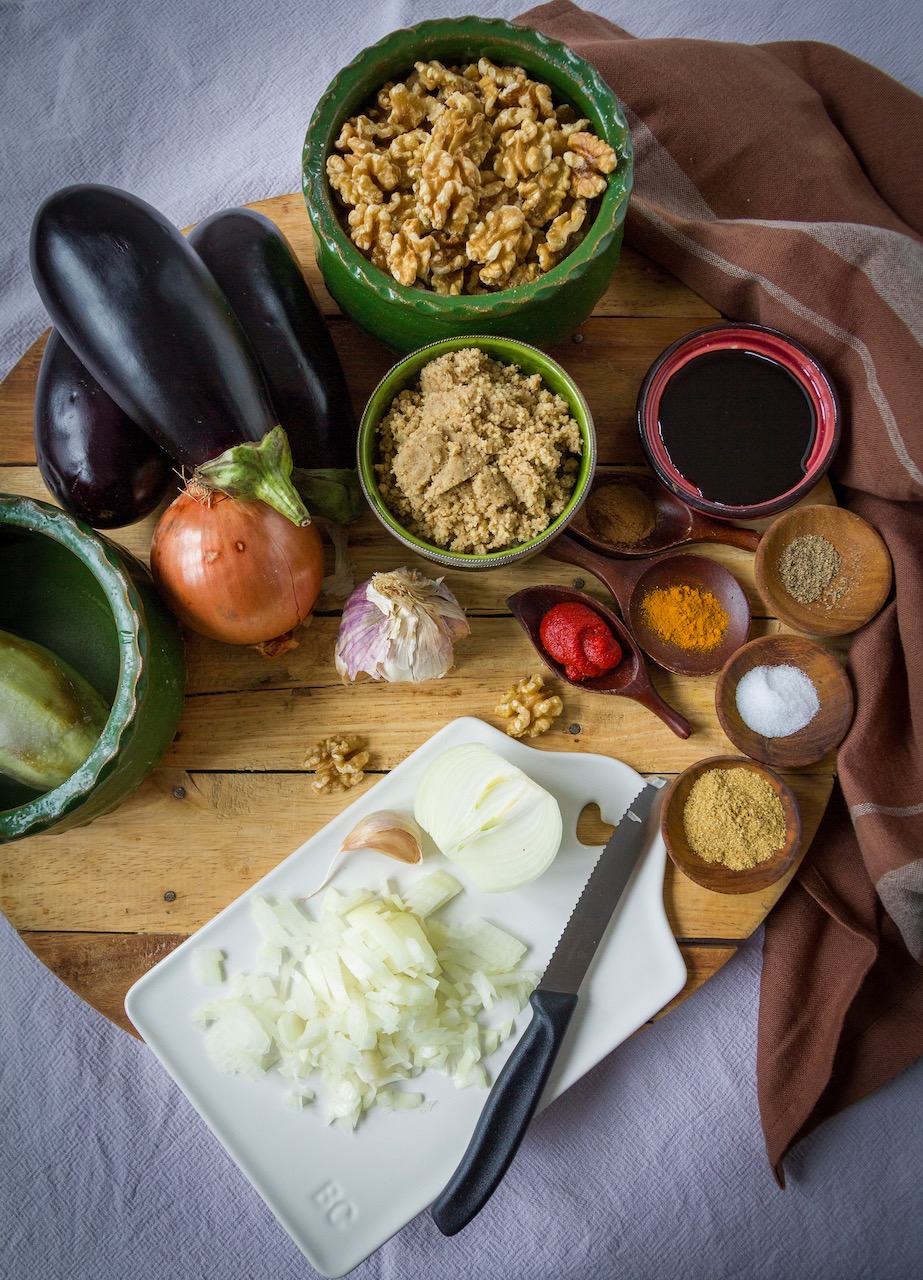
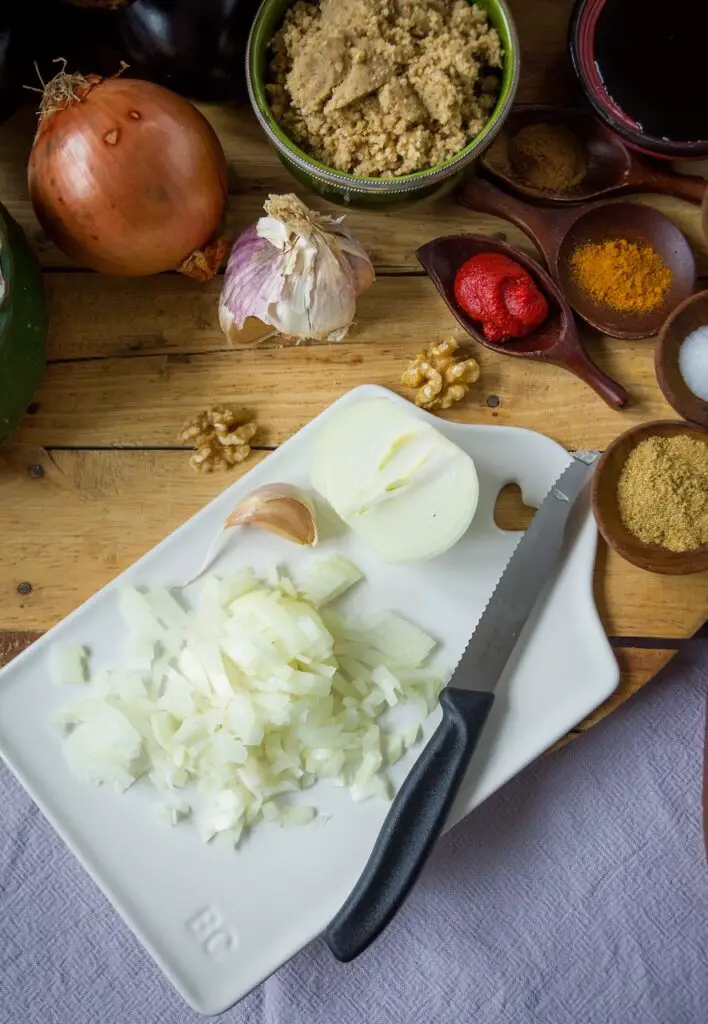
INGREDIENTS FOR SHESH ANDAZ GILANI
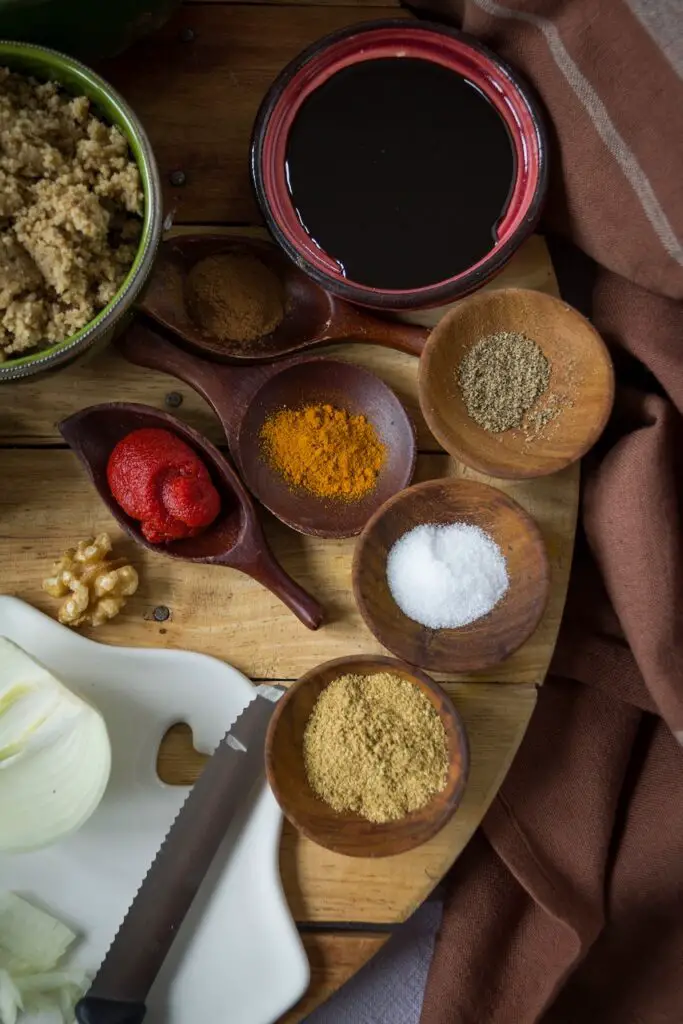
5 medium eggplants (preferably long, slender varieties)
3 onions
Cooking oil for frying
1 tsp turmeric
1 garlic clove
300 g (about 3 cups) walnuts*, finely ground
1 tsp tomato paste
2 tbsp pomegranate molasses* (or sour pomegranate paste)
1 tsp golpar (ground Persian angelica seed)
2–3 cups ice-cold water
3–4 ice cubes
1 tsp cinnamon*, ground
Salt and black pepper to taste
STEP-BY-STEP PREPARATION
1. PREPARE THE EGGPLANTS
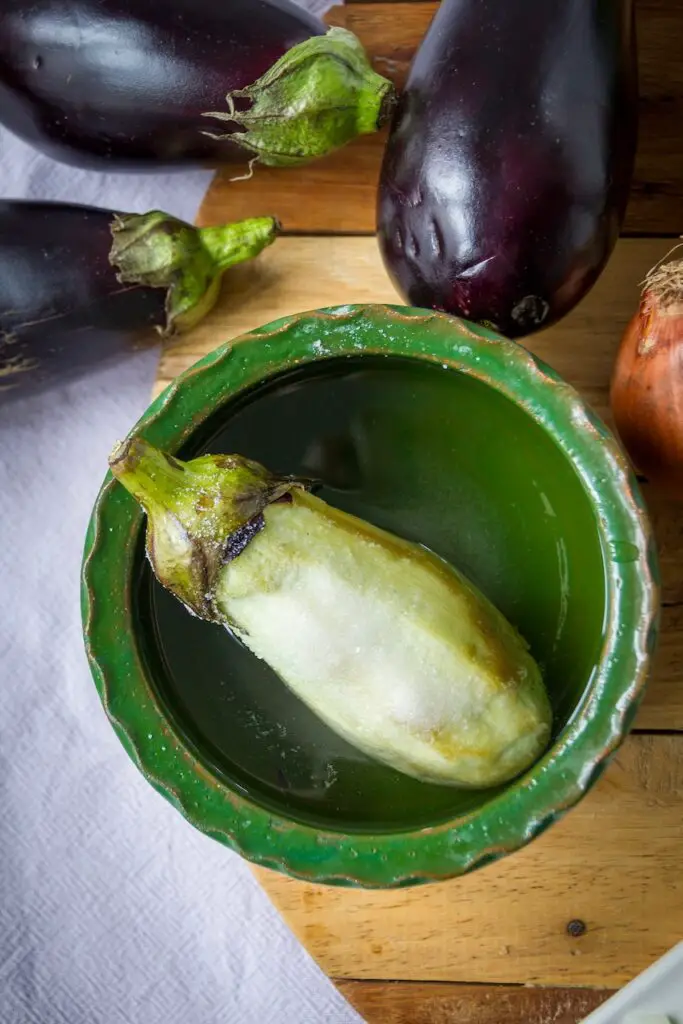
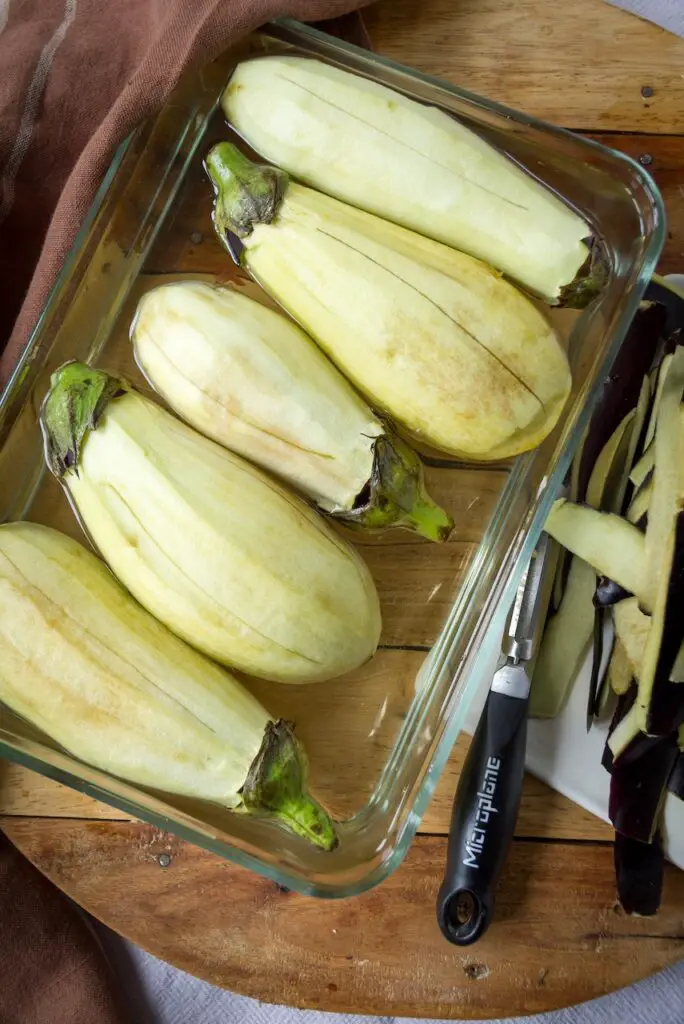
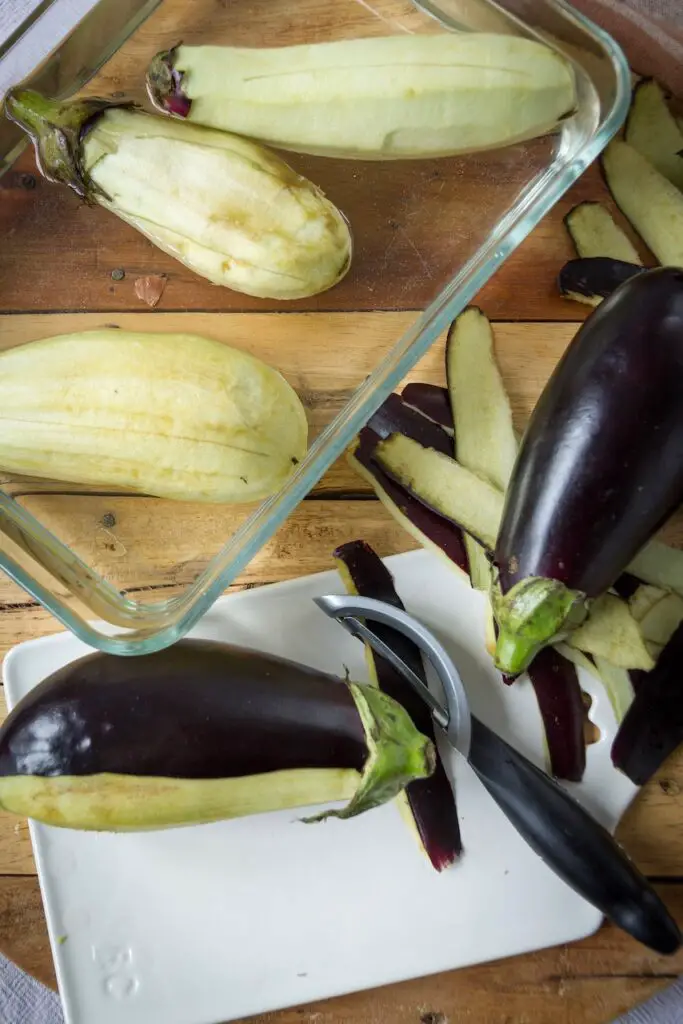
Peel the eggplants. Depending on your preference, cut them into rounds, cubes, or strips. (I prefer to leave them whole for this dish.) Lightly salt the eggplants, place them in a colander, and let them rest for 1 to 2 hours. This removes any potential bitterness and prevents the eggplants from absorbing too much oil during frying.
2. SAUTÉ THE AROMATIC BASE
Finely chop or grate the onions using a food processor or box grater. Place them into a pot over medium heat without oil first, letting their natural moisture evaporate. Once dry, add a splash of oil and sauté until golden brown. Stir in the turmeric and toast for a minute until fragrant. Press in the garlic clove and sauté briefly.
3. TOAST THE WALNUTS AND SPICES
Add the finely ground walnuts to the pot. Toast them gently over medium heat until they release a rich, nutty aroma. Stir in the tomato paste, pomegranate molasses, and ground golpar.
4. SLOW-SIMMER THE SAUCE
Pour 2 to 3 cups of ice-cold water along with the ice cubes into the pot. Turn the heat down to low. Let the sauce simmer gently for 2 to 3 hours until it thickens and turns a dark, glossy brown. Add an ice cube every hour to encourage the walnuts to release their natural oils. Season with salt and pepper to taste as it cooks.
5. FRY THE EGGPLANTS AND COMBINE
Rinse the salted eggplants thoroughly under cold water to remove the excess salt. Pat them dry with paper towels. Heat a little oil in a skillet and fry the eggplants until golden brown on all sides.
Gently lower the fried eggplants into the simmering walnut sauce. Cover and let everything simmer together on low heat for another 30 minutes. This allows the eggplants to soak up the rich flavors and thickens the sauce to perfection. Right before serving, give it a final taste and adjust with cinnamon, salt, pepper, or a pinch more golpar if desired.
PLATING AND SERVING
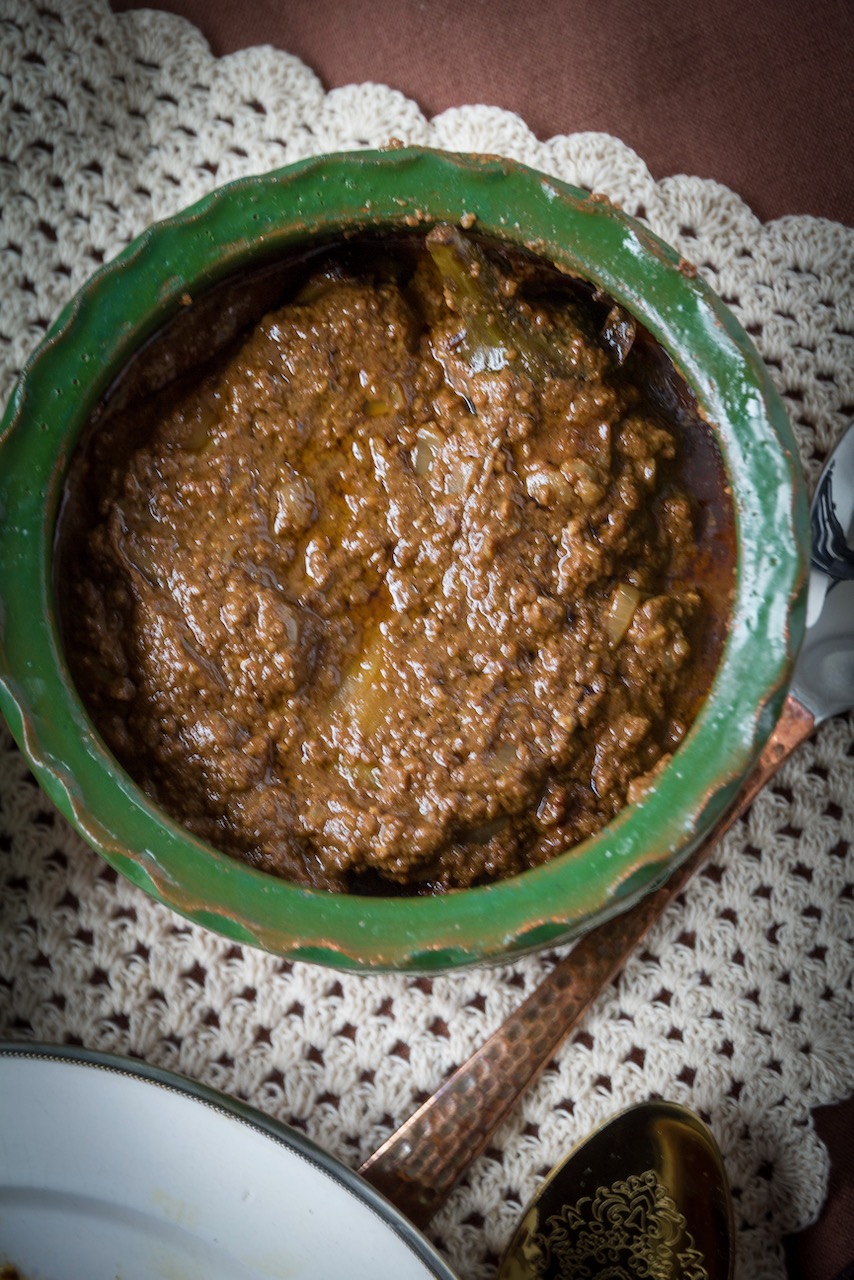
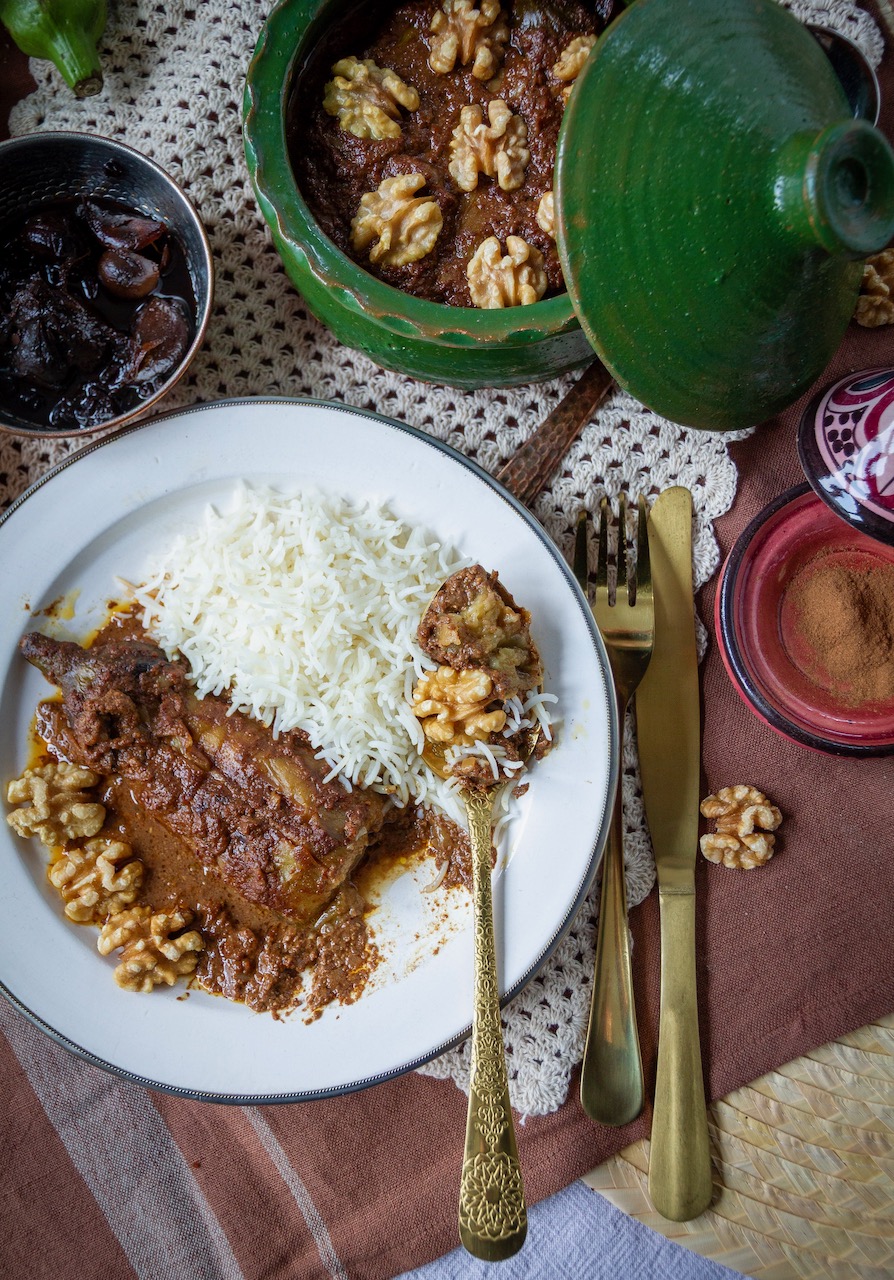
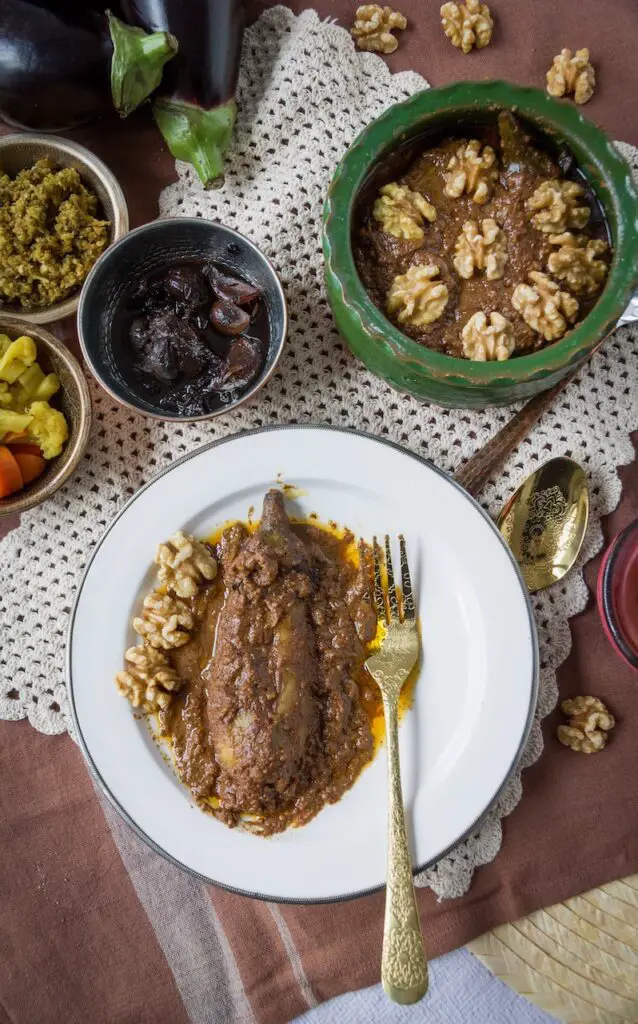
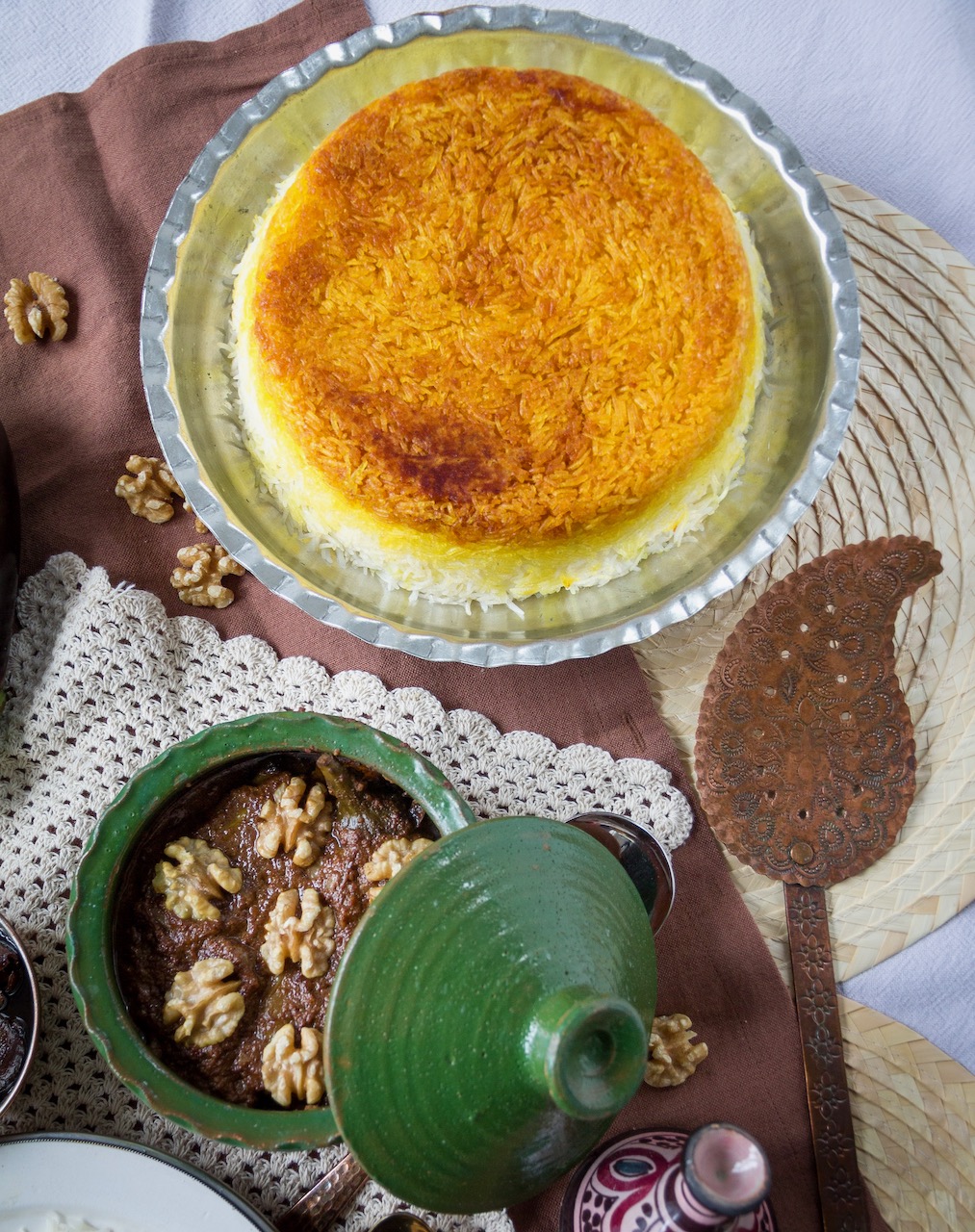
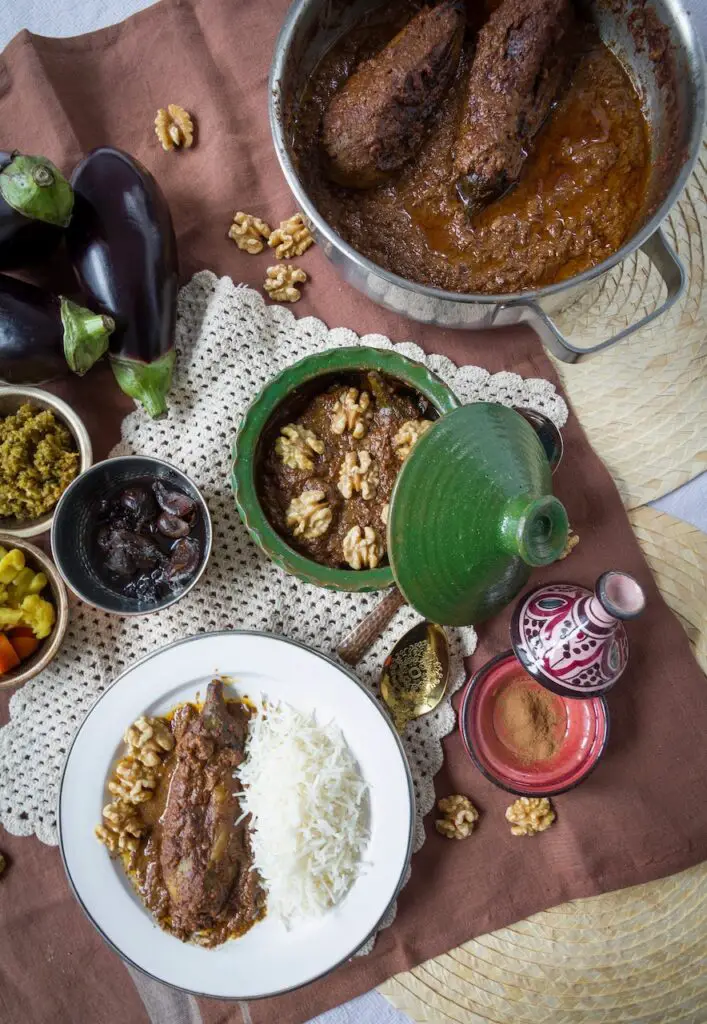
Ladle the finished Shish Andaz Bademjan into a deep serving bowl. Garnish with whole walnut halves or vibrant fresh pomegranate seeds.
Serve this Northern Iranian classic piping hot alongside steamed saffron rice (Kateh) or fresh flatbread (Lavash). For the full Gilani experience, pair it with crunchy raw onion wedges, a platter of fresh herbs (Sabzi Khordan), and traditional pickled vegetables (Torshi).
Befarmayid!
Susan
The items marked with * are affiliate links, referral links. If you buy through this link, I get a small commission. The price stays the same for you and you can easily support my efforts. A big thank you ♥
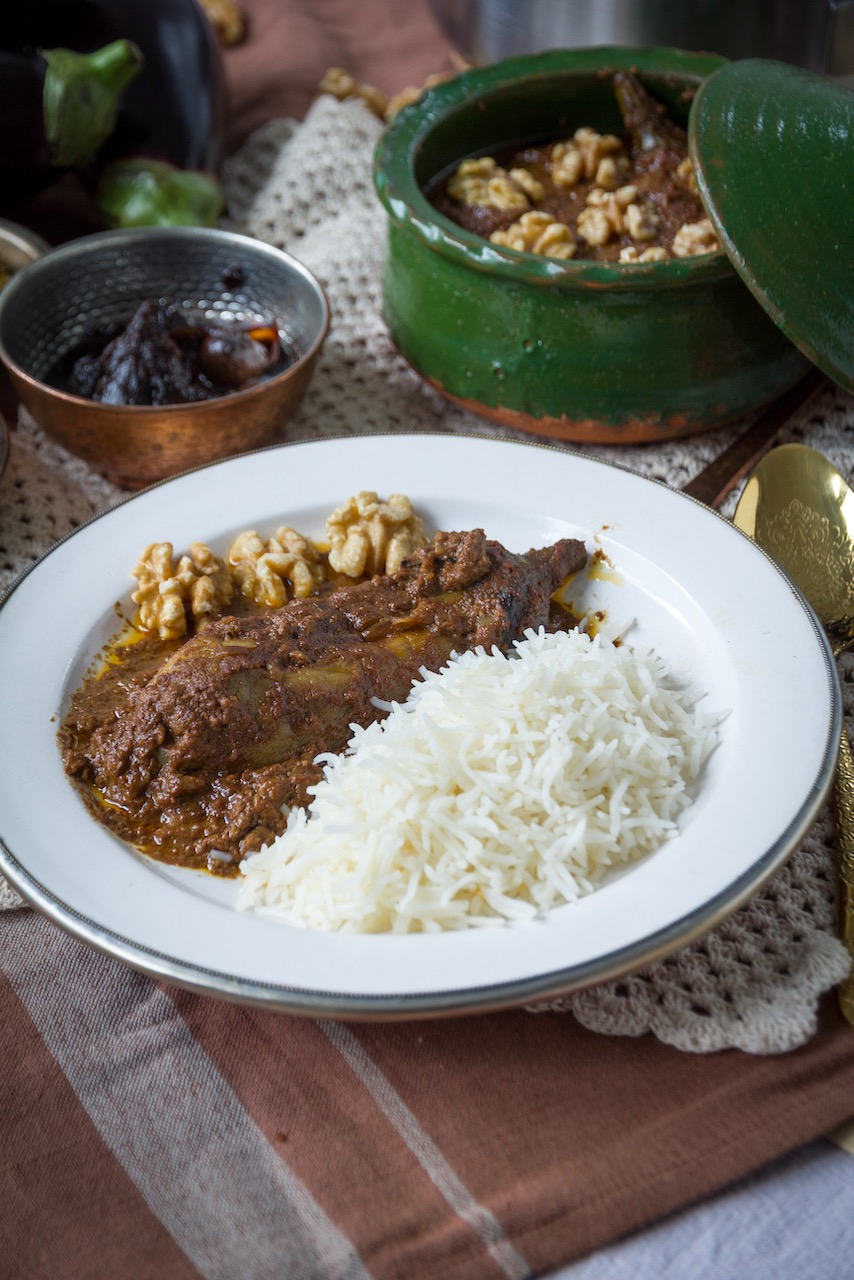
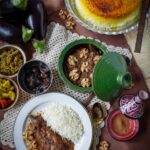
Shish Andaz Bademjan – Vegan Eggplants in Walnut Pomegranate Sauce
A deeply aromatic, sweet-and-sour, naturally plant-based eggplant stew
Ingredients
INGREDIENTS FOR SHESH ANDAZ GILANI
- 5 medium eggplants preferably long, slender varieties
- 3 onions
- Cooking oil for frying
- 1 tsp turmeric
- 1 garlic clove
- 300 g 3 cups walnuts, finely ground
- 1 tsp tomato paste
- 2 tbsp pomegranate molasses or sour pomegranate paste
- 1 tsp golpar ground Persian angelica seed
- 2-3 cups ice-cold water
- 3-4 ice cubes
- 1 tsp cinnamon ground
- Salt and black pepper to taste
Instructions
STEP-BY-STEP PREPARATION
PREPARE THE EGGPLANTS
-
Peel the eggplants. Depending on your preference, cut them into rounds, cubes, or strips. (I prefer to leave them whole for this dish.)
-
Lightly salt the eggplants, place them in a colander, and let them rest for 1 to 2 hours. This removes any potential bitterness and prevents the eggplants from absorbing too much oil during frying.
SAUTÉ THE AROMATIC BASE
-
Finely chop or grate the onions using a food processor or box grater.
-
Place them into a pot over medium heat without oil first, letting their natural moisture evaporate.
-
Once dry, add a splash of oil and sauté until golden brown.
-
Stir in the turmeric and toast for a minute until fragrant.
-
Press in the garlic clove and sauté briefly.
TOAST THE WALNUTS AND SPICES
-
Add the finely ground walnuts to the pot. Toast them gently over medium heat until they release a rich, nutty aroma.
-
Stir in the tomato paste, pomegranate molasses, and ground golpar.
SLOW-SIMMER THE SAUCE
-
Pour 2 to 3 cups of ice-cold water along with the ice cubes into the pot. Turn the heat down to low. Let the sauce simmer gently for 2 to 3 hours until it thickens and turns a dark, glossy brown.
-
Add an ice cube every hour to encourage the walnuts to release their natural oils.
-
Season with salt and pepper to taste as it cooks.
FRY THE EGGPLANTS AND COMBINE
-
Rinse the salted eggplants thoroughly under cold water to remove the excess salt.
-
Pat them dry with paper towels.
-
Heat a little oil in a skillet and fry the eggplants until golden brown on all sides.
-
Gently lower the fried eggplants into the simmering walnut sauce.
-
Cover and let everything simmer together on low heat for another 30 minutes. This allows the eggplants to soak up the rich flavors and thickens the sauce to perfection.
-
Right before serving, give it a final taste and adjust with cinnamon, salt, pepper, or a pinch more golpar if desired.
PLATING AND SERVING
-
Ladle the finished Shish Andaz Bademjan into a deep serving bowl.
-
Garnish with whole walnut halves or vibrant fresh pomegranate seeds.
-
Serve this Northern Iranian classic piping hot alongside steamed saffron rice (Kateh) or fresh flatbread (Lavash).
-
For the full Gilani experience, pair it with crunchy raw onion wedges, a platter of fresh herbs (Sabzi Khordan), and traditional pickled vegetables (Torshi).
Have you cooked this or maybe another delicious recipe of mine? Feel free to leave me a comment below. If you tag your picture on Instagram with @labsalliebe and use the hashtag#labsalliebe, I won’t miss a post and will be happy to leave you a comment as well. Can’t wait to see your creations.
♥♥♥♥♥♥♥♥♥♥♥♥♥♥♥♥♥♥♥♥♥♥♥♥♥♥♥♥♥♥♥♥