

There is a moment every autumn when the air changes. The mornings turn crisp, the light gets softer, and suddenly your body asks for something different. Not a rushed coffee. Not a slice of toast eaten standing up. It wants something warm, slow and kind.
This Warm Ayurvedic Porridge is exactly that. It’s creamy, gently spiced and topped with soft, glossy pears and plums that taste like autumn itself. One spoonful and your shoulders drop. One bowl and your whole morning feels calmer.
If you’ve ever wondered what an ayurvedic breakfast really looks like (and whether it can be simple enough for a busy weekday), you’re in the right place.
MY KITCHEN IN THE MORNING
Cinnamon, Cloves and Cardamom. Mmh! Is there anything better than the scent of cinnamon, cloves and cardamom drifting through the kitchen early in the morning?
It makes my mouth water before the porridge has even touched the bowl. With every spoonful, my appetite wakes up a little more and a warm, happy feeling settles in my tummy. And those warm cereals? They give me real energy for the day ahead.
WHY YOU’LL LOVE THIS AYURVEDIC PORRIDGE
In Ayurveda, warm, cooked, lightly spiced food is considered especially comforting in the colder months. You don’t need to follow a strict diet to enjoy the idea. Think of it as a cosy, nourishing breakfast that treats you gently. Here’s what makes this bowl special:
- Creamy and comforting: the grains soften beautifully as they steep.
- Rich in flavour: ghee, toasted nuts and sweet raisins give every bite depth.
- Fruity and fragrant: spiced pears and plums add a juicy, jammy finish.
- Easy to make: two pans, simple steps, no special skills needed.
 INGREDIENTS AYURVEDIC PORRIDGE
1 tbsp Ghee
3 tbsp Ayurvedic Porridge
1 Handful nuts, as almonds or sunflower seeds
Handful Raisins
200 ml Water or Milk
Seasonal fruits, I used 2 Pears and 2 Plums
Spices 1 tsp Cinnamon, 2 whole cloves, 1/2 tsp Cardamom
2 tbsp raw sugar
INGREDIENTS TOPPING
1 Handful grated Coconuts
1 tbsp Chia seeds
How to Make Ayurvedic Porridge with Spiced Pears and Plums: Step by Step
Step 1: Toast the grains, nuts and raisins
Melt the ghee in a saucepan over medium heat. Add the ayurvedic cereal grains, the nuts and the raisins, and toast them for a minute or two until fragrant.
Step 2: Add water and let it swell
Pour in the water and stir well. Take the pan off the heat, cover it and let everything steep for 15 minutes, so the grains turn soft and creamy.
Step 3: Poach the pears and plums
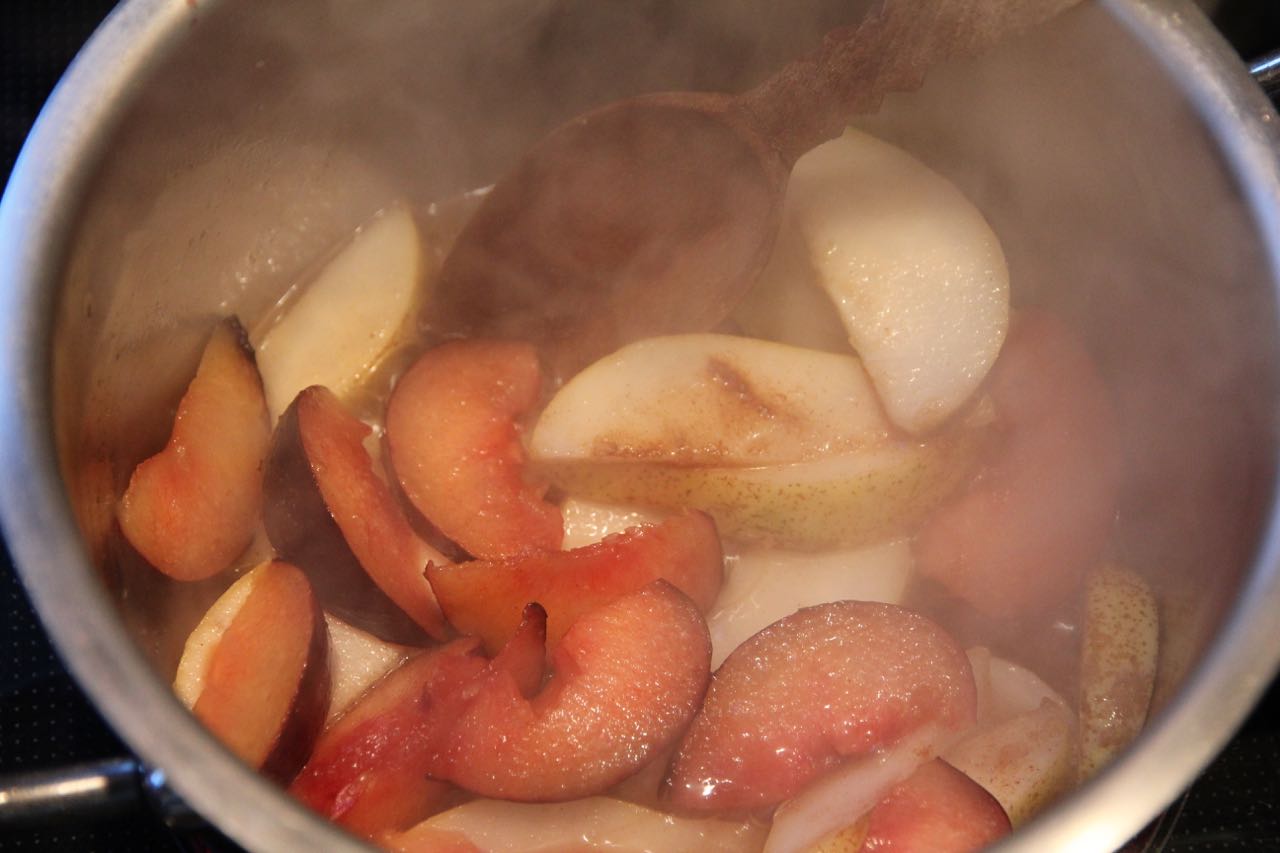
While the porridge rests, slice the pears and plums. Add them to a second saucepan with a little water, the whole spices and 2 tbsp raw sugar. Simmer gently until the fruit is tender but still holds its shape, firm rather than mushy.
Step 4: Remove the cloves
Fish out the cloves before serving. Bite into one by accident and your tongue goes numb for a moment!
Step 5: Serve
Spoon the warm spiced fruit over the porridge and enjoy.


HEALTH BENEFITS OF CINNAMON
Why This Spice Deserves a Place in Your Morning Bowl? Cinnamon is more than a pretty scent. People have treasured this golden-brown spice for thousands of years, and modern research has taken a closer look at why. Here’s what makes it so special:
- May support healthy blood sugar levels. Some studies suggest cinnamon can help the body respond to sugar after a meal. The effect is modest, so think of it as a helpful extra, not a replacement for a balanced diet or medical treatment.
- May support healthy cholesterol levels. Some research points to small improvements in cholesterol values when cinnamon is part of a healthy diet. Results vary from study to study.
- Warming for the metabolism. In Ayurveda, cinnamon is a classic warming spice that is said to get digestion going. There’s no magic “fat burner” in your spice rack, but a warm, spiced breakfast is a lovely way to start the day.
- Packed with antioxidants. Cinnamon is among the spices richest in polyphenols, plant compounds that help protect your cells from oxidative stress.
- Naturally anti-inflammatory. Its compounds have shown anti-inflammatory properties in research, which is one reason it’s so valued in traditional cooking.
- Adds sweetness without extra sugar. A pinch of cinnamon makes porridge, fruit and desserts taste sweeter, so you can use less sugar.
- Supports digestion, traditionally. Cinnamon, cardamom and cloves are classic Ayurvedic digestive spices, often used to ease heaviness after a meal.
- Comfort for the senses. Its aroma alone can lift your mood and make a morning feel calmer, and that counts too.
A little tip for choosing cinnamon: Ceylon cinnamon (“true cinnamon”) contains much less coumarin than the cheaper cassia variety, which is more common in supermarkets. Coumarin can be a concern in large amounts, so Ceylon is the better choice if you use cinnamon daily.

HEATLH BENEFITS OF CLOVES
Remember the little warning in the recipe about biting into a whole clove? That numb tongue is no accident. It comes from eugenol, the powerful compound that gives cloves their unmistakable scent and many of their benefits. These tiny dried flower buds have been used in kitchens and traditional medicine for centuries. Here’s why they deserve a spot in your pan:
- Rich in antioxidants. Cloves are one of the most antioxidant-rich spices there are. These compounds help protect your cells from oxidative stress, and that supports your body’s natural defences.
- Traditionally used to support the immune system. In Ayurveda, cloves are a classic warming spice for the colder months. A varied, healthy diet is what truly strengthens your immunity, but cloves are a flavourful addition to it.
- Natural pain-relieving properties. Eugenol has a mild numbing effect, which is why clove oil has long been used in dentistry for toothache relief. This is also why a whole clove makes your tongue tingle!
- Antibacterial properties. In lab studies, clove compounds have shown antibacterial and antimicrobial effects, one of the reasons cloves were prized for preserving and flavouring food.
- Traditional digestive support. Along with cinnamon and cardamom, cloves are a classic Ayurvedic spice for comfortable digestion after a hearty meal.
- Warming and aromatic. Their scent alone brings comfort, which is half the magic of a bowl of porridge on a cold morning.
Good to know: The amounts used in cooking are safe for most people. Concentrated clove oil is a different story, and it shouldn’t be swallowed undiluted. If you’re pregnant, take blood-thinning medication or have an upcoming operation, check with your doctor before using cloves in larger or medicinal amounts.

HEALTH BENEFITS OF CARDAMOM
If cinnamon is the cosy hug and cloves are the bold kick, then cardamom is the elegant finishing touch. Sweet, citrusy, a little floral: just a few crushed pods can turn a simple bowl of porridge into something special. No wonder it’s nicknamed the “queen of spices”. Here’s why it earns a place in your morning bowl:
- Traditionally used for digestion. In Ayurveda and across the Middle East and India, cardamom is a classic after-meal spice, valued for its soothing effect on a heavy stomach and for easing bloating.
- Rich in antioxidants. Like cinnamon and cloves, cardamom contains plant compounds that help protect your cells from oxidative stress.
- May support healthy blood pressure. Some small studies suggest cardamom may help, but the research is limited, so see it as a nice extra and not a treatment.
- Antibacterial properties. In lab studies, cardamom compounds have shown antibacterial effects, which may be part of why it’s been used for fresher breath for centuries.
- Fresh breath, naturally. Chewing a cardamom pod after a meal is a beloved tradition in many cultures. It leaves your mouth tasting clean and fragrant.
- Anti-inflammatory potential. Early research points to anti-inflammatory properties, though more studies in humans are needed.
- Mood-lifting aroma. Its warm, sweet-citrusy scent is a joy in itself, and a fragrant kitchen can lift your mood before breakfast has even started.
Kitchen tip: For the best flavour, buy whole green pods and crush them just before using. Ground cardamom loses its aroma quickly. Add the seeds to the pan with your other spices, or crush a pod or two into the porridge.
Good to know: Cardamom in cooking amounts is safe for most people. If you’re pregnant, take medication or have a health condition, check with your doctor before using it in larger or supplement amounts.

HEALTH BENEFITS OF CHIASEEDS
They look like nothing special: little black and white dots. But chia seeds are one of the most nutrient-dense foods you can stir into your breakfast. Soak them for a few minutes and they swell into a soft, gel-like coating that makes porridge extra creamy. Here’s why they’re worth a spoonful:
- Packed with fibre. Just two tablespoons provide a large share of your daily fibre needs. Fibre supports healthy digestion and keeps you feeling full for longer.
- A plant-based source of omega-3. Chia seeds contain alpha-linolenic acid (ALA), a plant omega-3 fatty acid. It’s a great addition to a healthy diet, especially if you eat little or no fish.
- Good plant protein. A small portion adds protein, which helps keep you satisfied through the morning.
- Rich in minerals. Chia seeds provide calcium, magnesium, phosphorus and other minerals that support bones and muscles.
- Full of antioxidants. Like the warming spices, they contain plant compounds that help protect your cells from oxidative stress.
- Keeps you fuller for longer. Thanks to the fibre and the gel they form, chia seeds slow digestion. That makes them a lovely addition for steady energy, though they’re not a magic weight-loss food.
- Naturally gluten-free and easy to use. Stir them into porridge, yoghurt or smoothies, or let them soak overnight.
How to use chia seeds in this porridge: Stir a tablespoon into the hot porridge after the 15-minute rest and let it sit for about 5 minutes, or sprinkle a teaspoon on top as a crunchy finish.
Good to know: Always enjoy chia seeds with plenty of liquid. Dry seeds swell and can be a choking hazard if eaten in large amounts without being soaked. If you’re not used to much fibre, start with a teaspoon and drink enough water. If you take blood-pressure or blood-thinning medication, or have a health condition, check with your doctor first.
This post is for inspiration and doesn’t replace medical advice. If you have diabetes, high cholesterol or other health conditions, talk to your doctor before changing your diet.
Befarmayid
Susan
Have you cooked this or maybe another delicious recipe of mine? Feel free to leave me a comment below. If you tag your picture on Instagram with @labsalliebe and use the hashtag#labsalliebe, I won’t miss a post and will be happy to leave you a comment as well. Can’t wait to see your creations.
♥♥♥♥♥♥♥♥♥♥♥♥♥♥♥♥♥♥♥♥♥♥♥♥♥♥♥♥♥♥♥♥
Sign up for my newsletter, and I’ll email you my latest recipes, travel reports, and trends once or maybe 2x a week for free.