Norooz, the Persian New Year, marks the Spring Equinox and feels like a deep, collective exhale for the soul. It is a season of shedding the old and welcoming the new with open hearts. A sentiment that resonates more deeply than ever for Iranians this year.
Even when the world feels heavy, we hold onto our traditions. They are our anchor. Through my 15 favorite Norooz recipes, I’m inviting you into our home to experience the flavors and hope of the Persian New Year.
THE SCENT OF HOPE – A KITCHEN FULL OF HERBS
In my kitchen, the journey to Norooz always begins with a mountain of fresh herbs. There is something truly meditative about finely chopping piles of coriander, dill, and parsley. As the knife moves, the house fills with an unmistakable aroma. It’s the scent of spring, of course, but it’s also the scent of rebirth and new beginnings.
MORE THAN JUST FOOD – THE SOUL OF SOFREH
Every dish served on the Sofreh Norooz (the ceremonial spread) has its own “soul.” Each recipe tells a story, preserves a memory, and carries a specific wish for the year ahead.
When I cook these dishes, I’m not just following steps; I’m stirring in the hopes we all carry in our hearts right now:
- Peace for our families.
- Freedom for our people.
- A free Iran for the generations to come.
WHAT IS NOROOZ?
Before we pick up our wooden spoons, let’s dive into the magic. Norooz literally translates to “New Day.” Celebrated for over 3,000 years, it marks the exact moment of the Spring Equinox—the astronomical beginning of spring.
It’s more than just a date; it’s a celebration of light overcoming darkness and nature waking up from its winter slumber. Norooz is a journey through several fascinating phases:
🧹 PHASE 1: KHANEH TAKANI (The “Shaking of the House”)
Before the first herb is chopped, we practice Khaneh Takani. This is the ultimate Persian spring cleaning. We don’t just dust; we “shake” the house, clearing every corner of the previous year’s heavy energy. Only when the home sparkles is there room for the fresh energy of the new year.
🔥 PHASE 2: CHAHARSHANBEH SURI (The Festival of Fire)
On the eve of the last Wednesday before Norooz, things get fiery! We celebrate Chaharshanbeh Suri by jumping over small bonfires. As we leap, we chant:
“Zardi-ye man az to, sorkhi-ye to az man” >
(Give me your beautiful red glow/warmth, and take away my winter paleness/sickness.)
It’s a ritual of purification, symbolically burning away the baggage of the past year.
🍏 PHASE 3: THE HAFT-SIN TABLE
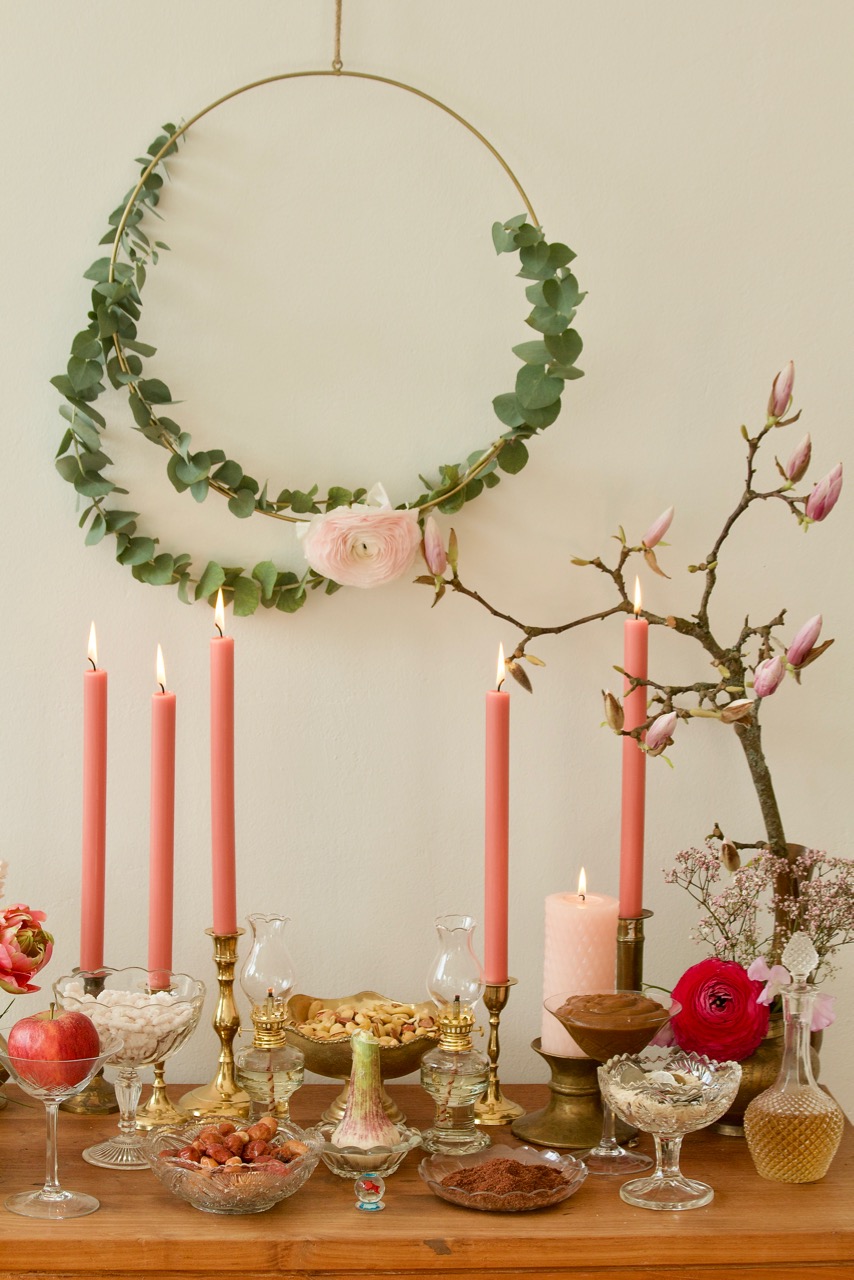
The heart of every Persian home during this time is the Haft-Sin table. We arrange seven symbolic items that start with the letter “S” in Farsi. Shopping for these at the fragrant bazaars is when the festive spirit truly kicks in.
The Seven “S” Symbols include:
- Seeb (Apple): For beauty and health.
- Sabzeh (Sprouts): Representing rebirth and renewal.
- Seer (Garlic): For medicine and self-care.
- Serkeh (Vinegar): Representing patience and age.
- …and three more uniquely meaningful items!
Freebie Alert: If you have children (or just love tradition!), I’ve created a Haft-Sin Printable for you to download. You can also check out my Haft Sin Impressions 2023, 2024, and 2025 for some styling ideas!
🌱 PHASE 4: NOROOZ DAY (The Main Event)
At the exact moment of the equinox, families gather around the Haft-Sin table. We exchange gifts (called Eidi), visit elders, and share massive feasts. It is a time of pure harmony and a literal fresh start.
🌳 PHASE 5: SIZDAH BEDAR (Nature Day)
On the 13th day after the New Year, Persians head outdoors. It’s considered bad luck to stay inside, so the whole country goes on a massive picnic! We take the Sabzeh (wheat sprouts) from our Haft-Sin and toss them into running water to let go of our worries, closing the holiday cycle under the open sky.
POPULAR NOROOZ CLASSICS YOU’LL FIND IN THIS GUIDE:
Whether you are celebrating your heritage or discovering Persian cuisine for the first time, these recipes are a celebration of resilience. Let’s bring the taste of a Persian spring into your kitchen.
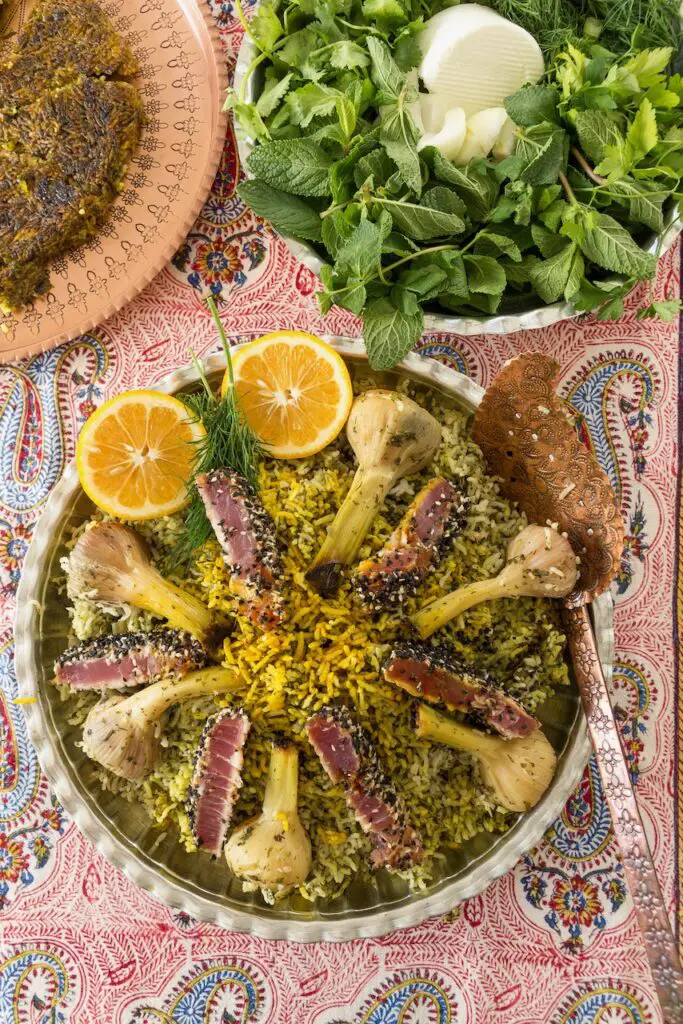
1. SABZI POLO BA MAHI (Herbed Rice with Fried Fish)
For me, Norooz doesn’t truly begin until this scent fills the house. Imagine mountains of finely chopped dill, coriander (cilantro), and chives layered into fluffy basmati rice until it looks like a vibrant spring meadow.
Traditionally, this dish is served with fish, which symbolizes fertility and new life. There is a deep magic in that first bite—where the steaming, fragrant herbs meet the golden, crispy skin of the fish. It’s the ultimate signal that spring has finally arrived.
🐟 MY FAVORITE TWISTS ON THE CLASSIC:
Over the years, I’ve shared several ways to enjoy this tradition. Whether you want the authentic classic or a modern fusion, I’ve got you covered:
- The Modern Gourmet: – A fresh, seared take on the tradition.
- The Showstopper: – Zesty, bright, and perfect for a dinner party.
- The Foundation: – Perfect for those who want to master the rice first.
- Pro Tip: The secret to the world’s fluffiest herbed rice isn’t just the herbs—it’s the technique.
👉 [Click here to unlock the secret to the fluffiest Herbed Rice you’ve ever tasted!]
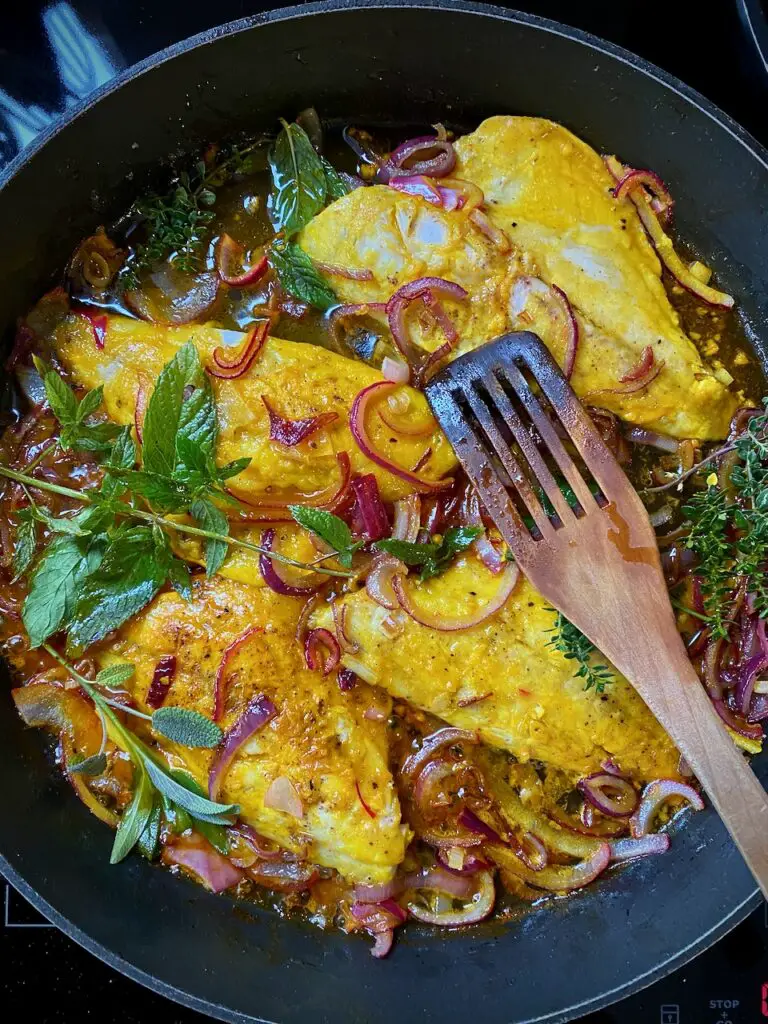
2. MAHI ZAFARANI (Saffron-Infused Fish)
When you want to elevate your Norooz table to something truly royal, we turn to “liquid gold.” Mahi Zafarani is a luxurious dish where the fish is bathed in a vibrant marinade of the world’s finest saffron and a bright splash of fresh lemon.
The saffron doesn’t just add a stunning golden hue; it infuses the delicate fish with an earthy, floral aroma that feels like a warm embrace. It’s the kind of dish that instantly creates a festive atmosphere—elegant, fragrant, and deeply comforting.
THE SECRET IS IN THE BLOOM
The key to this dish is how you treat the saffron. To get that deep, sunset-orange glow and the full breadth of its flavor, you have to “bloom” the ground threads properly before marinating the fish.
- Saffron: In Persian culture, saffron is more than a spice; it’s a symbol of joy and prosperity. Using it generously during Norooz is our way of inviting abundance into the new year.
👉 [Learn how to whisk up the perfect, aromatic Saffron Marinade right here!]
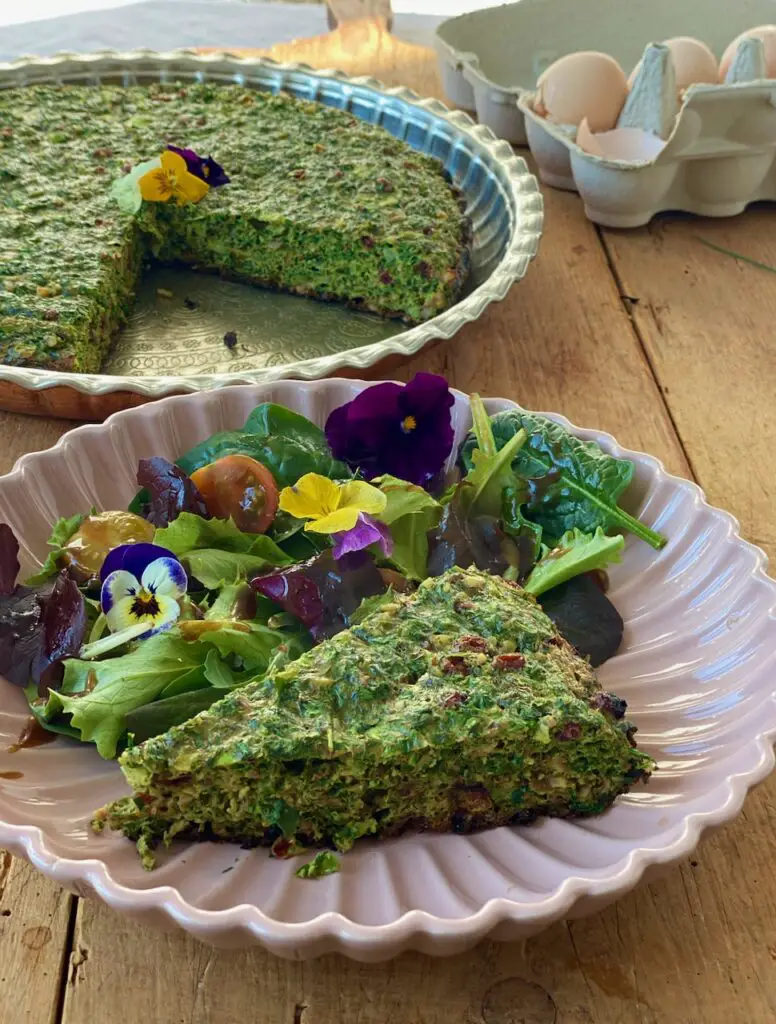
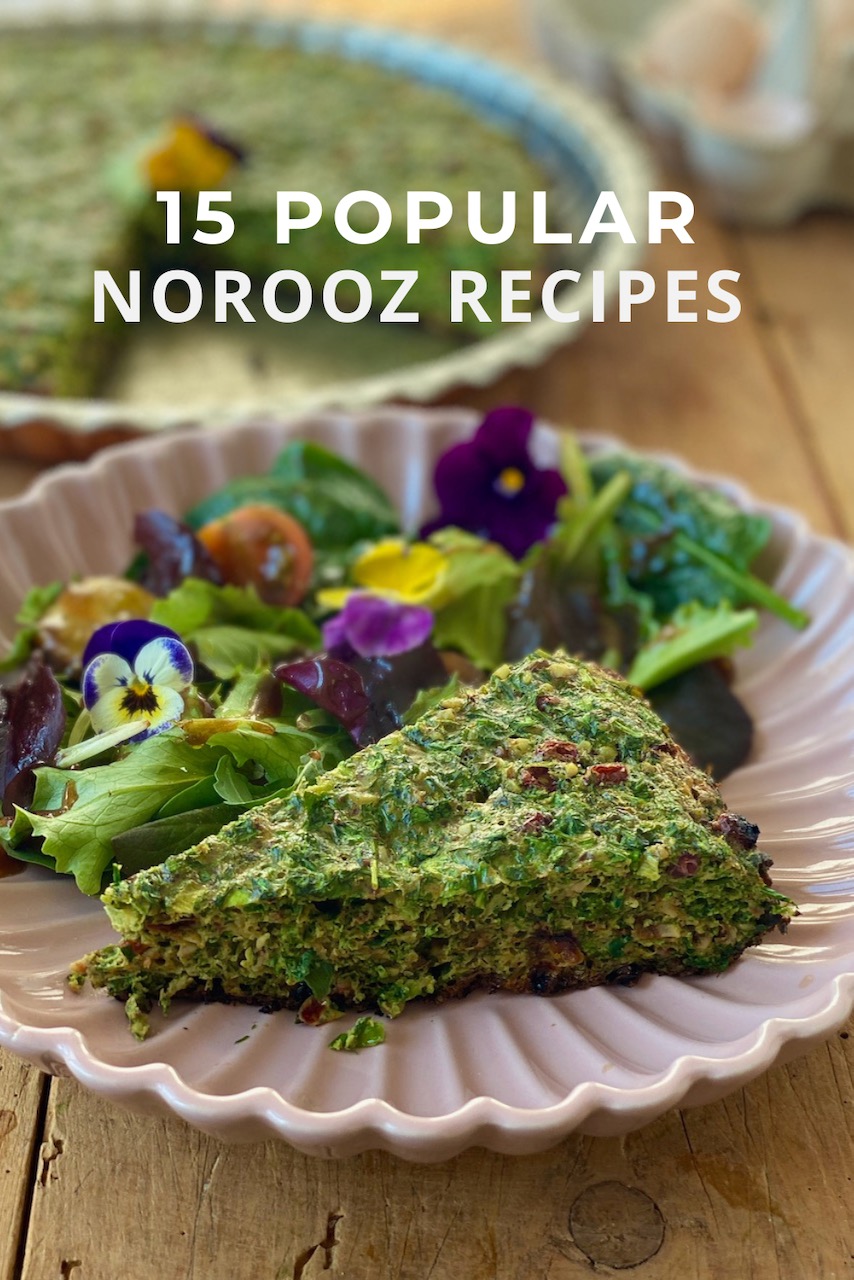
3. KUKU SABZI (Persian Herb Frittata)
Forget everything you know about standard omelets. Kuku Sabzi is a vibrant, emerald-green masterpiece where the herbs are the stars of the show, and the eggs are simply there to hold the “herb explosion” together.
Imagine a dish so packed with fresh greens that it glows. To elevate the texture, we add crunchy walnuts for bite and tart barberries (Zereshk) that sparkle like tiny crimson jewels against the green. Each mouthful is a perfect balance of earthy, nutty, and tangy flavors.
WHY IT’S NOROOZ ESSENTIAL
The deep green color of this frittata represents rebirth and fertility—the very essence of spring. Whether you serve it hot from the pan or at room temperature as part of a picnic, it’s a refreshing celebration of the new season.
- The Secret to the Perfect Slice: It’s all about the ratio. You want just enough egg to bind, but not so much that it masks the fragrance of the coriander, parsley, and dill.
👉 [Click here for the recipe for this fluffy, herb-filled wonder!]
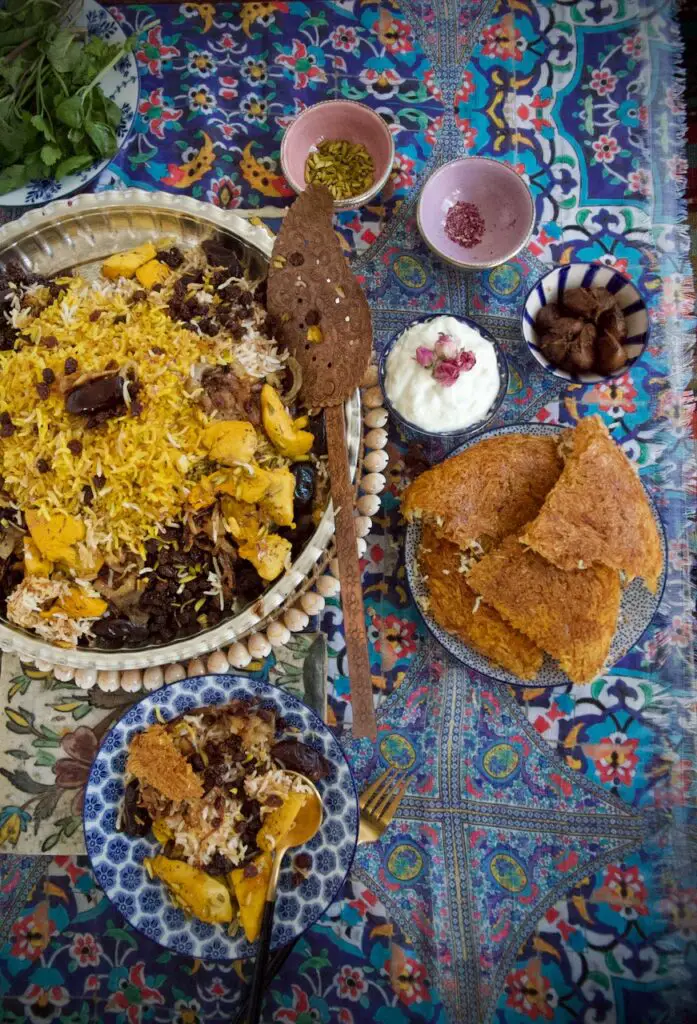
4. RESHTEH POLO (Toasted Noodle Rice)
Reshteh Polo is pure symbolism on a plate. In Persian culture, the fine toasted noodles represent the “threads of life.” Tradition says that if you eat Reshteh Polo at the start of the New Year, you’ll be able to untangle life’s knots and find your path more easily in the coming months.
Beyond the beautiful sentiment, the flavor profile is addictive. It’s a masterful balance of savory and sweet: the nutty, toasted aroma of the noodles pairs perfectly with the caramelized richness of sautéed raisins and dates.
WHY YOU’LL LOVE IT
- The Crunch: Like all great Persian rice dishes, the Tahdig (crispy bottom) of Reshteh Polo is the ultimate prize.
- The Balance: The natural sweetness of the fruit cuts through the savory basmati rice, making every forkful a surprise.
- The Tradition: It’s the ultimate “good luck” meal to kick off your Spring Equinox.
- A Kitchen Secret: Getting the noodles to the perfect golden-brown without burning them is an art form. It’s all about a gentle toast before they hit the steaming pot.
👉 [Master the art of the perfect Reshteh Polo right here!]
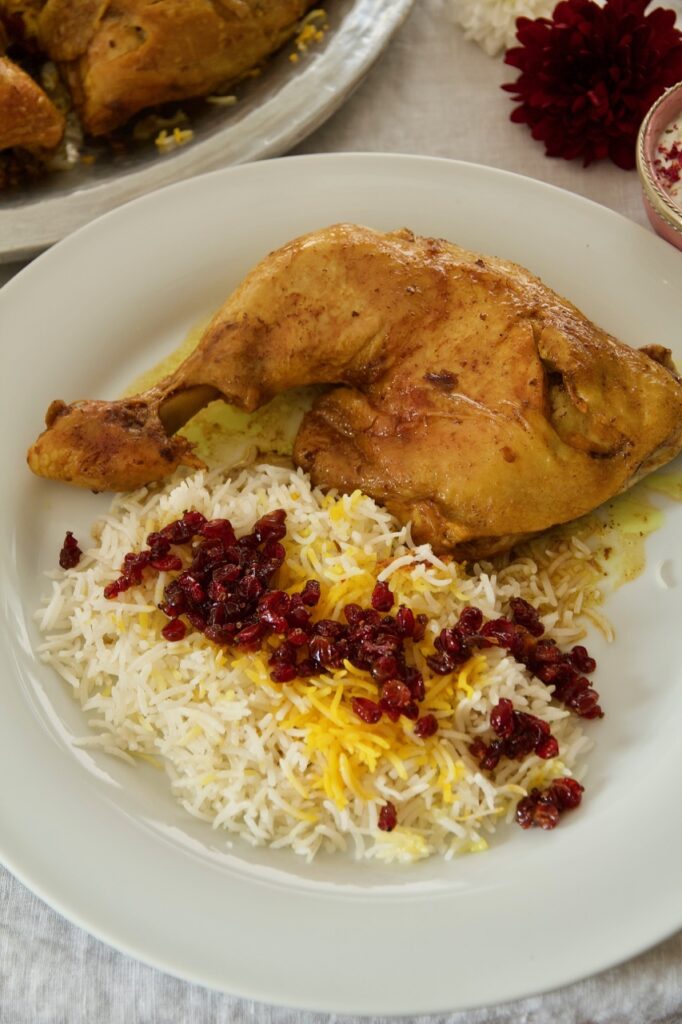
5. ZERESHK POLO BA MORGH (Barberry Rice with Saffron Chicken)
If you’re looking for the ultimate “crowd-pleaser” on the Norooz table, this is it. Zereshk Polo ba Morgh is a visual and culinary masterpiece. Imagine a mountain of fluffy, snow-white Basmati rice crowned with a “tiara” of glowing yellow saffron rice and scattered with shimmering crimson barberries (Zereshk).
The tartness of the barberries provides a brilliant pop of acidity that perfectly cuts through the richness of the slow-cooked, succulent chicken. Simmered in a fragrant tomato and saffron sauce, the chicken becomes so tender it practically melts at the touch of a fork.
WHY IT’S A FESTIVAL FAVORITE
- The Visuals: The contrast of red, yellow, and white makes this the most “Instagrammable” dish on the Sofreh.
- The Flavor Profile: It hits every note—savory, tart, and floral.
- The Comfort: It’s the quintessential Persian celebration meal that brings everyone together.
Pro Tip: To get those barberries to glisten like rubies, sauté them briefly with a pinch of sugar and a splash of butter. Be careful—they burn quickly!
👉 [Discover my secret to making chicken so tender it falls right off the bone!]
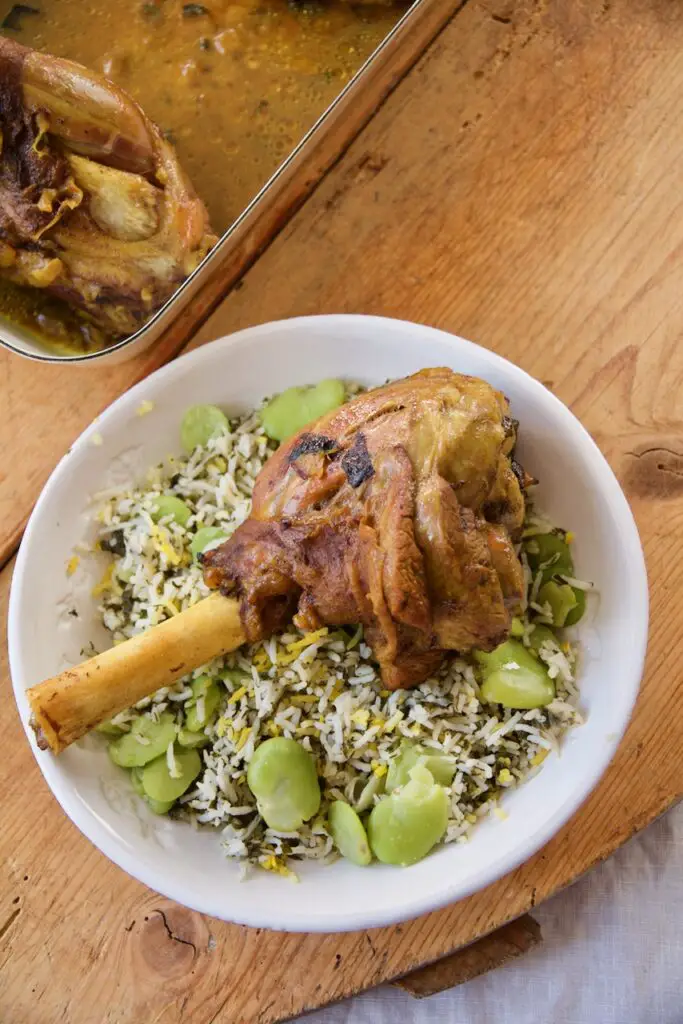
6. BAGHALI POLO BA MAHICHE (Dill & Broad Bean Rice with Lamb Shank)
If spring had a flavor, this would be it. Baghali Polo is an incredibly aromatic rice dish, layered with generous amounts of fresh dill and tender broad beans (fava beans). The bright, herbaceous scent of the dill captures the very essence of nature waking up.
But the real showstopper? The Mahicheh—a succulent lamb shank slow-cooked to perfection. We cook it low and slow until the meat is so buttery and tender it literally slides off the bone. The pairing of the light, ethereal green rice with the rich, melt-in-your-mouth lamb is nothing short of divine.
WHY THIS IS A SUNDAY ROAST, PERSIAN STYLE:
- The Aroma: The moment you lift the lid off the rice pot, the scent of steaming dill and saffron fills the entire room.
- The Texture: The pop of the broad beans against the fluffy long-grain Basmati rice is a culinary delight.
- The Occasion: This is the dish we serve when we want to truly honor our guests and celebrate the abundance of the new season.
- The Secret to “Melt-in-Your-Mouth” Lamb: It’s all about patience and a gentle braise in a bath of onions, turmeric, and a hint of saffron. No rushing allowed!
👉 [Get the recipe: How to prepare the most tender, succulent lamb shanks at home!]
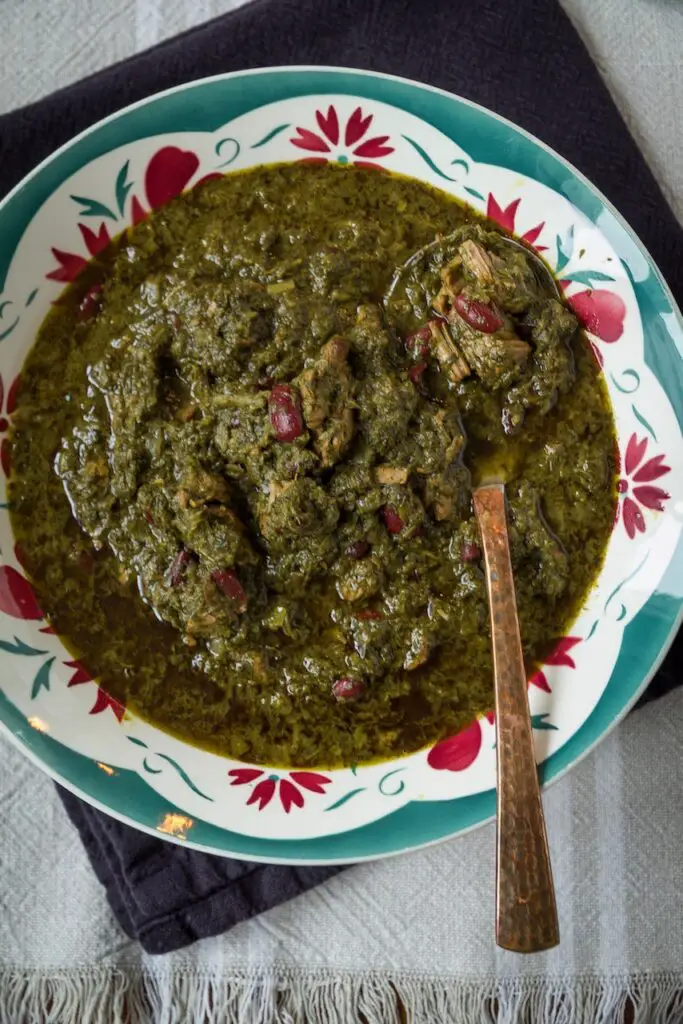
7. GHORMEH SABZI (The Legendary Herb Stew)
Ask any Iranian to define the taste of “home,” and the answer is almost always Ghormeh Sabzi. This isn’t just a meal; it’s a national treasure. It is a deep, dark green stew made from a massive amount of sautéed herbs—parsley, leeks (or scallions), and fenugreek—slow-simmered until they reach a rich, velvety consistency.
The soul of this dish lies in the dried limes (Limoo Amani), which infuse the stew with a unique, earthy tang that you won’t find anywhere else. Combined with tender chunks of beef or lamb and red kidney beans, it’s the ultimate “Slow Food” experience.
WHY EVERY PERSIAN LOVES IT:
- The “Next Day” Rule: Like a fine wine, Ghormeh Sabzi actually tastes even better the next day once the flavors have fully married.
- The Complexity: It strikes a perfect balance between savory, herbaceous, and sour.
- The Tradition: No Norooz celebration is complete without at least one steaming bowl of this green gold on the table.
- The Secret to Authenticity: Success lies in the “fry.” You have to sauté the herbs until they turn a dark, forest green—just before they burn—to unlock that legendary deep flavor.
👉 [Discover my top tips for mastering this authentic Persian “Slow-Food” classic!]

8. FESENJAN (Pomegranate & Walnut Stew)
When a Persian host wants to truly honor their guests, they serve Fesenjan. This isn’t just a stew; it’s a culinary masterpiece that showcases the incredible sophistication of Persian cuisine. It’s dark, rich, and velvety—a dish that plays a high-stakes game of flavor contrasts.
The magic happens in the sauce: a thick, luxurious reduction of finely ground walnuts and tangy pomegranate molasses. The natural oils from the walnuts create a creamy texture, while the pomegranate adds a deep, ruby-red acidity that cuts through the richness.
THE ART OF THE PERSIAN “SWEET & SOUR”
- The Color: As it slow-cooks, the sauce transforms from a light tan to a deep, dark chocolate brown—a sign that the flavors have truly deepened.
- The Protein: Traditionally made with duck or chicken, though many modern versions use meatballs (Koofteh) or vegan.
- The Balance: Every family has their own secret ratio—some like it puckeringly tart, while others add a touch of sugar for a mellow, sweet-and-sour finish.
- A Little Kitchen Secret: Fesenjan is a lesson in patience. It needs to simmer on low heat for hours until the walnut oil naturally rises to the top, signaling it’s ready to serve.
👉 [Get the recipe: How to find your perfect balance of sweet and sour!]
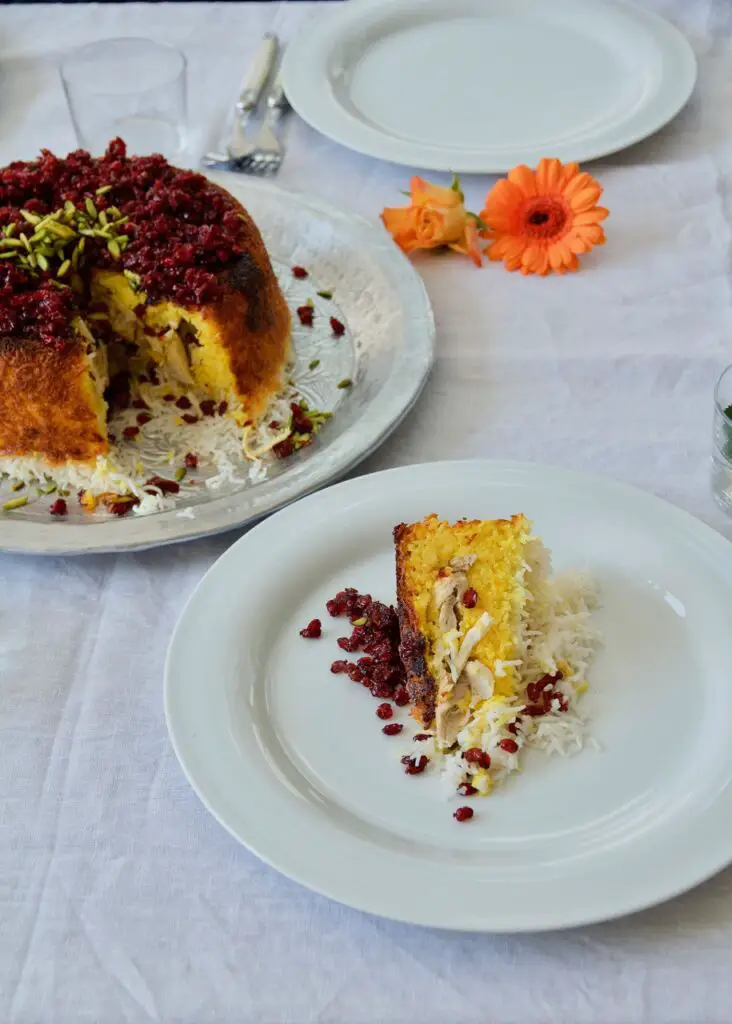
9. TAHCHIN (Golden Saffron Rice Cake)
If you want a true “showstopper” that will have everyone reaching for their cameras, Tahchin is the answer. It looks like a magnificent, golden-crusted cake, but it’s actually a savory masterpiece made of saffron-infused rice, thick yogurt, and egg yolks.
The goal here is the ultimate Tahdig—that legendary Persian golden crust. When you flip the pot, you should be greeted by a perfectly crisp, jewel-toned exterior that hides a steaming, fragrant, and incredibly moist interior. It’s a small culinary triumph for any home cook!
WHY TAHCHIN IS THE STAR OF THE TABLE:
- The Architecture: It’s one of the few rice dishes that holds its shape, making it the literal centerpiece of the Sofreh.
- The Saffron Glow: The yogurt and saffron create a vibrant yellow hue and a tangy, floral flavor profile that is unique to this dish.
- The Surprise Inside: Often layered with succulent shredded chicken and barberries, every slice is a treasure trove of textures.
- The Secret to Success: It’s all about the temperature and the “flip.” You need a reliable non-stick pot and the patience to let that crust develop slowly over a gentle flame.
👉 [Master the flip! Click here for my trick to the perfect, golden rice crust.]
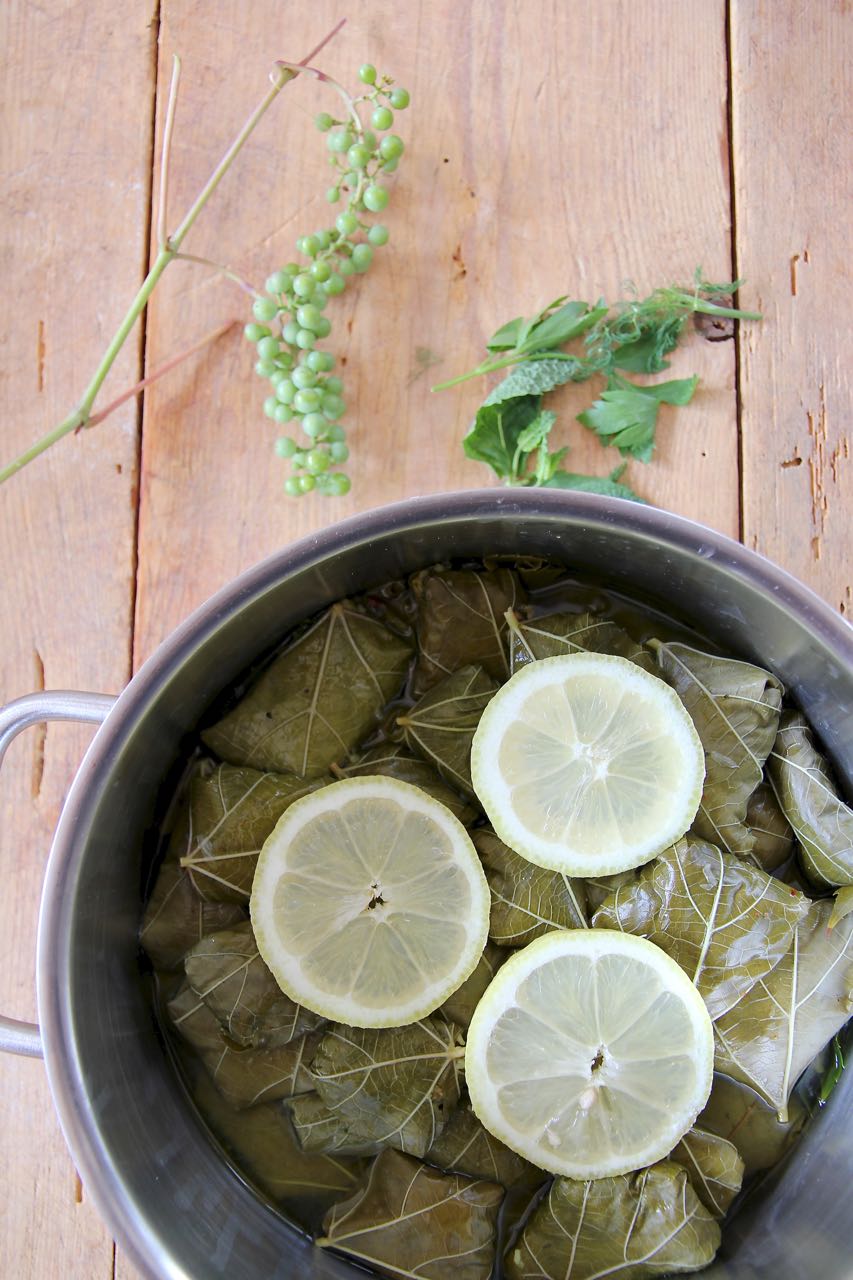
10. DOLMEH (Stuffed Grape Leaves)
In a Persian household, making Dolmeh is rarely a solo mission—it’s a social event. Families often gather around a large table, sharing stories and laughter while expertly rolling tender grape leaves. Each leaf acts as a tiny parcel, snugly wrapping a savory filling of rice, split peas, ground meat, and a garden’s worth of fresh herbs.
These little bundles are simmered in a signature sweet-and-sour glaze that soaks into the leaves, making them incredibly juicy. Because they are meticulously hand-rolled and packed tightly together in the pot, they have come to symbolize family unity and togetherness.
WHY DOLMEH IS THE PERFECT PARTY FOOD:
- The “Pop”: They are the ultimate bite-sized appetizers that deliver a huge punch of flavor.
- The Texture: Soft, vinegary grape leaves contrasting with a hearty, herb-packed center.
- The Versatility: While grape leaves are the classic choice, you can also “Dolmeh” bell peppers, tomatoes, or even onions!
- The Pro Roller’s Secret: Don’t overstuff! The rice needs room to expand as it cooks. A tight, neat roll ensures they don’t unravel in the pot, keeping all that delicious flavor locked inside.
👉 [Master the craft: Learn the art of rolling the perfect Dolmeh step-by-step!]

11. ASH-E RESHTEH (The Soup of Good Fortune)
If there is one dish that defines the cozy, communal spirit of Norooz, it’s Ash-e Reshteh. This isn’t just a soup; it’s a thick, hearty pot of “liquid gold” packed with fresh herbs, various beans, and special Persian noodles (Reshteh).
The noodles are the most important part—symbolizing the many paths of life. Eating them at the start of the year is a delicious way to wish for good luck and success in navigating whatever the new year brings.
THE ART OF GARNISH
The base of the soup is incredible, but the toppings are what make Ash-e Reshteh a masterpiece:
- Kashk: A unique, tangy fermented whey that adds a creamy, umami depth.
- Crispy Fried Onions (Piaz Dagh): For a sweet, golden crunch.
- Sizzling Mint Oil (Nana Dagh): Drizzled over the top to release an intoxicating aroma.
- Soulfood at its Best: This is the dish that warms you from the inside out. Whether it’s a chilly spring afternoon or a festive gathering, one bowl of this soup feels like a hug for your soul.
👉 [Get the recipe: Click here for the hearty Persian soul food of your dreams!]
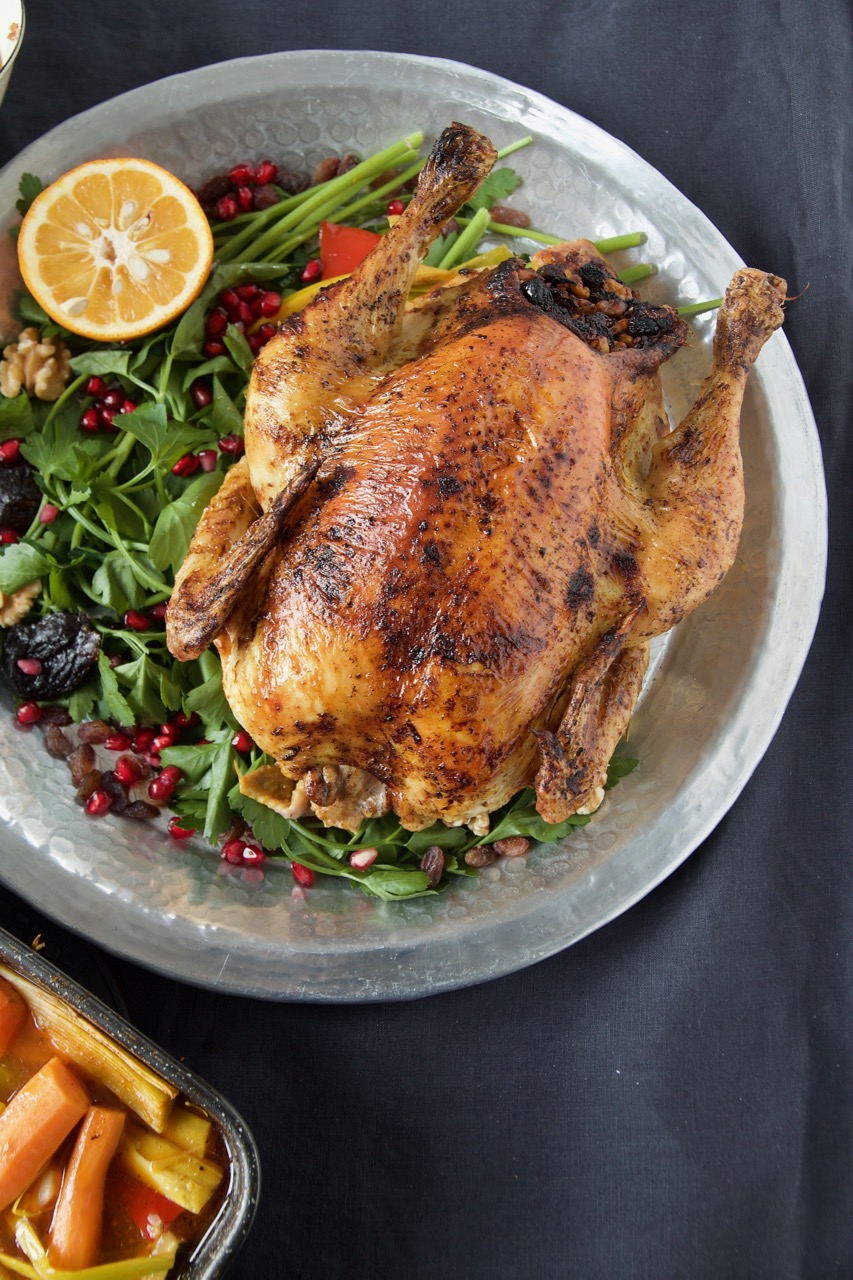
12. MORGH-E SHEKAMPOR (Persian Stuffed Roast Chicken)
If you want a centerpiece that screams “abundance,” look no further than Morgh-e Shekampor. This whole-roasted chicken is far more than your average Sunday roast. It is stuffed to the brim with a luxurious mixture of crunchy walnuts, tart dried plums (Prunes), and fresh green herbs.
In Persian culture, a stuffed bird at the center of the table is a powerful symbol of prosperity and a bountiful year ahead. As it roasts, the chicken absorbs all the sweet and tangy juices from the fruit, resulting in meat that is incredibly succulent and skin that is perfectly golden and crisp.
WHY THIS ROAST STANDS OUT:
- The “Jeweled” Filling: The contrast between the buttery walnuts and the chewy, caramelized plums creates a flavor profile that is uniquely Persian.
- The Saffron Glaze: We brush the skin with a saffron and butter infusion, giving it a royal glow and an irresistible aroma.
- The Festive Vibe: It’s a dish designed for sharing, usually carved at the table amidst the laughter of family and friends.
- Pro Cook Tip: To ensure the flavors truly penetrate the meat, let the chicken marinate in onion juice and saffron for a few hours before stuffing and roasting.
👉 [Discover the secret to my fruity, spiced Persian stuffing right here!]
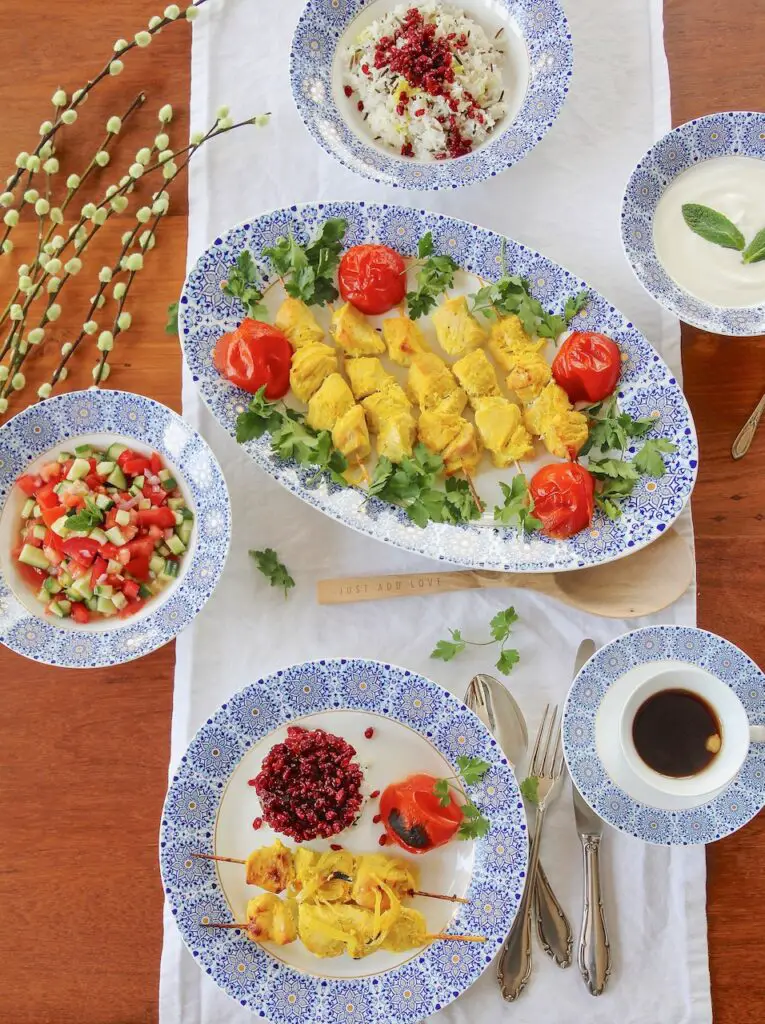
13. JOOJEH KABAB (Saffron Chicken Skewers)
Norooz just wouldn’t be the same without the ritual of outdoor grilling! Joojeh Kabab consists of tender chicken pieces that have spent hours “bathing” in a luxurious marinade of saffron, onions, yogurt, and fresh lemon.
The magic happens over the open flame. As the skewers sizzle over the hot coals and the juices drip down, they release a smoky, saffron-scented aroma that—for me—is the official scent of Sizdah Bedar (our traditional nature picnic). It’s the ultimate dish to celebrate the New Year under the open sky, surrounded by friends and family.
WHY THE MARINADE IS EVERYTHING
- The Saffron Glow: It gives the chicken a royal golden color that looks as good as it tastes.
- The Yogurt Secret: The enzymes in the yogurt act as a natural tenderizer, ensuring the meat stays incredibly juicy even over high heat.
- The Zesty Kick: The lemon and onion provide a bright, savory depth that perfectly balances the smoky char from the grill.
- A Quick Tip for the Grill Master: Don’t rush the marinating process! Let the chicken sit for at least 6 to 12 hours. This isn’t just about flavor—it’s what gives the kababs that signature “melt-in-your-mouth” texture.
👉 [Learn my secret to the world’s juiciest Saffron Chicken Marinade here!]
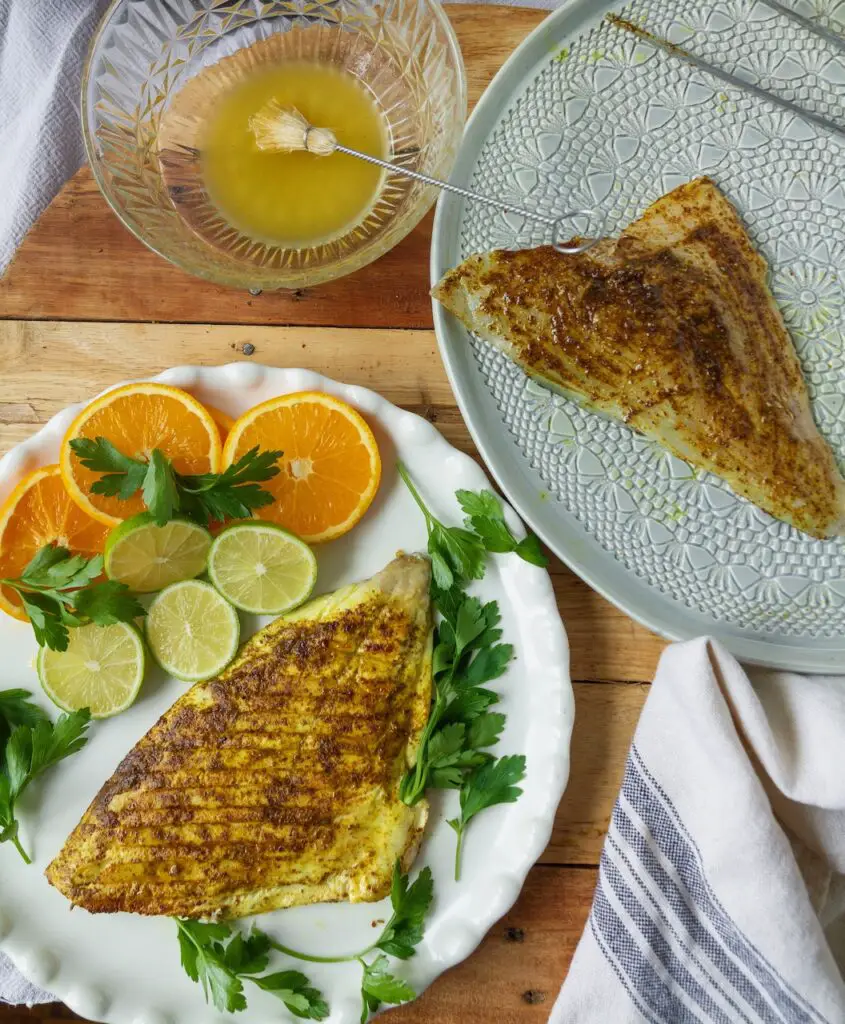
14. MAHI KABABI BA SOMAGH (Grilled Fish with Sumac)
When the charcoal begins to glow, it’s time for Mahi Kabab. Grilling fish over an open flame is a Norooz tradition that brings an incomparable smoky depth to the table. But the real “secret sauce” here isn’t a liquid at all—it’s Sumac (Somagh).
This vibrant, purple-red spice is dusted generously over the hot fish the moment it leaves the grill. It provides a sharp, tangy, almost lemony zing that cuts through the richness of the fish and balances the charred smoky notes perfectly. It’s a dish that captures the raw power of the fire and the freshness of the spring air.
WHY SUMAC IS THE SECRET INGREDIENT:
- The Zesty Pop: Sumac adds a bright acidity without the moisture of lemon juice, keeping the grilled skin perfectly crisp.
- The Antioxidant Boost: Not only is it delicious, but it’s also one of the most powerful antioxidant spices in the world!
- The Visual Contrast: The deep crimson dust against the golden-charred fish makes the platter look like a piece of art.
- Grilling Tip: To keep the fish from sticking to the grate, make sure your grill is screaming hot and lightly oiled. And remember: only flip the fish once to keep that delicate flesh intact!
👉 [Discover which fish are best for the grill and how to unlock the full flavor of Sumac here!]
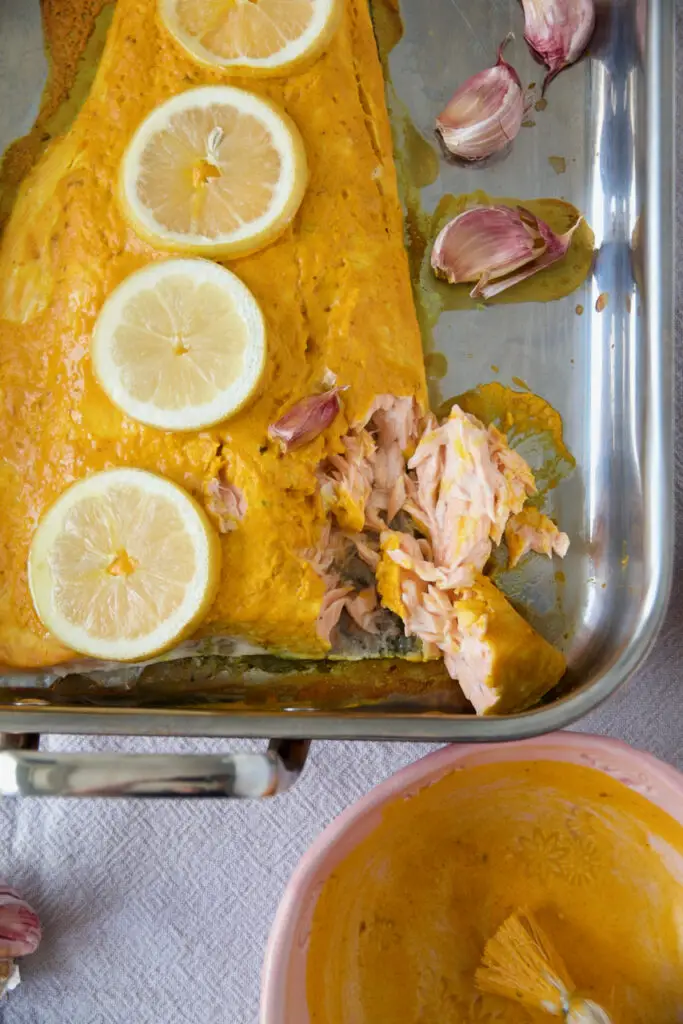
15. EASY TURMERIC & LEMON BAKED SALMON
Let’s be honest—sometimes the New Year hustle gets a little overwhelming! If you need a dish that looks spectacular but takes minimal effort, this Easy Turmeric & Lemon Baked Salmon is my absolute go-to.
The combination of earthy turmeric and zesty lemon gives the fish a glowing golden hue and an incredible freshness that practically screams “Spring!” The best part? The oven does all the heavy lifting. While the salmon roasts to perfection, you can relax, finish setting your Haft-Sin table, or enjoy a glass of tea with your guests. It’s a modern Nowruz classic that proves Persian cooking can be both effortless and deeply flavorful.
WHY THIS IS A “BUSY COOK’S” DREAM:
- The Golden Glow: Turmeric isn’t just for health; it provides a stunning, sun-kissed color that looks beautiful on any festive platter.
- The Hands-Off Method: No flipping, no splashing oil—just perfectly flaky fish every single time.
- The Modern Twist: It’s a lighter, contemporary take on the traditional fried fish that fits perfectly into a busy holiday schedule.
- Pro Tip: Lay the salmon on a bed of sliced lemons and onions. Not only does it prevent the fish from sticking, but it also creates a delicious, built-in garnish that soaks up all those golden juices!
👉 [Get the recipe for this vibrant, golden Lemon-Turmeric Salmon right here!]
A WISH FOR THE NEW YEAR. FINDING LIGHT IN DARK TIMES
As we set our tables and finely chop our herbs this year, my heart feels a little heavier than usual. Norooz has always been the celebration of light’s victory over darkness. But in a world where war and suffering cast such long shadows, this “New Day” feels like more than just a tradition—it feels like a prayer.
We gather, we cook, and we celebrate because we believe in life. We hold onto these rituals because they remind us that even after the harshest winter, spring always returns.
MY PRAYER FOR THE YEAR AHEAD:
- May the warmth of the spring sun wake not just the earth, but the hearts of people everywhere.
- May the scent of peace be stronger than the smoke of conflict.
- May we find the strength to welcome the new with open arms, even when the old is hard to leave behind.
From my kitchen to yours, I wish you a peaceful, beautiful, and deeply hopeful Norooz Pirooz! 🌱🕊️
With love,
Susan