*Not sponsored. This post mentions brands and a shop I love*
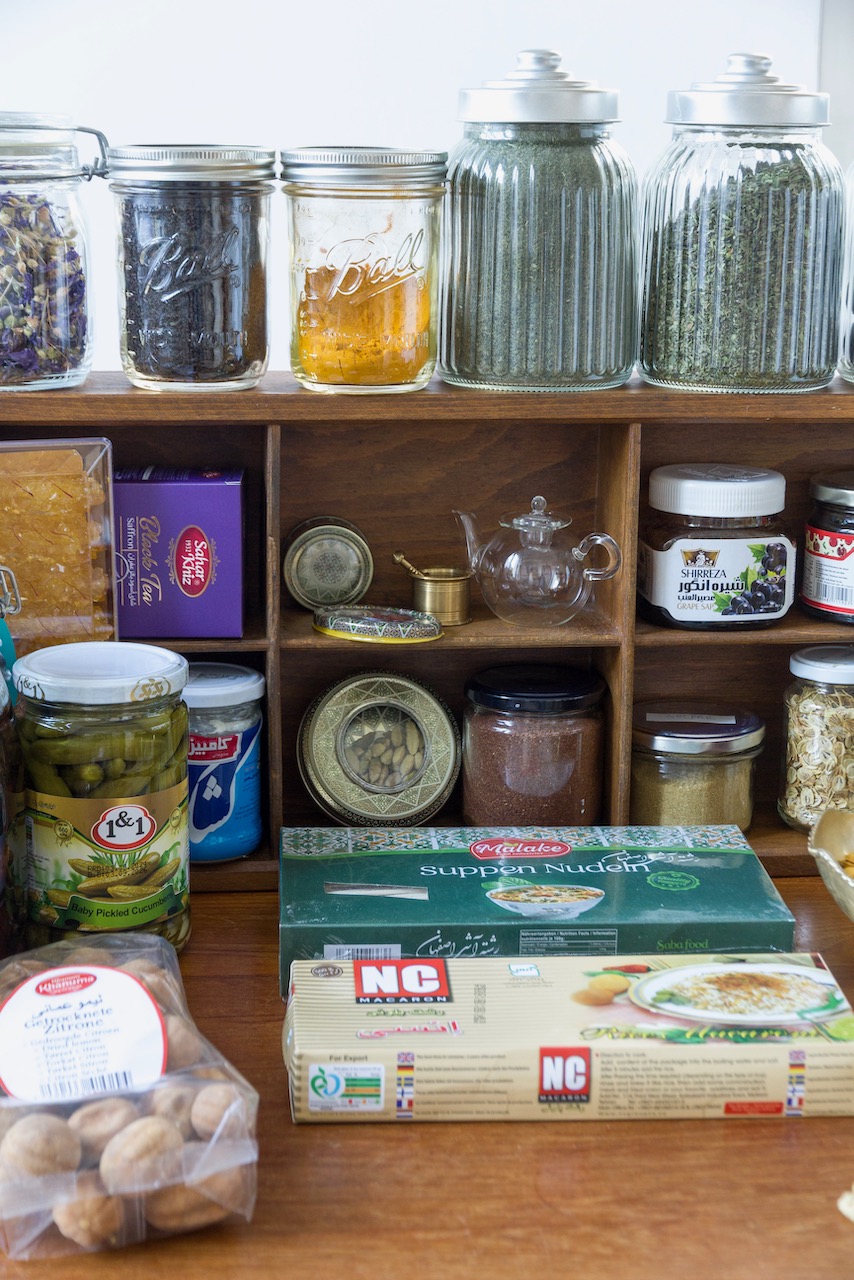
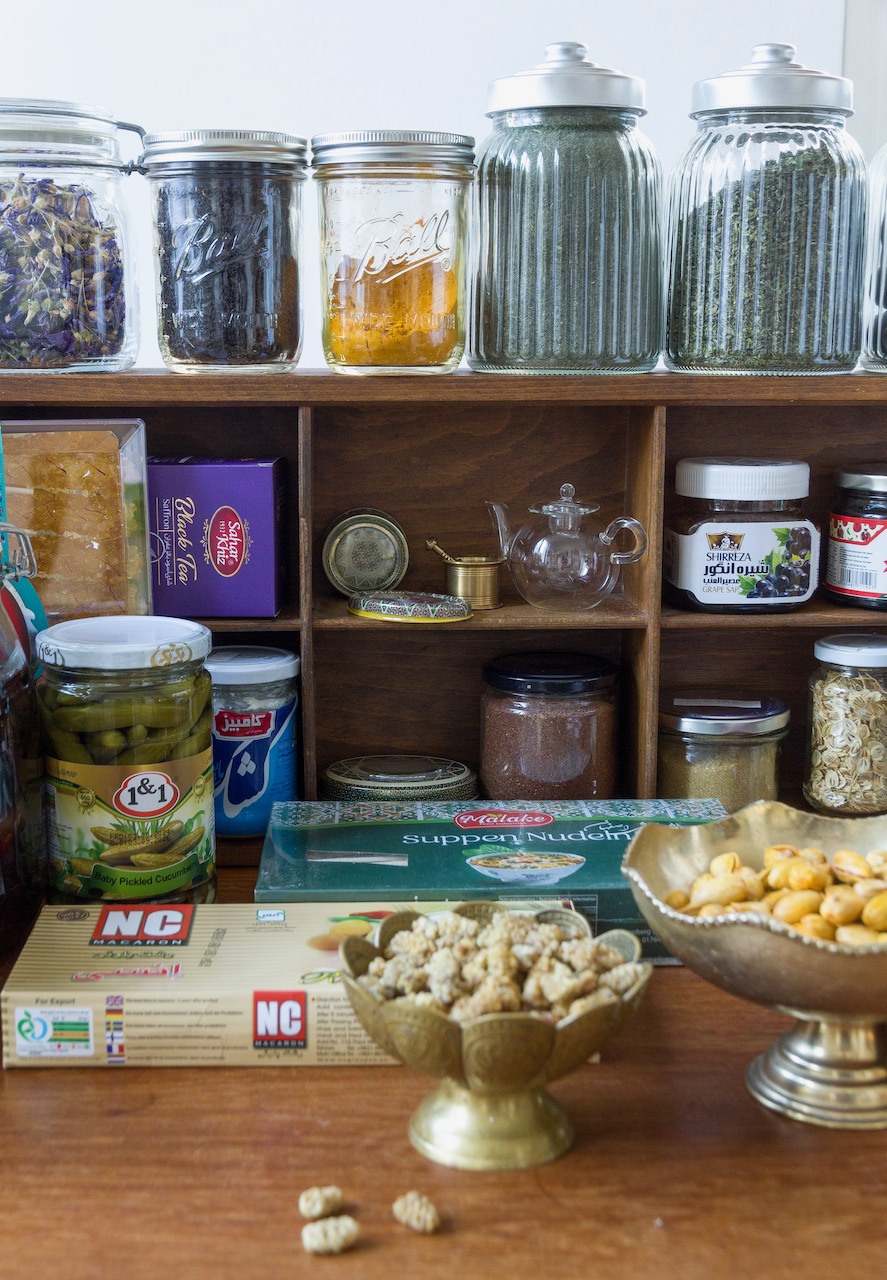
Do you want to bring the flavors of Persia into your own kitchen? Picture this: the dreamy scent of saffron rice drifts through your home. Rose water tickles your nose. Pomegranate molasses gives your dish a deep, fruity tang. That’s what a well-stocked Persian pantry gives you. With the right must-have ingredients, you can cook authentic Persian dishes, whether for a cozy dinner or a festive feast.
I have known this magic since I was little. My grandmother kept her treasures in small jars and cloth bags, each with a handwritten label. To me, it was a treasure chamber full of scents. Today, I carry it on in my own kitchen. Come along. I’ll show you the ingredients that never run out in my kitchen.
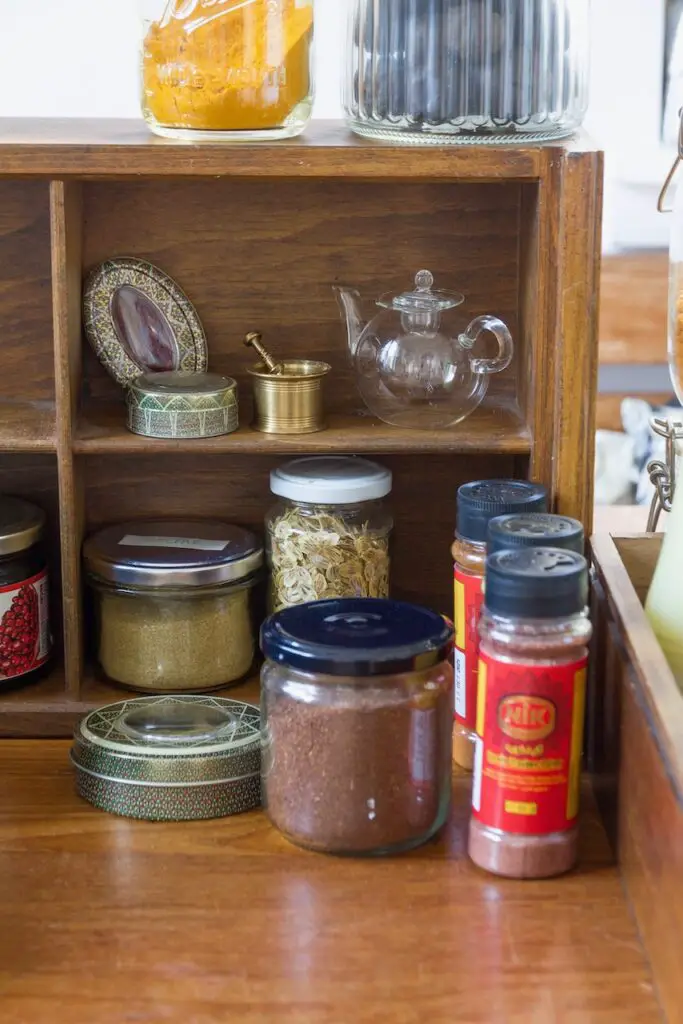
SPICES – ADVIEH (SPICE BLEND ادویه)
SPICE BLEND – (ADVIEH ادویه)
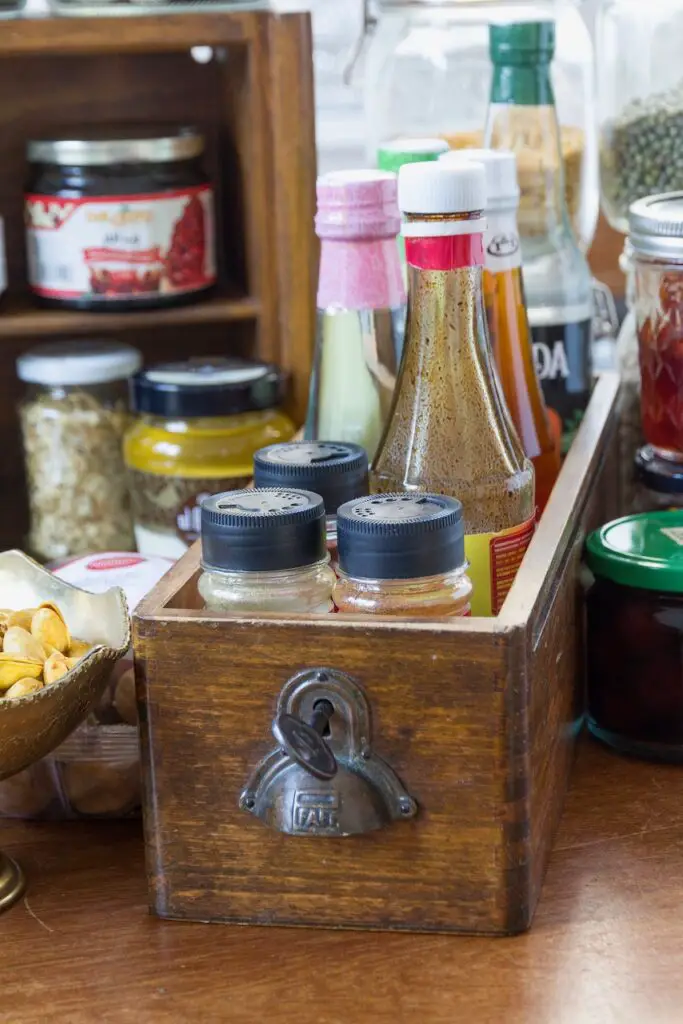
Advieh simply means “spices,” and it’s the magic powder of Persian cooking. Every dish gets its own blend: for rice (advieh polo), stews (advieh khoresh) or kabab (advieh kabab). One pinch is enough, and your kitchen smells like Persia. Try it in:
- Advieh – Persian spice blend
- Macaroni – Persian-style spaghetti
- Havij Polo – Persian carrot rice
- Kabab Tabei Morgh – Easy Pan Chicken Kebab کباب تابه ای مرغ
- Loobia Polo – Persian Rice with Green Beans and Ground Meat لوبیا پلو
SAFFRON (ZAFARAN زعفران)
The gold of Persian cooking. Just a few threads turn rice, chicken and even ice cream into something festive. To release the color and aroma, grind the threads finely in a mortar. Then dissolve them in hot water, or let them melt on an ice cube. The result is called saffron water. It turns your rice, meat and desserts golden yellow.
Leftover saffron water keeps for a few days in a covered jar in the fridge. You can even freeze it. How exactly? And which tricks do the pros know? I’ll share them in a separate post: How to Prepare Saffron. Try it in:
- Joojeh Kabab – Saffron and Lemon Chicken
- Zereshk Polo ba Morgh – Persian Barberry Rice With Chicken
- Kabab Tabei Morgh – Easy Pan Chicken Kebab کباب تابه ای مرغ
- Zereshk Polo ba Morgh – Saffron Rice with Barberries & Chicken Meatballs
- Bastani Sonati – Persian Saffron Ice Cream
SUMAC (SOMAGH سماق)
Deep red, lightly lemony and wonderfully fresh. Sprinkle it over kabab, onion salad or tomatoes, and taste how it wakes up every dish. Try it in:
- Mahi Kabab ba Somagh – Sumac Roasted Fish
- Kabab Koobideh – Grilled Minced Meat Kabab کباک کوبیده
- Persian Red Onion Salad with Sumac
TURMERIC (ZARDCHOOBEH زردچوبه)
Almost every Persian everyday dish starts with onions and a pinch of turmeric. It gives khoresht (Persian stew) its golden color and earthy warmth. Try it in:
CARDAMOM (HEL هل)
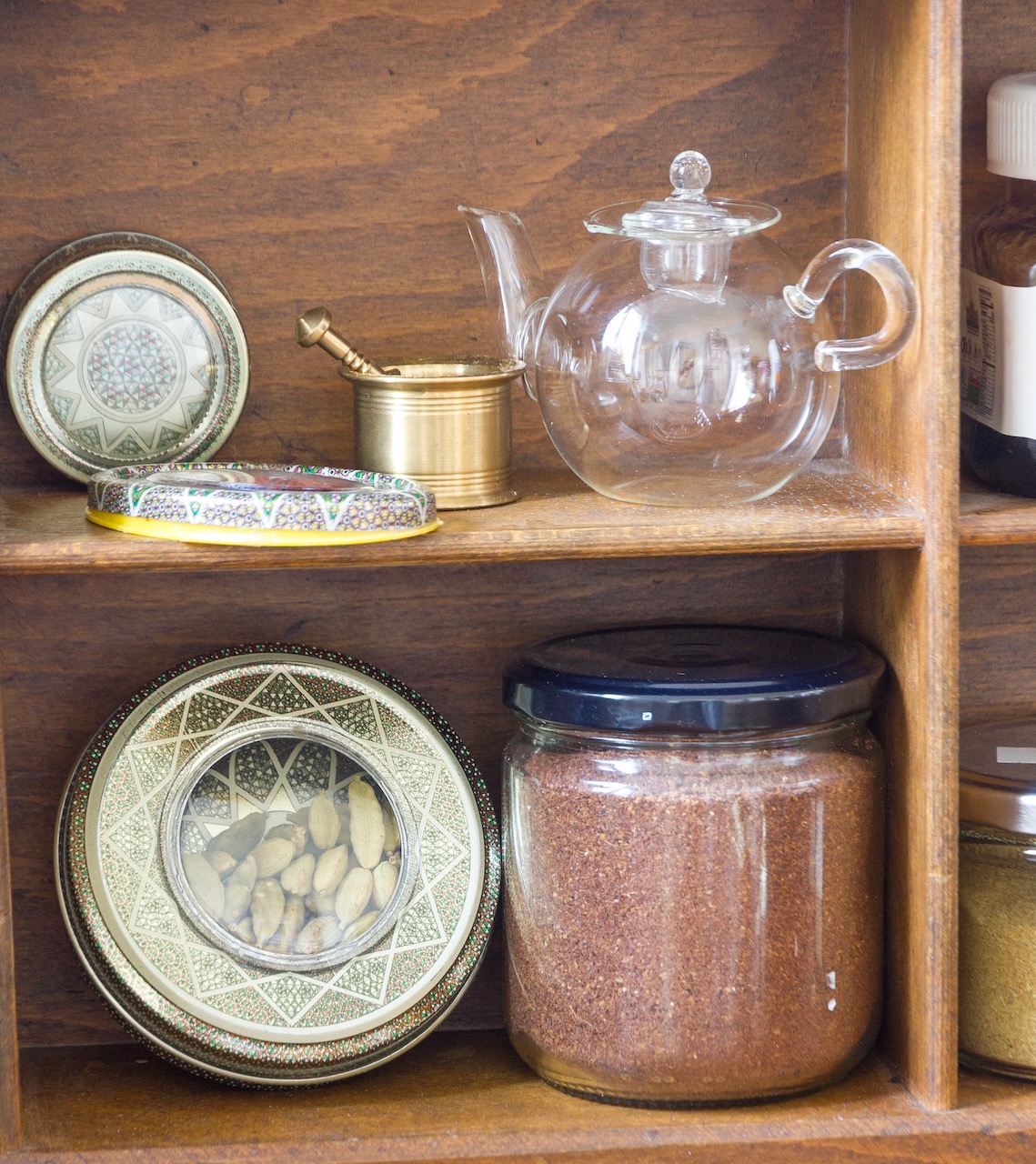
A true gem of Persian cooking. Its elegant, lightly spicy and sweet note flatters rice, meat and baked treats alike. Crush the pods briefly in a mortar, take out the seeds, and the scent rises straight to your nose. I also love it in tea, as a delicate aroma in damnoosh (Persian herbal infusion). Try it in:
PERSIAN HOGWEED – (GOLPAR گلپر)
Golpar is made from the seeds of Persian hogweed. It has a one-of-a-kind taste: lemony, tangy and a little herbal. People love to sprinkle it over beans or lentils for a deeper, savory note. It shines with pomegranate seeds. It also pairs well with cucumbers and tomatoes. Try it in:
Tip: Store your spices airtight and toast them briefly to bring out their full aroma.
HERBS – (SABZI سبزی)
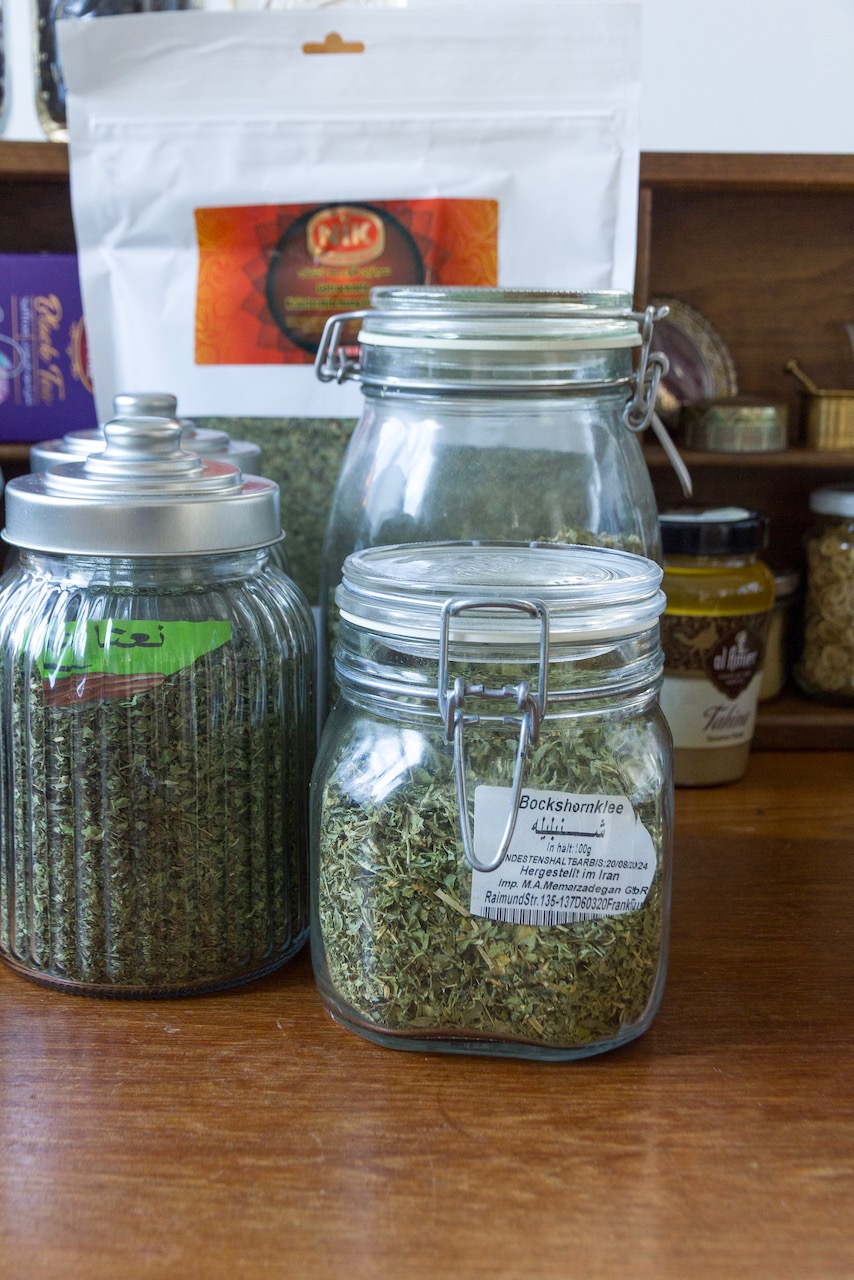
Whenever the comforting aromas of Persian home cooking fill the air, fresh herbs are never far away. For me, they are an essential part of Persian cuisine, whether in fragrant rice dishes, hearty stews, or traditional herb-based recipes. They bring color to the plate, freshness to every dish, and that unmistakable flavor that makes Persian food so special.
I personally love using fresh herbs, but for everyday cooking, frozen herbs are a wonderful alternative, whether you use individual varieties or convenient herb mixes. And when fresh herbs aren’t available? Dried herbs are the little kitchen heroes that every pantry needs. Because sometimes, all it takes is a handful of greens to turn a simple dish into something truly special.
DRIED HERBS (SABZI KHOSHK سبزی خشک)
Persian dried herbs are a real kitchen secret. They include parsley, mint, leek, cilantro (coriander), dill, basil, tarragon and fenugreek leaves.
Ready-made herb blends are especially handy. Each one is made for a specific dish, such as rice, ghormeh sabzi, kuku, ghalieh mahi, soups or ash (thick Persian soup). In these blends, the herbs release their full flavor. Soak the herbs in cold water before you use them. Try it in:
- Kuku Sabzi – Persian herb frittata
- Ghorme Sabzi – Persian beef and fresh herb stew
- Sabzi Polo – Persian Herb Rice سبزی پلو
- Ghalieh Meygoo – Persian Shrimp in a Tamarind and Cilantro Sauce
My tip: Take the herbs out of the bag right after shopping and pour them into a jar. They stay airtight, dry and flavorful. And you see at a glance what you have in the cupboard. I keep mine in a dark spot, so they stay bright green.
SOURNESS – CHASHNI چاشنی
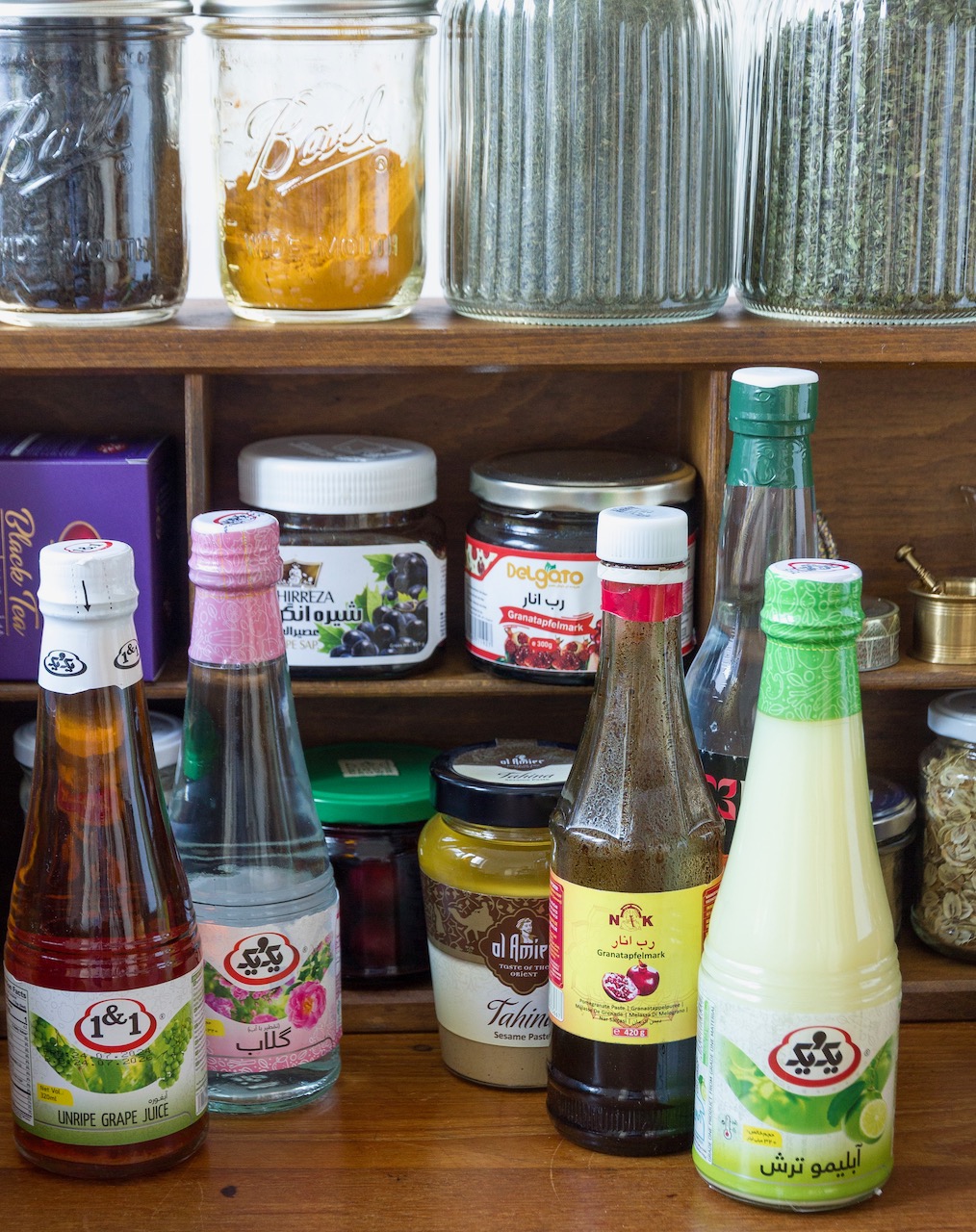
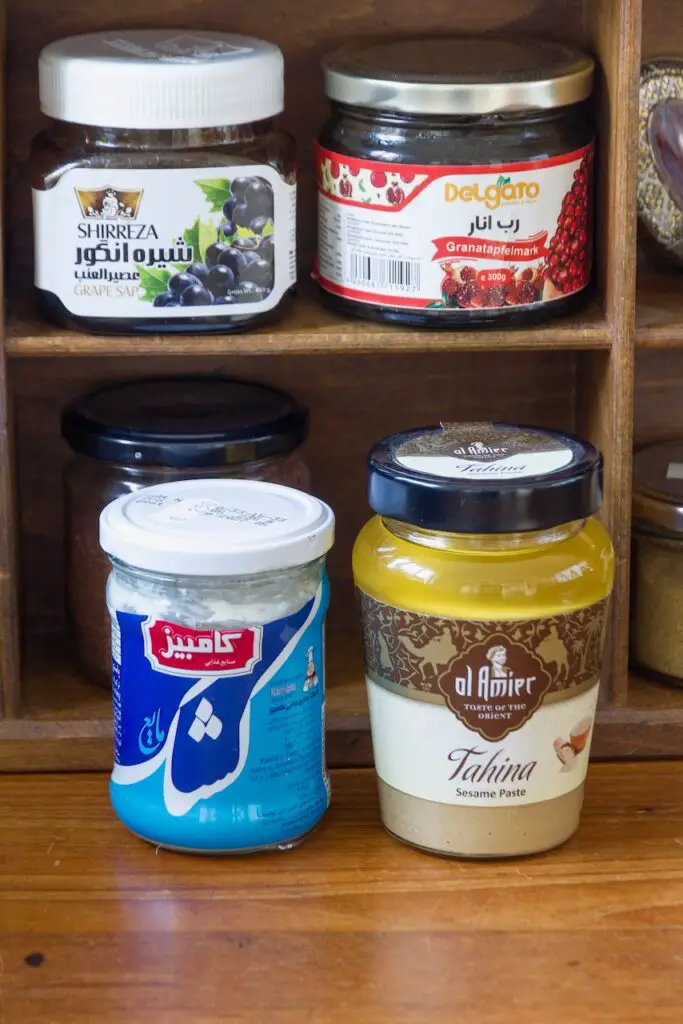
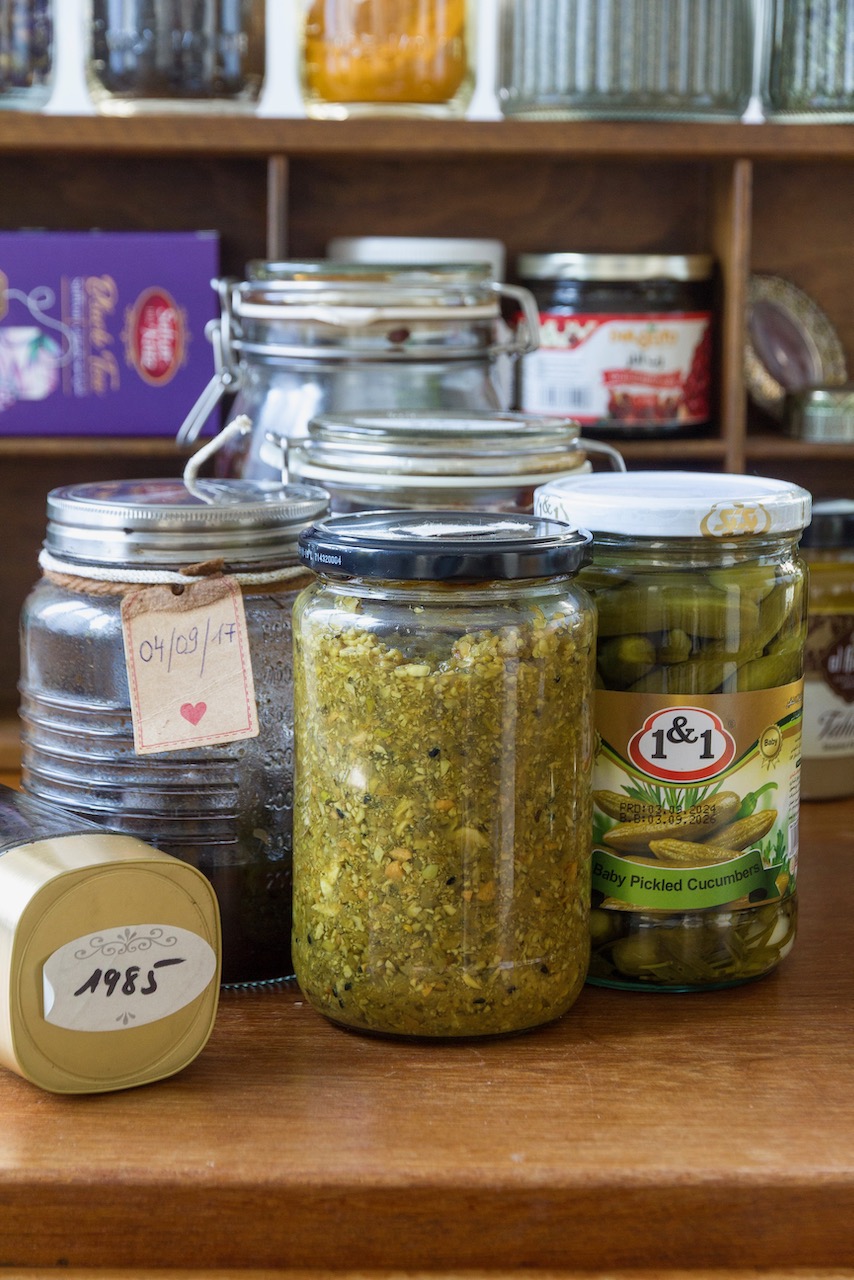
Chashni (چاشنی) is the secret behind the flavor. The word describes the mix of tastes that gives a dish its final character, often a harmonious play of sweet and sour, for example from vinegar, sugar, lemon juice or pomegranate molasses. It includes seasonings and condiments you add during or at the end of cooking to round out the taste. In a wider sense, chashni also means tangy or spicy side dishes that wake up your appetite, such as torshi (pickled vegetables) or chutneys. Here are my favorite chashni ingredients.
POMEGRANATE MOLASSES (ROB-E ANAR رب انار)
Pomegranate molasses is a thick, concentrated paste. It’s made by simmering pomegranate juice until it reduces. Unlike pomegranate syrup, it usually has no added sugar, just the pure essence of the fruit. Check the ingredient list when you buy it: ideally, it says only pomegranate.
Its taste is sweet and pleasantly sour at the same time, with a deep, fruity note. The texture is a bit like tomato paste. In salad dressings, it adds fresh sourness and punch. As a topping, it brings color and flavor. Try it in:
- Ash-e Anar ba Koofteh Ghelgheli – Thick Pomegranate Soup with Meatballs and Mint Oil آش انار
- Vegan Khoresht-e Fesenjan
VERJUS (AB-E GHOREH آبغوره)
Verjus is the juice of unripe grapes. In the kitchen, it’s a mild, fruity alternative to vinegar or lemon juice. Its taste is pleasantly sour, but much softer than vinegar. That makes it a great fit for many Persian dishes.
The name comes from French and means “green juice” (vert jus). In Persia, people have known this ingredient for centuries. They call it ab-e ghooreh. Traditionally, it seasons stews, salads and vegetable dishes and adds a fresh, delicate tang. Try it in:
- Khoresht-e Bademjan – lamb and eggplant (aubergine) stew with verjus
- Khoresht-e Karafs – beef and celery stew in a verjus, parsley and mint sauce
DRIED LIMES (LIMOO AMANI لیمو عمانی)
Dried limes play an important role in Persian cooking. They come originally from South and East Asia. They bring a lemon-like but much stronger sourness to many dishes.
Before using them, pierce the limes several times and soak them briefly in water. This lets any bitterness escape. Some people also remove the seeds to be safe. As they simmer, they give stews and sauces a fine, slightly sour depth. You can eat them after cooking. If the taste is too strong for you, just take them out of the dish. You’ll find dried limes light or dark, whole, sliced or as powder. You can also use them to flavor Persian tea, marinades, salads or toppings. Try it in:
- Khoresht-e Gheymeh – Persian Lamb Stew with Dried Limes and Split Peas
- Tas Kabab with Quince – A Winter Roast Beef on a Bed of Root Vegetables
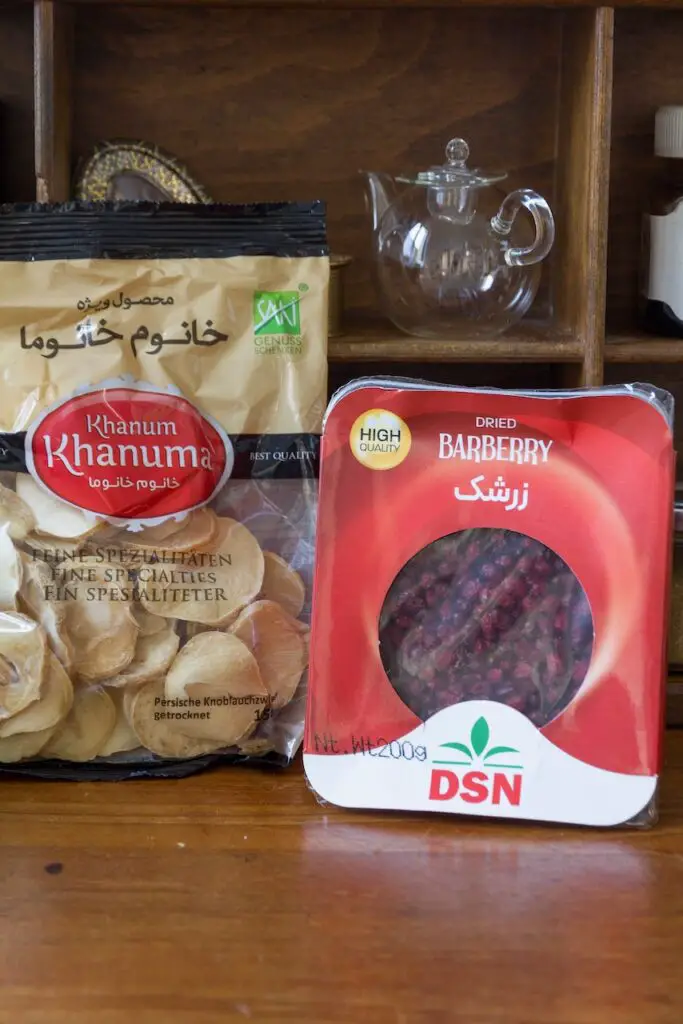
BARBERRIES (ZERESHK زرشک)
These small red berries add a refreshing sour note to many dishes. Toss them briefly in a little butter and sugar to bring out their flavor. They are perfect with Persian rice dishes and create a lovely contrast of sweet and sour. Try it in:
- Kuku Sabzi – Persian Herb Frittata کوکو سبزی
- Zereshk Polo ba Morgh – Persian Barberry Rice With Chicken
- Sir Torshi – Persian Pickled Garlic
- Koofteh Tabrizi – Persian stuffed Meatballs for Mehregan
KASHK (کشک) – THE PERSIAN UMAMI KICK
Kashk is a fermented dairy product with an intensely savory taste. It is essential in Persian cooking. You can buy it creamy or dried, and it gives dishes a wonderfully tangy depth. Try it in:
TAMARIND PASTE (TAMR-E HENDI تمر هندی) – FROM SOUTHERN IRAN
Tamarind paste is a key ingredient in the cooking of southern Iran, especially on the coast, in regions like Hormozgan and Bandar Abbas. It adds fresh sourness and unmistakable depth. It’s a perfect match for the spicy, hot dishes of that region. Try it in:
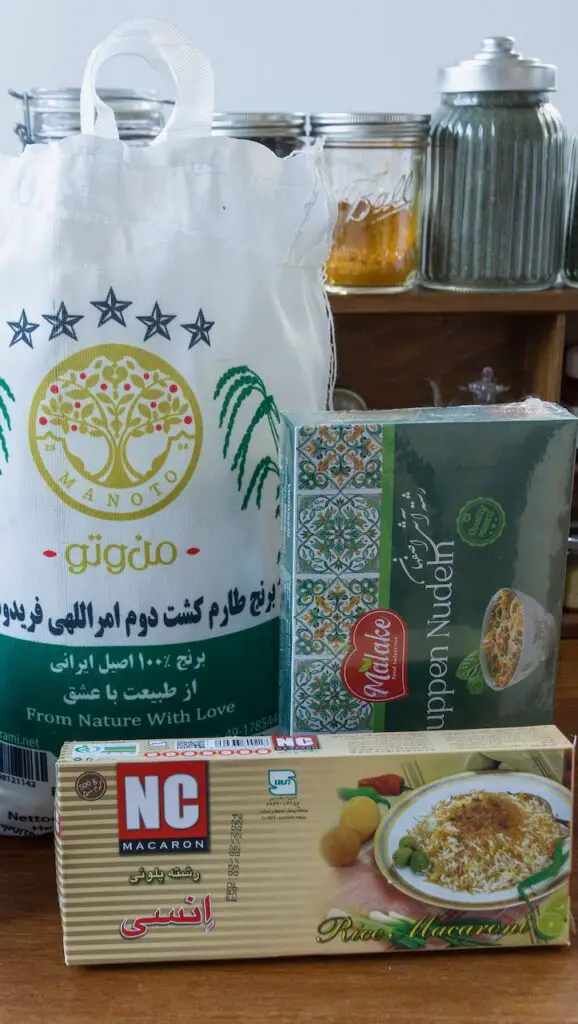

THE ESSENTIALS – GRAINS – (Ghalāt غلات)
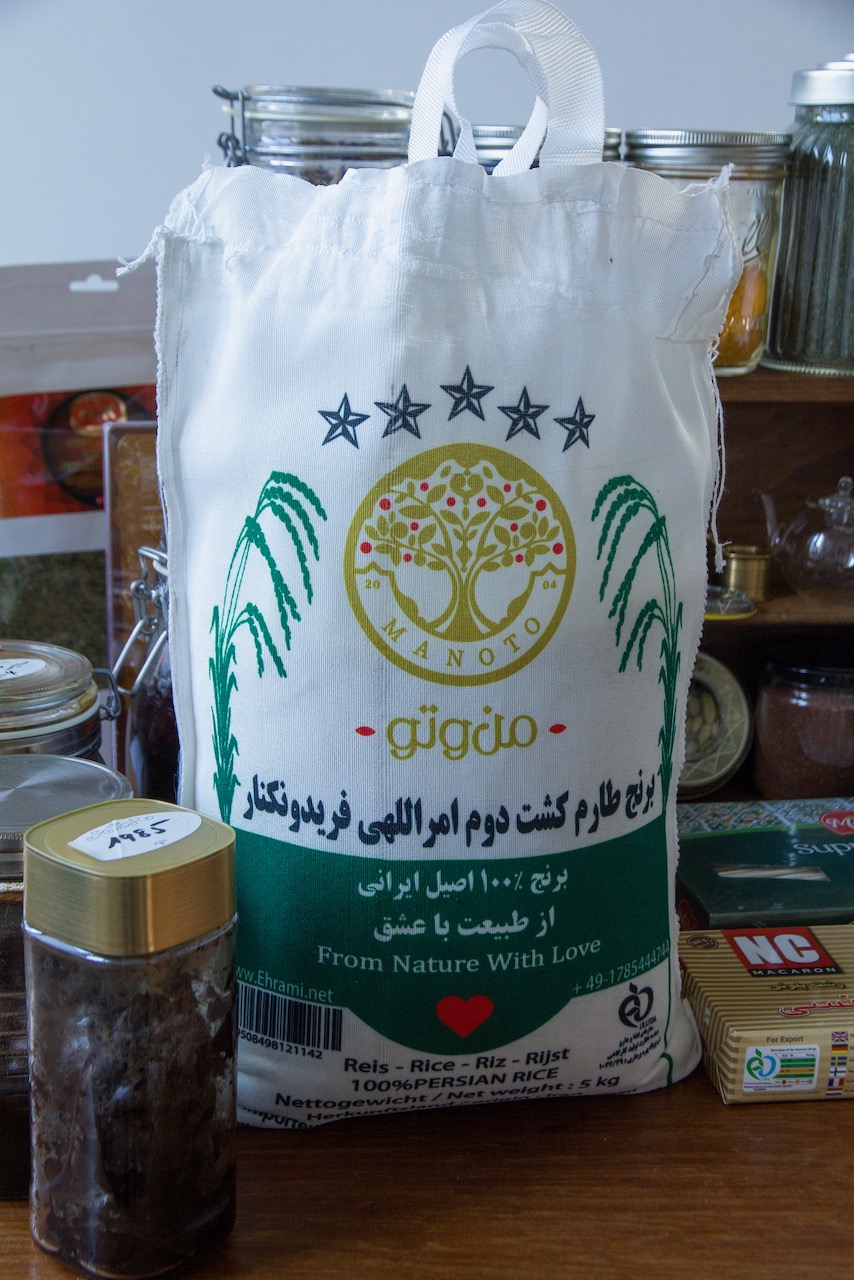
RICE (BERENJ برنج)
Rice is the heart and soul of Persian cooking. It is a must for classics like tahdig (the crispy golden rice crust), zereshk polo or baghali polo. No rice, no tahdig. No tahdig, no Persian meal. Whether it’s fragrant Sadri rice from Iran or classic basmati from India, the right variety makes all the difference.
My favorites are Sadri rice and Hashemi rice from Manoto for a wonderfully aromatic result. Nadi Aahu Barah Super Basmati is another true gem of Persian cooking. Try it in:
- Adas Polo – Persian Lentil Rice with Dates & Raisins
- Gerdoo Polo – Walnut Rice with Barberries, Raisins and Saffron
- Anar Polo ba Morgh – Pomegranate Rice with Chicken انار پلو با مرغ
- Sabzi Polo – Persian Herb Rice سبزی پلو
- Zereshk Polo ba Morgh – Saffron Rice with Barberries & Chicken Meatballs
Tip: Store rice in a dry, cool, airtight container. It stays fresh and aromatic for months.
NOODLES (RESHTEH رشته)
Persian cooking has two kinds of reshteh: toasted and untoasted noodles. These fine, handmade noodles are traditionally made from wheat flour and water. Use the untoasted noodles in soups. They have a slightly springy texture and soak up flavors really well, which makes them perfect for ash-e reshteh. Mix the toasted noodles into cooked rice, for example in reshteh polo. Try it in:
BARLEY – (DJO جو)
Barley (Djo – جو) has a long tradition in Persian cuisine and is especially popular in warming soups and hearty dishes. Whole barley grains or pearl barley create a pleasantly thick, creamy consistency, while barley flakes (Djo Parak – جو پرک) make everyday cooking easier. Try these recipes:
WHEAT – (GANDOM گندم)
In Persian cuisine, wheat is available both as whole grains and in a hulled form. Hulled wheat is particularly popular in traditional soups, stews, and other savory dishes. It is nutritious, filling, and gives dishes a wonderfully soft texture.
A well-known example is Halim (حلیم), a traditional Persian dish made with wheat and meat that is especially popular for breakfast. Try these recipes:
- Haleem-e Gandom ba Morgh – Persian Wheat Porridge with Chicken
- Ash-e Dandooni – Persian Stew for a Baby’s First Tooth Celebration (آش دندونی)
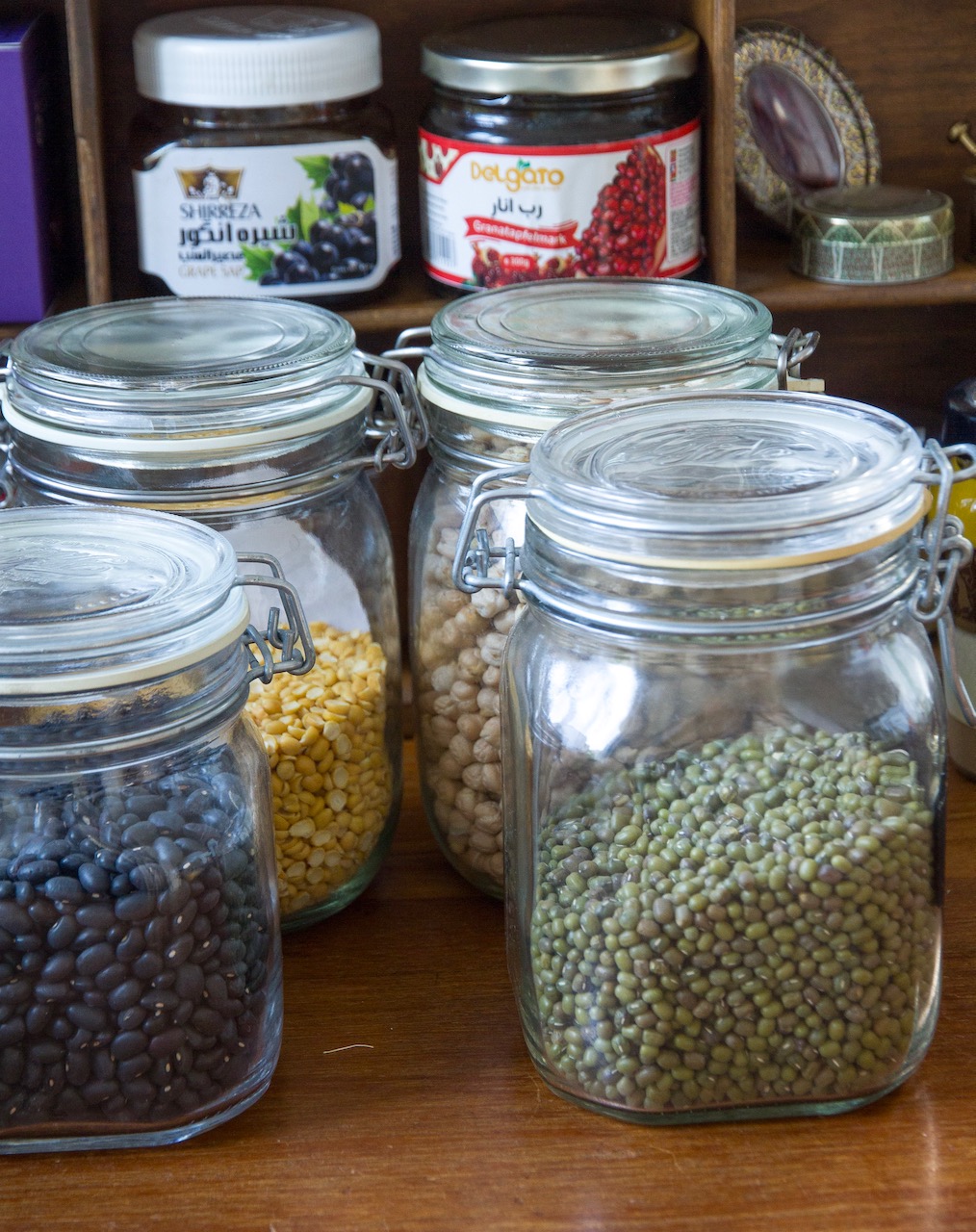
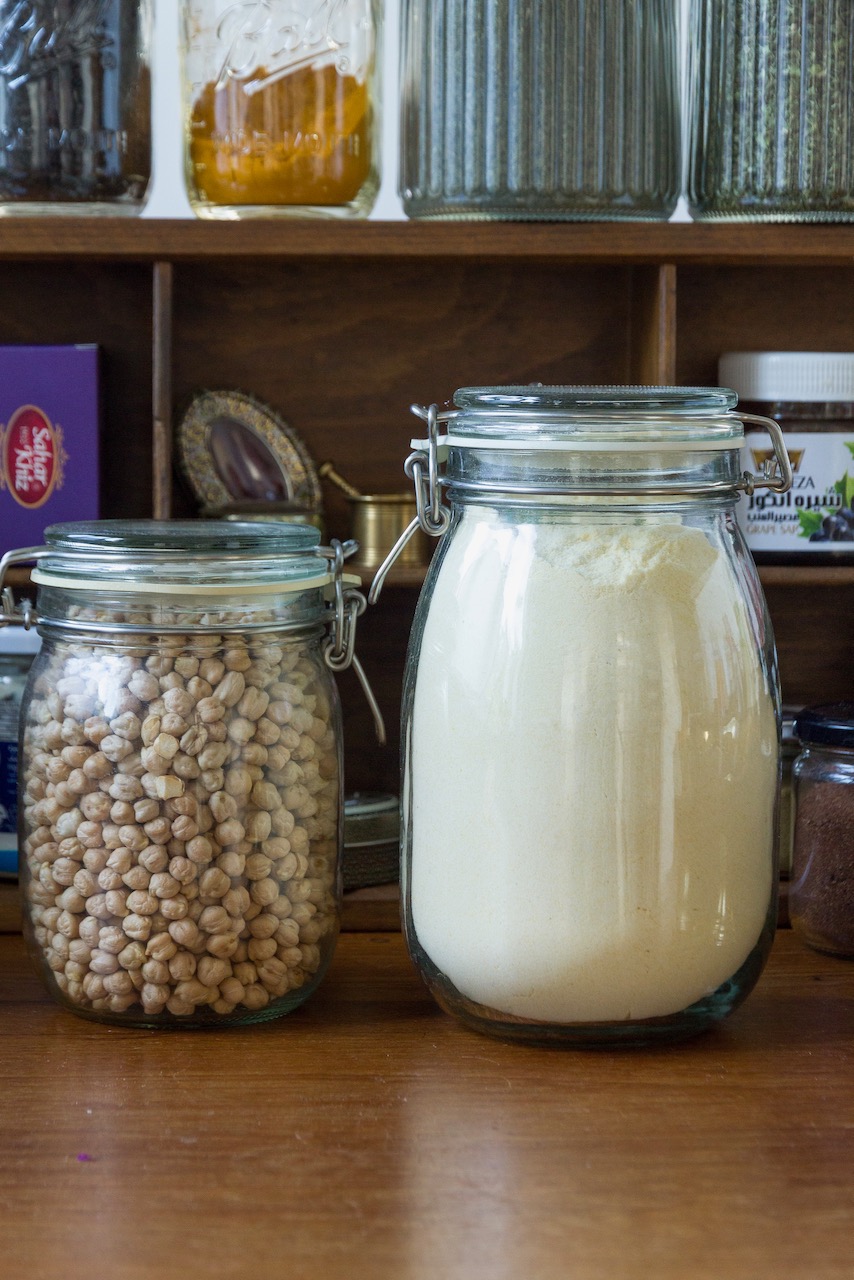
LEGUMES (Ho-bu-bat حبوبات)- PACKED WITH PROTEIN
CHICKPEAS (NOKHOD نخود) & WHITE BEANS (LOOBIA لوبیا)
These two legumes are the quiet heroes of many traditional Persian dishes. They show their full flavor in stews that simmer for hours. They bring plenty of plant-based protein and make any dish wonderfully filling. Their creamy texture soaks up the flavors of the broth, so every spoonful tastes a little deeper. We also use chickpea flour to make a few special treats. Try it in:
- Dizi Sofali – Persian Lamb Stew in a Traditional Clay Pot
- Abgoosht/Dizi – Persian Lamb Stew
- Ash-e Mast – Persian Herb and Yogurt Soup with Chickpeas and Meatballs
- Nan-e Nokhodchi – Vegan & Gluten-Free Chickpea Cookies
- Piyaz – Giant White Bean Salad | سالاد لوبیا سفید
YELLOW SPLIT PEAS (LAPEH لپه)
Yellow split peas (lapeh) are dried, peeled and halved peas. They taste mild, slightly nutty and a little sweet. You don’t have to soak them, but soaking shortens the cooking time. When cooked, they turn soft but keep their shape and soak up the flavors of the sauce. Try it in:
- Khoresht-e Gheymeh – Persian Lamb Stew with Dried Limes and Split Peas
- Koofteh Tabrizi – Persian stuffed Meatballs for Mehregan
- Ash-e Anar ba Koofteh Ghelgheli – Thick Pomegranate Soup with Meatballs and Mint Oil آش انار
PINTO BEANS (LOOBIA CHITI لوبیا چیتی)
The pinto bean, called loobia chiti in Persian, is a true all-rounder. It has a tender, creamy texture and a mild, nutty taste. It’s great in stews and braised dishes, or as a hearty side. In many Persian homes, it’s a pantry staple because it’s so versatile and makes dishes wonderfully full. Try it in:
- Khorak-e Loobia Chiti – Persian Pinto Bean Stew لوبیا چیتی
- Ghorme Sabzi – Persian beef and fresh herb stew
My tip: Soak dried legumes overnight in plenty of water. They turn wonderfully soft and cook faster. Some people also add a little djooshe shirin (جوش شیرین), which is baking soda (bicarbonate of soda in the UK), to the soaking water. It’s said to make legumes easier to digest. Then pour off the soaking water and rinse them well before cooking.
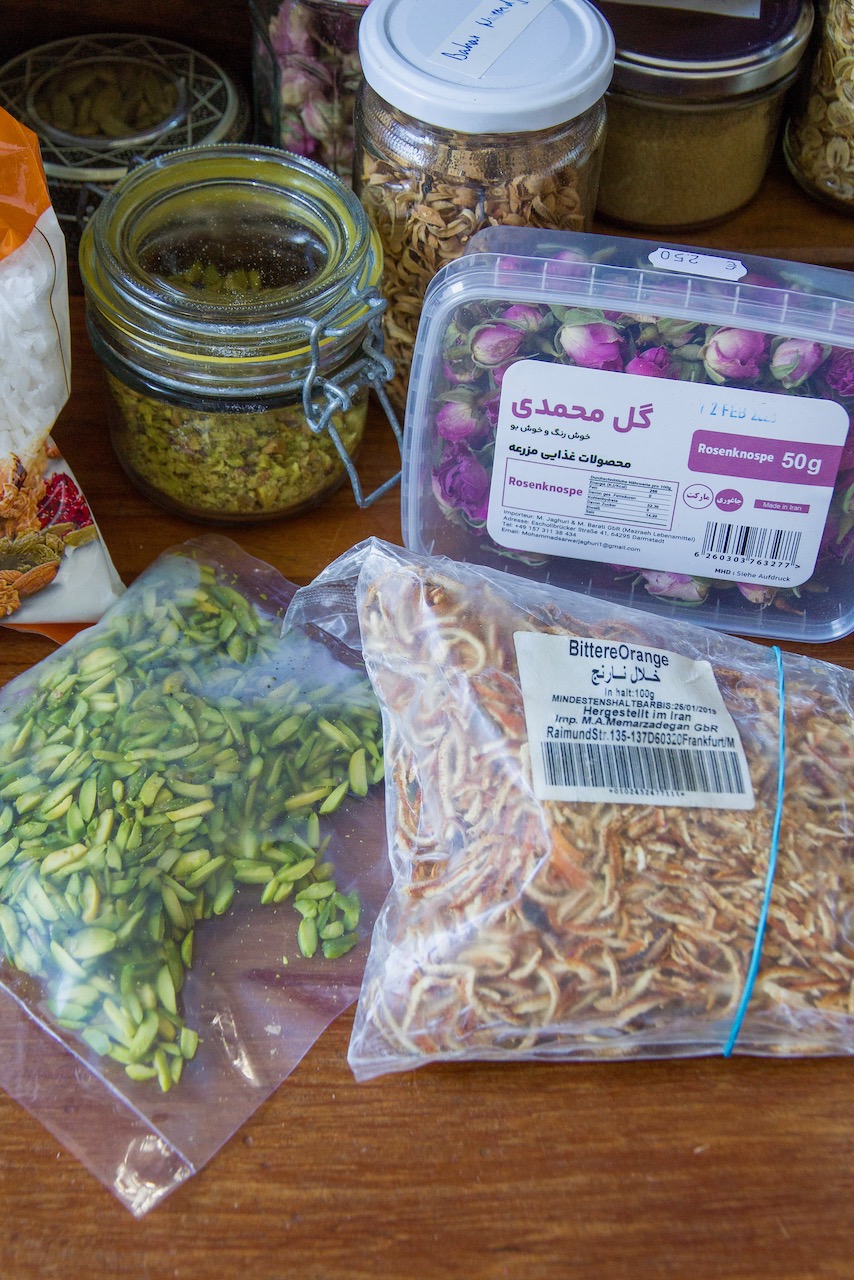
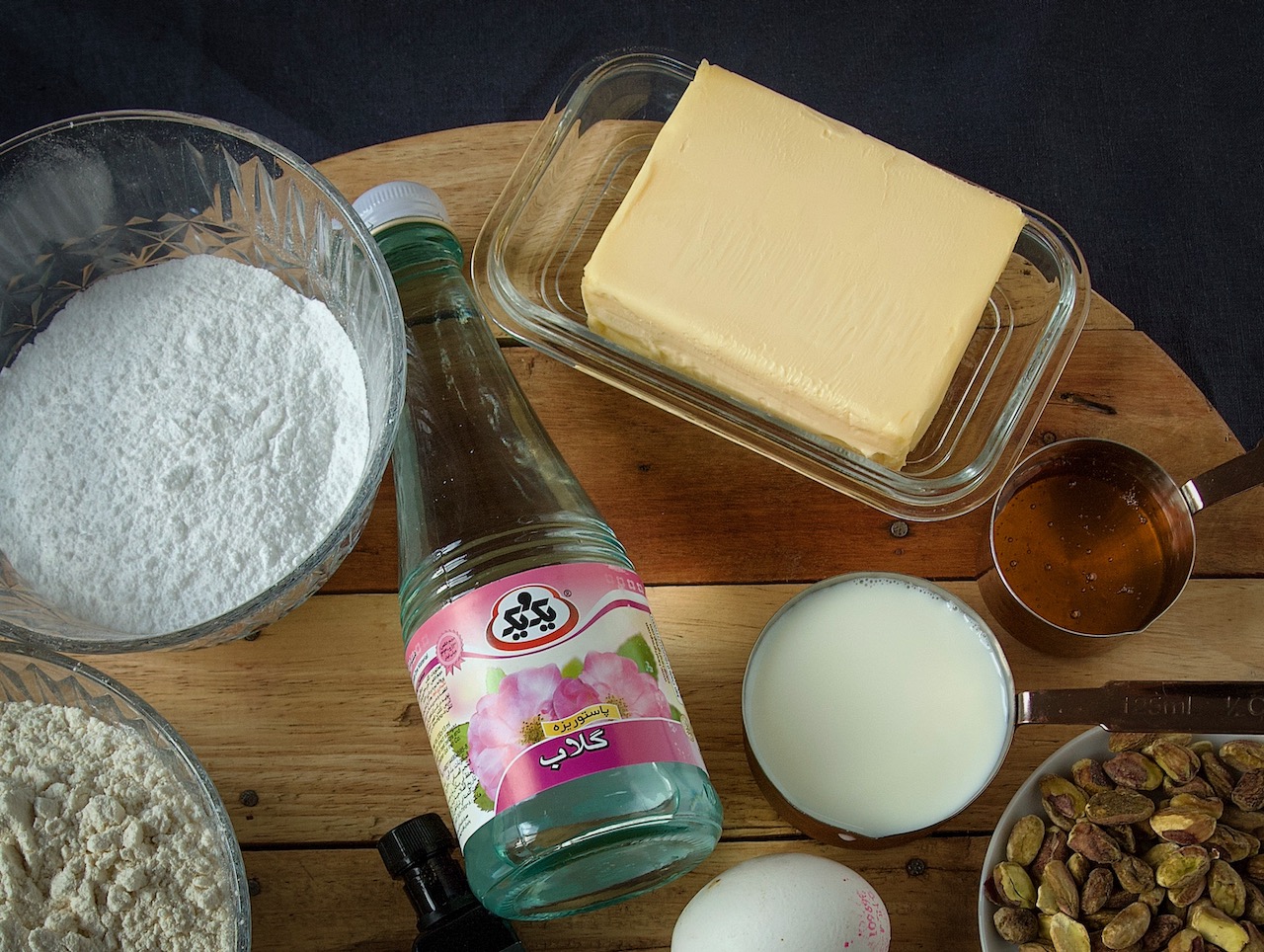
THE ROSE – THE SCENT OF PERSIA گل سرخ – عطر و بوی ایران
ROSE PETALS (GOL-E MOHAMMADI گل محمدی)
Rose petals are the delicate side of my pantry. Dried, they smell sweet, floral and a little like summer. I add them to tea as a soft aroma in damnoosh, and I turn them into morabayeh gol, a fragrant rose petal jam. Sprinkle a few petals over desserts, and your dishes look like tiny feasts. Buy them in food-grade quality, not from the cosmetics aisle. Try it in:
- Morabayeh Gol – Persian rose petal Jam مربای گل سرخ
- Baklava Cheesecake
- Middle Eastern Style Bundt Cake
ROSE WATER (GOLAB گلاب)
Rose water is a true classic of Persian cooking, and it’s popular in cosmetics too. Producers make it by distilling rose petals, which creates a delicate floral aroma. A few drops are enough to give food and drinks an elegant floral note.
In Persian cooking, it’s mostly used in desserts, sharbats (traditional drinks) and sometimes rice dishes. It adds special depth and an unmistakable scent. Quality varies by brand! Some varieties smell naturally and strongly of roses. Others taste artificial. So look for high-quality rose water, such as the brand 1 & 1. Try it in:
- Baklava Cheesecake
- Cake Yazdi – Cardamom Rose Water Muffins کیک یزدی
- Morabayeh Gol – Persian rose petal Jam مربای گل سرخ
- Morabay-e Beh – Traditional Persian Quince Jam
- Noon-e Khame-i – Rose and Pistachio Persian Cream Puffs
- Saffron Zoolbia زولبیا
Tip: Store rose water in the fridge after opening.
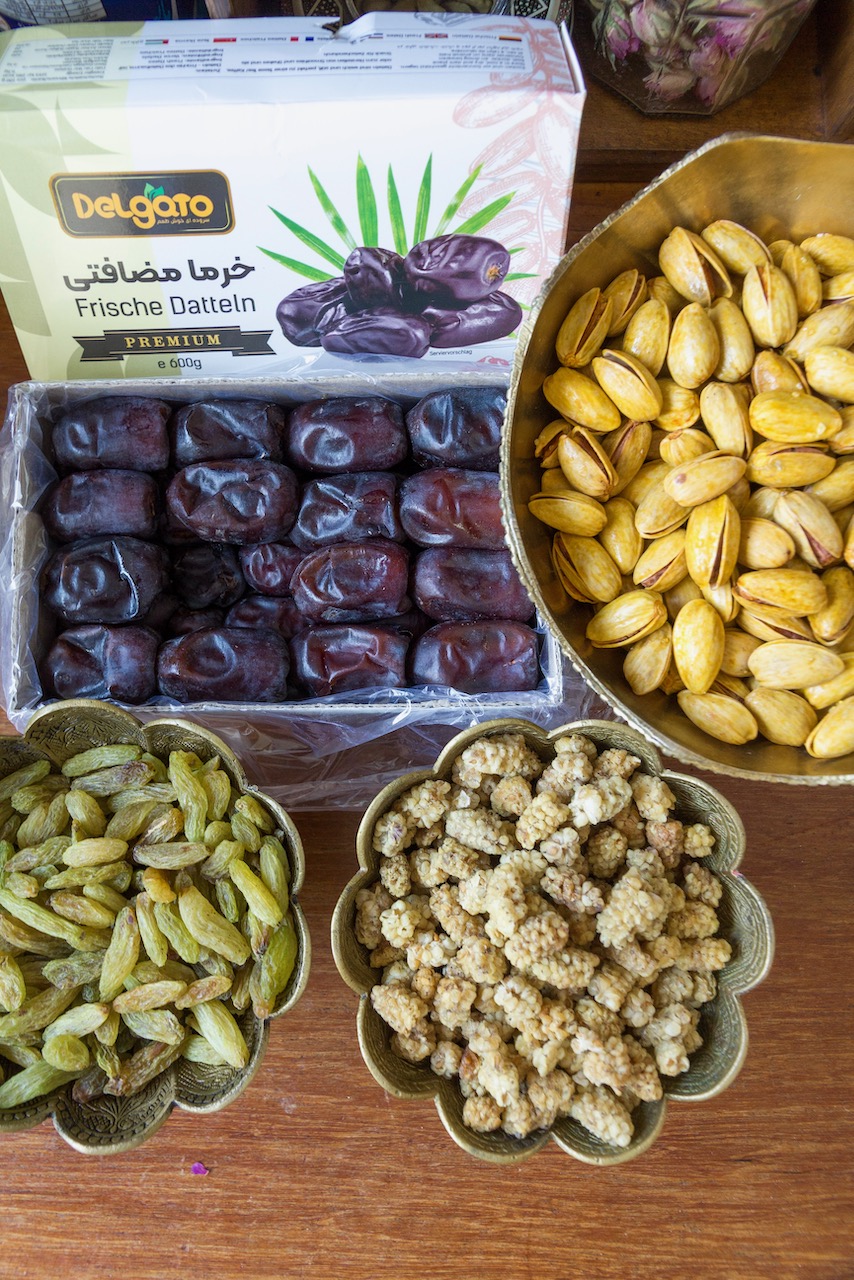
DRIED FRUITS (Miveh-ye Khoshk میوه خشک)
PERSIAN DATES (KHORMA خرما)
These small, juicy dates are naturally sweet, but less intense than big Medjool dates. They’re wonderfully tender and almost melt on your tongue. I like them best with a cup of chai. They stay fresh for a long time in the fridge. Try it in:
- Adas Polo – Persian Lentil Rice with Dates & Raisins
- Ranginak – Persian Date Dessert رنگینک خرما
- Dubai Chocolate Dates
RAISINS – (KESHMESH / KISHMISH کشمش)
We love raisins in two varieties: green raisins (Keshmesh-e Sabz – کشمش سبز) and red raisins (Keshmesh-e Polo – کشمش پلو). Green raisins have a wonderfully sweet, fruity flavor and are often enjoyed as a snack with nuts in Iran or stirred into yogurt. Red raisins, on the other hand, are my favorite addition to rice dishes, where their natural sweetness creates a delicious contrast with savory flavors. Try it in:
- Mast-o Khiyar
- Mash polo – Rice with Mung Beans and Meatballs ماش پلو
- Adas Polo – Persian Lentil Rice with Dates & Raisins
- Shirini Keshmeshi – Persian Raisin Cookies
DRIED SOUR CHERRIES (ALBALOO KHOSHK آلبالو خشک)
Fruity sweetness meets pleasant tartness, and suddenly your day looks brighter. I snack on them straight from the bag, sprinkle them over granola and muesli, or bake them into pastries. They also give salads a fruity touch. Try it in:
- Albaloo Khoshk – Dried Sour Cherries from the Airfryer
- Ajil Granola – Persian breakfast for Mother’s Day
- Ajil Granola – Persian breakfast for Mother’s Day
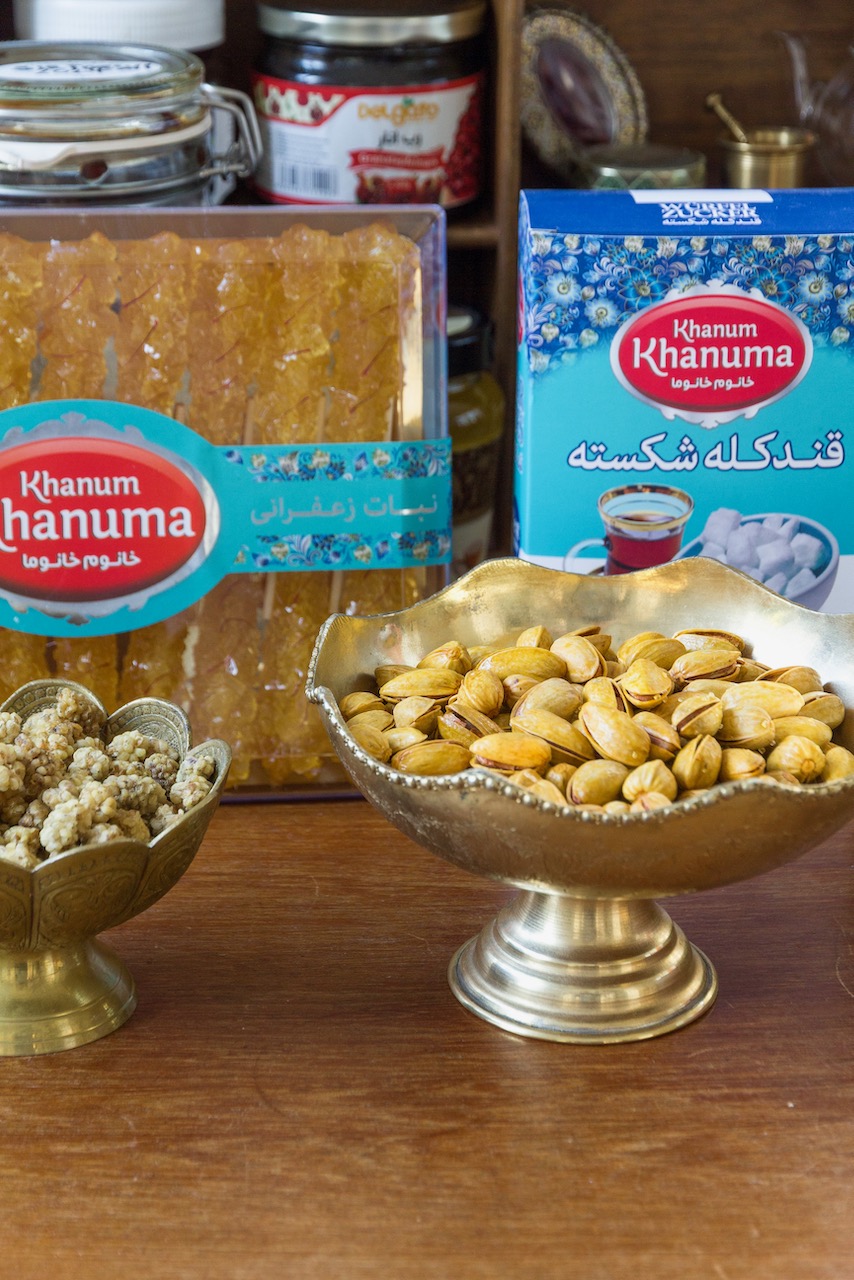
NUTS – (AJIL آجیل) PISTACHIOS, WALNUTS & CO.
NUTS (AJIL آجیل)
Persians adore ajil, and the country even has specialty shops for it, called ajilforoosh (آجیلفروش). The vendors there sell only nuts and dried fruit. These little treats bring healthy fats and protein, and they give many sweet and savory dishes their special taste.
The stars of the pantry are pistachios, almonds, walnuts, hazelnuts and cashews. Pistachios play the biggest role in Persian cooking. You’ll find them in rice dishes and desserts, or as a topping on sweets. Try it in:
- Ajil Granola – Persian breakfast for Mother’s Day
- Vegan Khoresht-e Fesenjan
- Baslogh Anar – Pomegranate – Pistachio Jelly Confection
- Gerdoo Polo – Walnut Rice with Barberries, Raisins and Saffron
- Majoon – Date Ice Cream Shake with Nuts معجون
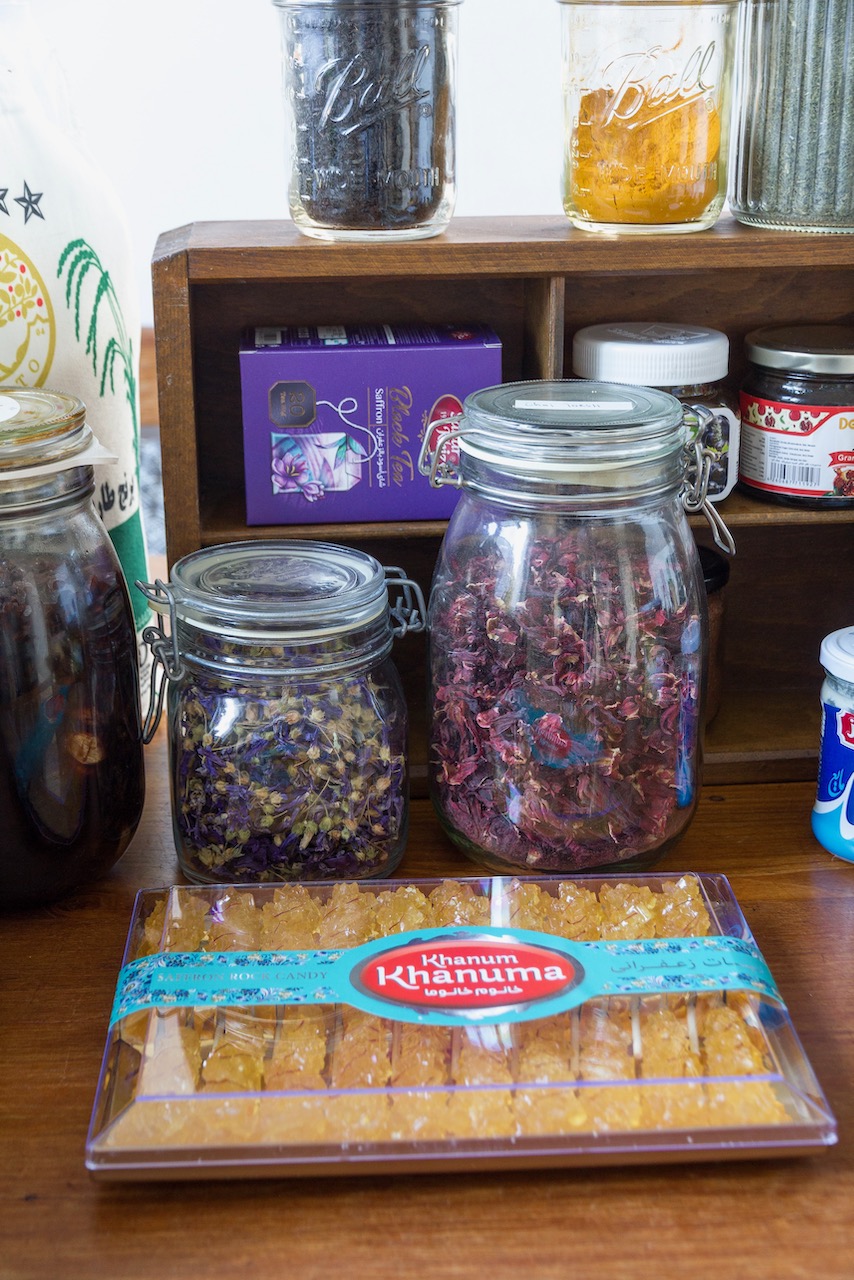
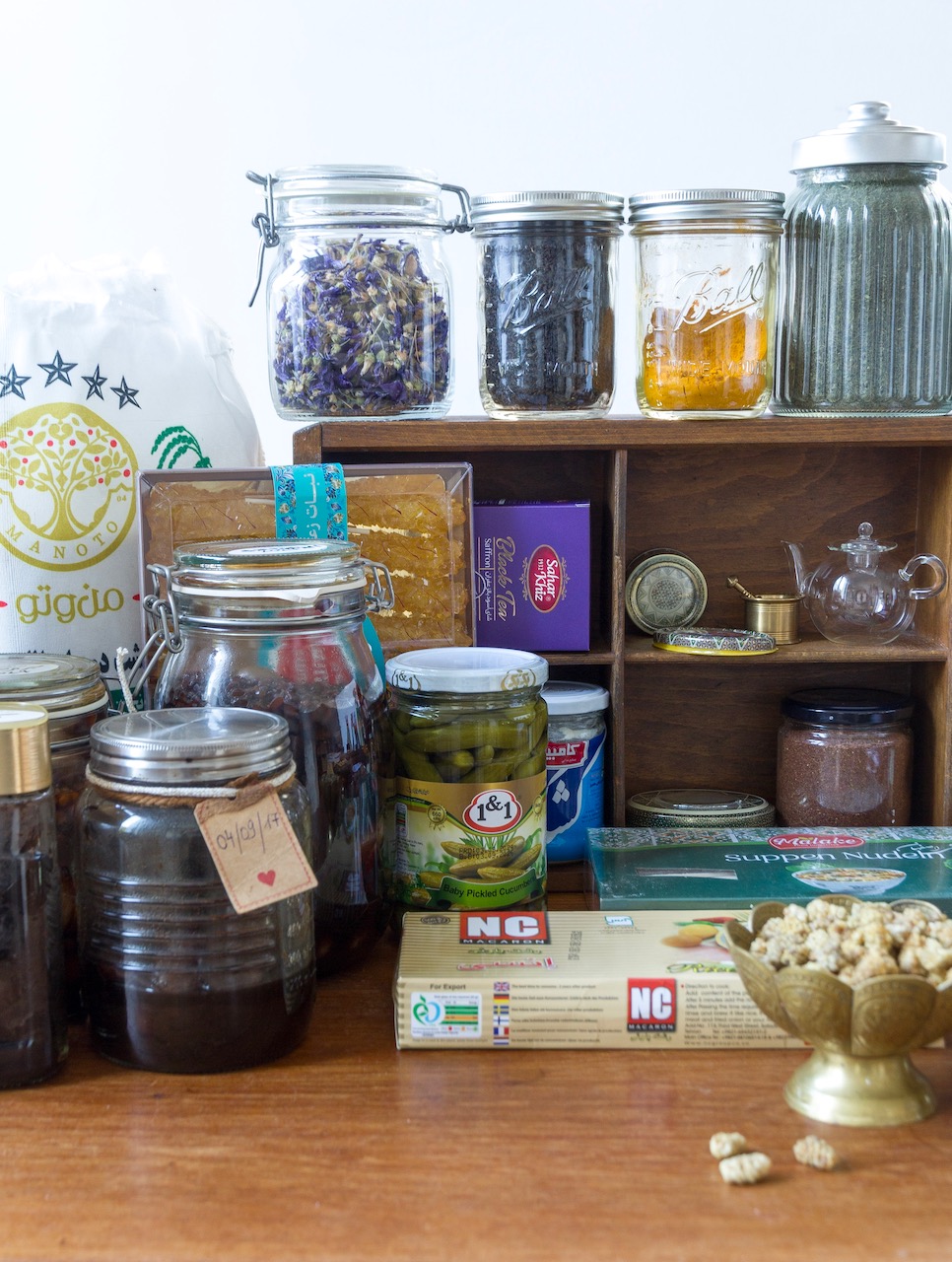
PERSIAN TEA (CHAI چای) & DAMNOOSH (دمنوش)
For a truly full-bodied cup of tea, we love loose, large-leaf teas. They unfold slowly as they steep and fill the room with their scent. Whether it’s strong Ceylon, mellow Assam or delicate Darjeeling, every variety has its own character. Two favorites of mine are Do Ghazal black tea and Ahmad Tea. Both are rich in aroma and nicely balanced.
Loose leaves always taste a little more special. But even many tea bags surprise you with great quality. A real highlight is the saffron black tea from Saharkhiz. You can get it as classic black tea with a hint of saffron, or as damnoosh in pyramid bags.
Beyond classic chai, Persian tea culture offers many more aromatic blends. We call them damnoosh. They include fragrant herbal mixes, delicate flowers (rose petals), fruit (dried limes) and warm spice blends (cardamom). Every cup turns into a little break and brings a taste of the Orient into your teacup. Try it in:
WHERE I FIND MY TREASURES
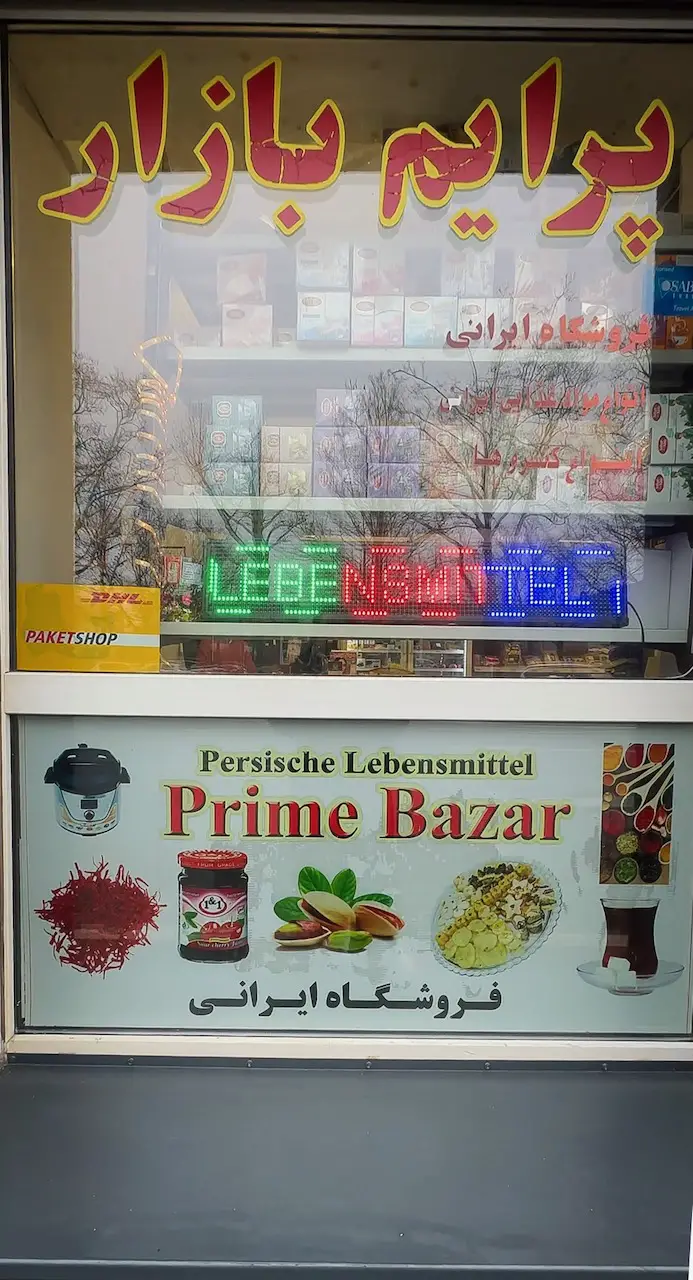
The first time I walked into Manouchehr Agha’s Persian shop, I was overwhelmed by the colors, scents and huge sacks of rice. Today, Prime Bazar is my favorite spot in Darmstadt, Germany. Here I find saffron, advieh, herb blends and rice straight from Iran. And that’s far from all. Whether you need frozen goods, fresh produce or canned food, you’ll find everything your Persian heart desires. You walk in with a small shopping list and walk out with a full bag and new ideas.
At Prime Bazar, I don’t just buy my ingredients. I even find cooking tools there: Persian rice cookers, samovars for tea, and mangal and sikh (a Persian grill and skewers), and much more. Owner Manouchehr Agha also shares great cooking tips. You can even call him. He puts your order together with care and sends it to you by mail. I also book my flights to Iran there. Prime Bazar is also Prime Travel.
Prime Bazar
Kasinostraße 55
64293 Darmstadt, Germany
Phone: +49 6151 5011993
Open daily from 10 a.m. to 7 p.m., closed on Sundays.
Not near Darmstadt? Look for a Persian, Iranian or Middle Eastern grocery store in your city. Many of these ingredients are waiting there for you.
And now I’m curious: Which Persian dish will you cook next?